
Gold flotation and cyanidation are often discussed as competing recovery methods, but they serve different purposes. Flotation is commonly used when gold is associated with floatable sulfide minerals and the concentrate can be treated or sold economically. Whole-ore cyanidation is better when gold is sufficiently exposed and readily leachable. If both conditions apply, flotation can first concentrate the sulfides for further treatment.
Choosing the right route depends on how the gold occurs in the ore and how finely it must be ground to be liberated—not on head grade alone.
Flotation separates selected mineral particles from gangue by attaching them to air bubbles. In gold ores, it commonly produces a sulfide-rich concentrate that contains much of the gold. Cyanidation uses a chemical solution to dissolve accessible gold, after which the gold is recovered from solution. A flotation concentrate is an intermediate product: it must be sold to a suitable smelter or treated further before gold is recovered.
Three mineralogical questions set the direction: Is the gold coarse and liberated? Is it associated with floatable sulfides? Is it locked in sulfide or carbonaceous minerals that prevent direct leaching or cause preg-robbing? Representative mineralogy, size-by-size assays, and metallurgical tests answer these questions more reliably than head grade.
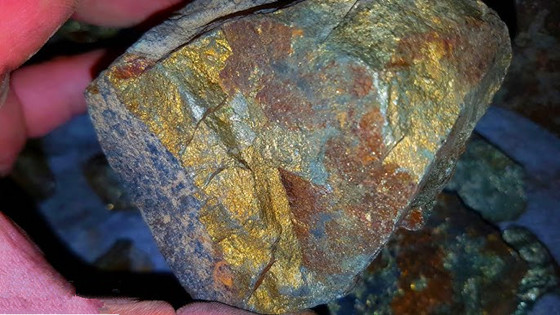
Match the ore to a process route
| Ore characteristic | Route to evaluate | Key test or constraint |
|---|---|---|
Accessible, free-milling gold; low sulfide content | Whole-ore cyanidation | Leach kinetics, grind size, reagent demand, and solution recovery |
Coarse, liberated gold | Gravity recovery, then treat the remaining stream | Gravity response by size and gold left in gravity tails |
Gold associated with floatable pyrite or arsenopyrite | Flotation, followed by concentrate sale or treatment | Gold recovery to concentrate, mass pull, concentrate quality, and leachability |
Gold in copper or lead-zinc sulfides | Selective flotation and treatment of the relevant concentrate | Gold distribution and value/penalty elements in each product |
High-arsenic or high-sulfur refractory ore | Flotation plus a tested pretreatment and leach route | Direct leach response, reagent consumption, and pretreatment requirements |
Carbonaceous, preg-robbing ore | Test carbon management, flotation, or an alternative leach route | Gold adsorption by carbon and solution losses |
Clay-rich ore or low-grade residue | Resolve slimes or residue properties before selecting leach method | Permeability, solid-liquid separation, and representative re-assay |
This map is a starting point for testwork. Mixed ores may need separate streams, and the best route can change across a deposit.
Flotation is worth testing when gold follows floatable sulfides, a large mass of barren gangue can be rejected, or valuable base metals report to the same concentrate. Its main benefit is concentration: a smaller stream may need downstream treatment. That benefit exists only when flotation captures the gold and the concentrate can be sold or processed.
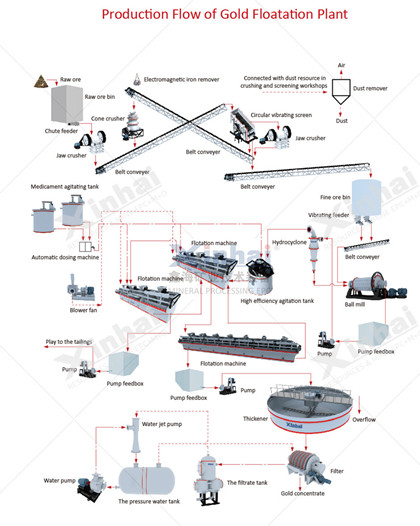
Evaluate the full balance: concentrate grade and mass, gold recovery to concentrate, gold lost to flotation tails, and the downstream concentrate route. Direct cyanidation may suit a leachable concentrate. Refractory concentrates may require a validated oxidation pretreatment before leaching. High arsenic, sulfur, or carbon can make direct treatment ineffective or increase reagent demand. Flotation by itself does not complete gold recovery.
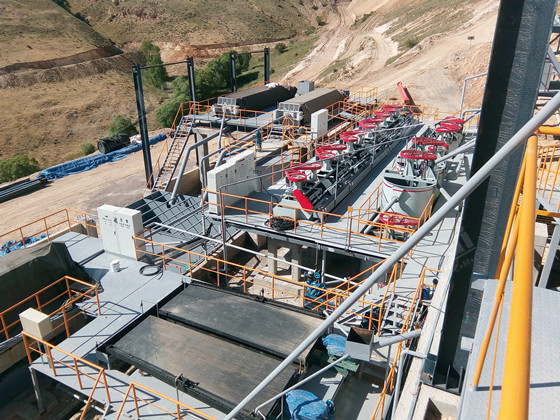
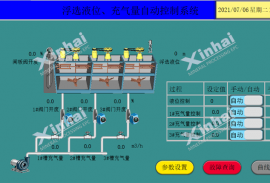
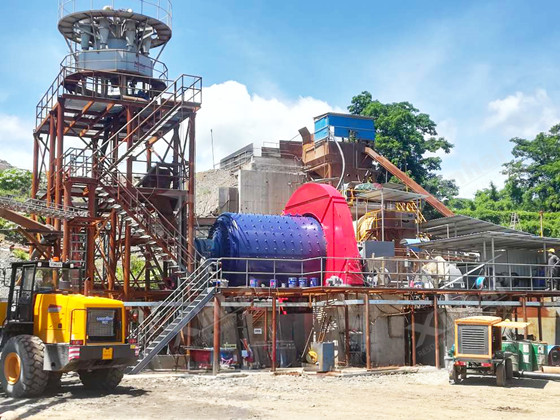
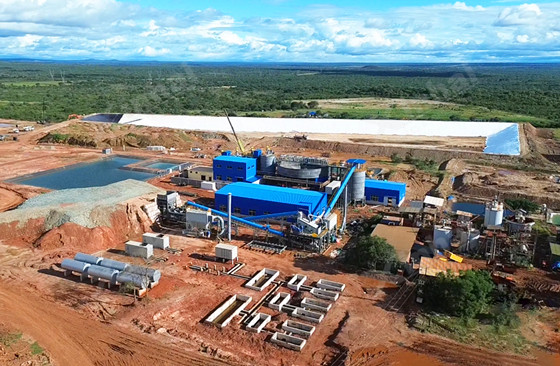
(West Asia 90,000 t/a Gold Flotation Plant)
Whole-ore cyanidation is a candidate when gold is sufficiently liberated and leachable, and the ore does not contain excessive cyanide-consuming minerals or preg-robbing carbon. The testwork should establish leach kinetics, reagent demand, solution recovery, and residue characteristics.
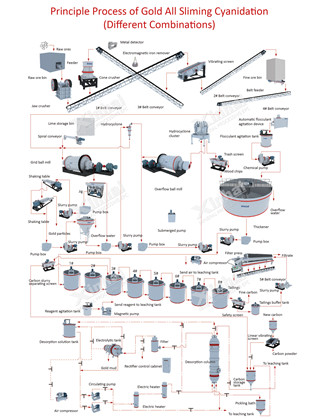
The route treats the entire ore feed, so the leach and solution-recovery system handles more tonnes than a route that first rejects flotation tailings. Compare whole-ore cyanidation with flotation plus concentrate treatment on the same samples and accounting basis. There is no universal head-grade cut-off: leachability, recovery, tonnage, reagent demand, and residue management all matter. Heap leaching is a separate option for suitable permeable ores, not a default answer to low grade.
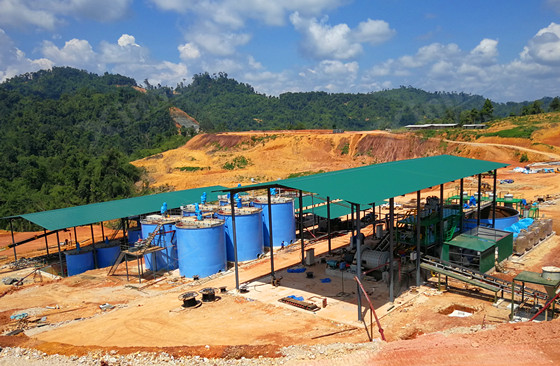
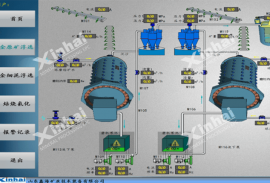
(Malaysia 500 t/d Gold CIL Processing Plant)
Combine the processes when a substantial share of the gold reports to floatable sulfides and the concentrate can be treated reliably. Flotation first reduces the mass sent to concentrate treatment; cyanidation or a tested pretreatment and leach then recovers gold from that concentrate. The flotation tailings remain a separate stream that must be assayed and managed.
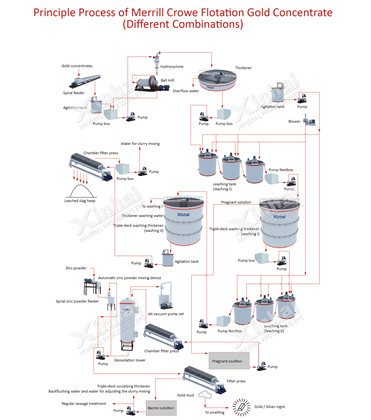
For mixed oxide-sulfide ores, separate treatment streams may be more suitable than routing all material through one circuit. A Fiji brownfield example in the project brief uses nominal capacities of 2,000 t/d for flotation, 300 t/d for fine-slime flotation, and 100 t/d for concentrate cyanidation with Merrill–Crowe. It illustrates selective, parallel treatment; those capacities are site-specific and are not a general design ratio.
Process comparison
| Flotation | Whole-ore cyanidation | Flotation + concentrate treatment | |
|---|---|---|---|
Primary function | Concentrates selected minerals | Dissolves accessible gold | Concentrates, then dissolves/treats |
Typical fit | Gold-bearing sulfides | Leachable, accessible gold | Sulfide-hosted gold with treatable concentrate |
Downstream feed | Concentrate and flotation tails | All ore | Concentrate; tails handled separately |
Main constraint | Liberation and concentrate destination | Leachability and reagent demand | Both flotation and concentrate response |
Common failure | Gold lost to tails or no concentrate route | Preg-robbing or excessive reagent consumption | Treatment costs outweigh mass reduction |
Why gravity separation may be used early
Coarse, liberated gold can circulate in a closed grinding circuit, become trapped in equipment, or dissolve slowly during cyanidation. When testwork confirms that this gold can be recovered, gravity separation can remove it before or during grinding. The remaining ore can then continue to flotation or leaching. Gravity separation works alongside these processes and does not necessarily replace them.
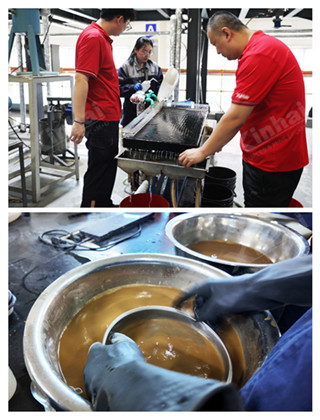
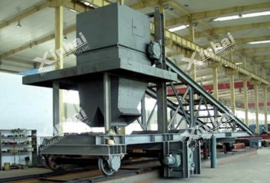
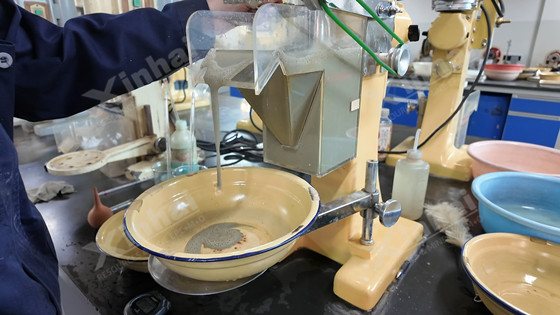
(Gravity Separation Test for Gold Ore)
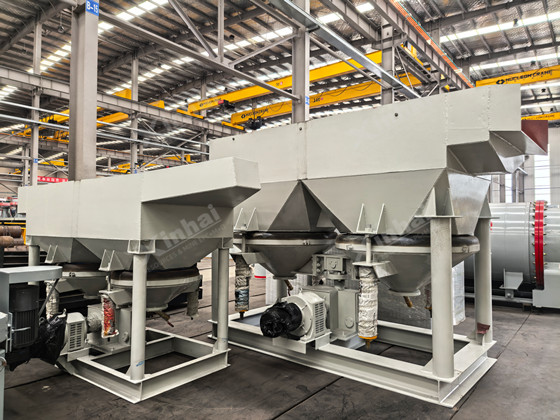
Jigs typically handle particles around 0.074–50 mm, shaking tables around 0.019–3 mm, and spiral chutes around 0.03–0.6 mm. These ranges are approximate. Performance depends on how well the gold is liberated, particle shape, feed preparation, and slime content.
Xinhai gold project examples
A 1,000 t/d gold plant in Zimbabwe treats free-milling ore through closed-circuit crushing and grinding, thickening, and a series leach circuit. The reported extraction is about 90% at a grind size of 90% passing 200 mesh. This is an example of whole-ore cyanidation for leachable ore.
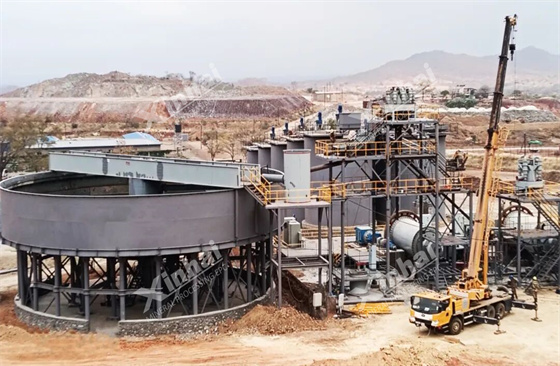
The Fiji project uses separate capacities for flotation, fine-slime flotation, and concentrate treatment to handle different ore streams at an existing operation.
A 3,000 t/d project in Guinea treats ore grading 1.2 g/t Au using gravity separation and cyanidation, with a reported overall recovery of about 93%. Recovery depends on the ore and operating conditions, so this figure should not be taken as a general guarantee.
The right gold-processing route follows the ore: flotation concentrates gold-bearing sulfides, whole-ore cyanidation dissolves accessible leachable gold, and some deposits require both stages. Coarse liberated gold may also warrant gravity recovery ahead of either route. Mineralogy and representative testwork establish which flowsheet can recover the gold while producing manageable concentrate and tailings streams.
Xinhai brings mineral-processing testwork, process design, equipment selection, and project implementation together to help evaluate these routes against your ore and operating conditions. Contact our team to discuss your sample characteristics and project goals and identify the next testwork step.
Neither is universally better. Flotation concentrates gold-bearing minerals; cyanidation dissolves accessible gold. Compare complete routes using the ore mineralogy, concentrate destination, leach response, and tailings balance.
Whole-ore cyanidation treats every tonne. If much of the gold occurs in a small sulfide fraction, flotation may reduce the mass requiring downstream treatment, provided the concentrate has a viable route.
Pretreatment may be needed when gold is locked in sulfides or arsenical minerals and direct leaching performs poorly. The method must be selected by mineralogy, testwork, and site requirements.
Usually it recovers a coarse liberated fraction that may dissolve slowly. The remaining fine or locked gold may still require flotation, cyanidation, or pretreatment.
Share your project details and our engineers will get back to you shortly.
 CHAT
 MESSAGE