
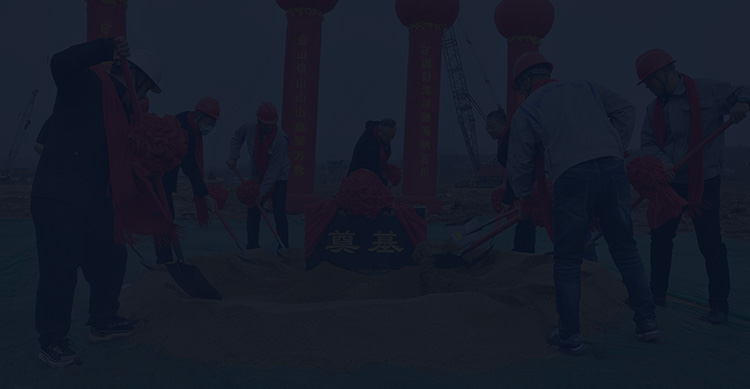
Gold mining development is a capital-intensive, technically complex long-cycle project. From discovering an economic gold orebody to achieving stable commercial production, the whole process usually takes 8–15 years, involving geology, mining engineering, legal compliance, financing, construction and operation. Many small and medium gold projects stall halfway due to disordered planning, underestimated risks or missing key links.
This 10-step standardized roadmap sorts out the full industrial chain workflow, targeting open-pit and underground gold mines of all scales, especially applicable to overseas gold clients across Africa, Central Asia, Southeast Asia and South America. Each step clarifies core tasks, deliverables and common pitfalls, helping investors and EPC contractors systematically push projects from ore evaluation to formal gold output.
Step 1: Orebody Definition & Resource Classification
The foundation of any mine is a viable orebody. This stage relies on surface geochemical survey, geophysical exploration and core drilling to collect rock samples for gold, silver and harmful element assays. Engineers draw 3D geological models to define ore boundaries, cut-off grades and rock conditions. Resources are classified per international JORC standards into Measured, Indicated and Inferred categories, then converted into Proven and Probable recoverable reserves after economic verification. Without accurate reserve data, all subsequent investment and design will lose basis. High arsenic, sulfur or carbonaceous ore must be flagged here, as they demand special refractory gold processing flows.
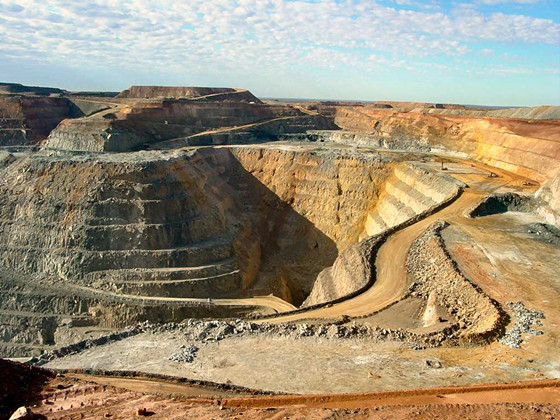
Step 2: Preliminary Economic Assessment (PEA)
PEA serves as a quick screening tool to eliminate uneconomic targets. Based on preliminary geological data, teams assume tentative daily processing capacity (100–5,000 tons per day), mining methods and alternative beneficiation technologies like heap leaching, flotation or CIL carbon-in-leach. Rough estimates of CAPEX and OPEX are calculated, paired with gold price sensitivity analysis to judge payback periods. Meanwhile, basic site conditions including water, power, transport and local community relations are reviewed. Projects with negative cash flow at reasonable gold prices will be abandoned early to avoid unnecessary investment.
Step 3: Pre-Feasibility Study (PFS)
For projects passing PEA, PFS locks core technical schemes. Mining teams compare open-pit stripping ratios or underground development layouts; mineral processing engineers select matched equipment such as ball mills, flotation cells, thickeners and filter presses according to ore properties. Tailings pond layout, power supply and camp infrastructure are preliminarily designed. A complete financial model covering NPV and IRR is built, while EIA drafting and mineral right sorting kick off simultaneously. This stage determines the general framework of the entire mine.
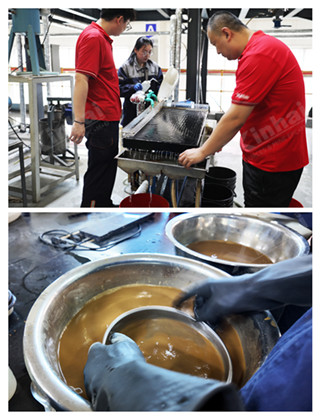
Step 4: Permitting & Stakeholder Coordination
Permitting is often the biggest bottleneck for overseas mines. Developers need mining licenses, water usage permits, tailings storage approvals and environmental certificates. A complete ESIA report covering ecology, water pollution and waste disposal must be submitted to local authorities. Continuous communication with governments, indigenous communities and land owners is required to sign land leases and compensation agreements. In African and Southeast Asian countries, permitting may take 2–4 years, and community conflicts can halt project progress indefinitely.
Step 5: Bankable Feasibility Study (BFS)
BFS is the authoritative document for financing. It provides detailed construction drawings, precise equipment lists and accurate cost budgets. Mining schedules, annual ore output and full beneficiation plant layout are finalized, with every piece of equipment including slurry pumps and leaching tanks specified. Third-party certified financial models include debt repayment schedules and closure provisions. Banks, mining funds and joint venture partners all rely on BFS to release investment funds.
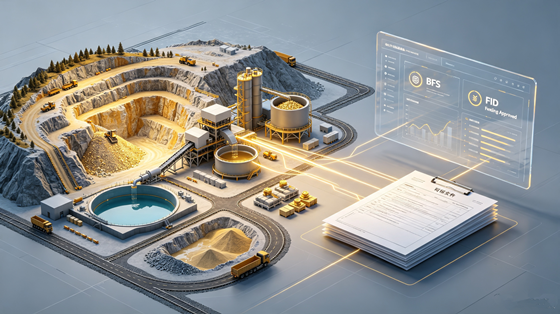
Step 6: Project Financing & Final Investment Decision
Based on approved BFS and full permits, developers launch financing through equity investment, project loans or gold streaming agreements. Cross-border projects additionally handle exchange risk and export credit insurance. After completing risk assessment, investors issue the Final Investment Decision (FID), confirming total construction funds and phased payment plans. Without secured capital, site construction cannot start.
Step 7: Site Early Works
Before major construction, early civil works are carried out: site leveling, temporary roads, power and water supply, worker camps and temporary warehouses. Auxiliary facilities like small explosive depots and lab buildings are built. Contractors for mining, processing plant and infrastructure are selected through tendering, laying groundwork for large-scale construction.
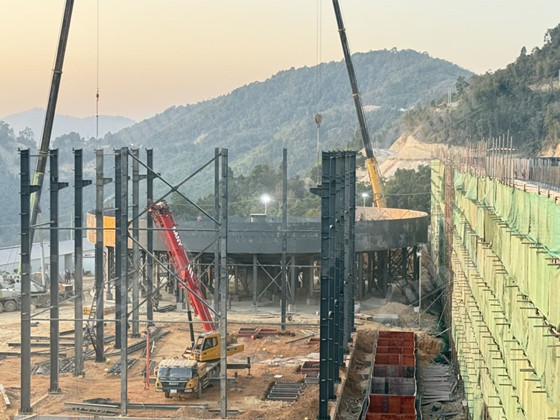
Step 8: Mine & Processing Plant Construction
This is the core implementation phase. Open-pit stripping or underground shaft and tunnel development proceeds in parallel with the construction of the full mineral processing line. Crushing, grinding, classification, leaching, electrowinning and tailings treatment equipment are delivered, installed and wired with automatic control systems. Spare parts, reagents and auxiliary rubber products such as hydrocyclones are stocked on-site. Strict schedule and quality control prevent construction delays.
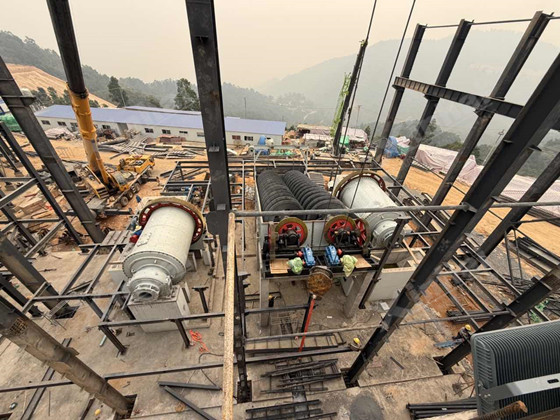
Step 9: Pre-Production Commissioning & Trial Run
Three phases of commissioning are implemented: no-load single machine test, water linkage test and full ore trial run. Technicians adjust grinding fineness, carbon adsorption efficiency and flotation reagent ratios to maximize gold recovery. All staff including miners, operators and maintenance workers receive systematic training. The milestone of first gold pour marks the completion of trial production.
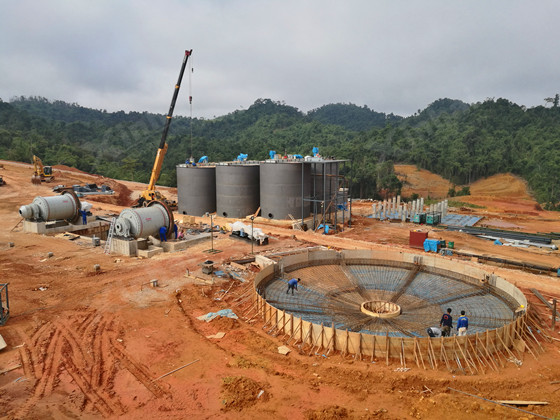
Step 10: Ramp-Up to Commercial Production
After successful trial runs, the mine gradually lifts throughput from 50% to full design capacity within several months. Operation SOPs are standardized to stabilize recovery and control all-in sustaining cost (AISC). Regular environmental monitoring and gold bullion sales contracts are established. Once long-term stable output and profitability are achieved, the mine officially enters formal commercial production.
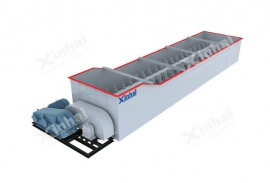
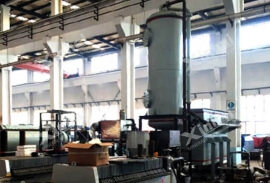
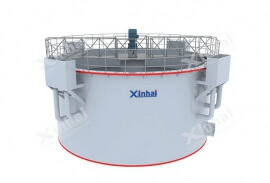
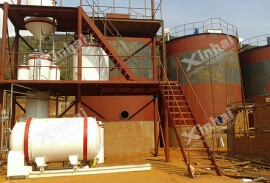
As a professional mine EPC+M+O service provider with nearly 30 years of global project experience, Xinhai Mining delivers full-cycle services covering every link in the 10-step gold mine development roadmap, backed by dozens of landmark gold projects across Africa, Central Asia, Southeast Asia and Latin America. At the early geological evaluation stage, Xinhai’s independent mineral testing lab completes customized ore analysis for oxidized, sulfide and refractory gold, providing reliable data for PFS and BFS drafting. Our self-developed complete sets of gold processing equipment—ball mills, flotation machines, CIL/CIP leaching systems, thickeners and filter presses—support projects ranging from small 100TPD heap leach plants to large 6,000TPD full-process concentrators. We offer integrated packages including process design, equipment manufacturing, cross-border logistics, overseas on-site installation, full commissioning and long-term operation training.
Xinhai’s proven overseas gold cases fully validate its end-to-end delivery capability matching the 10-stage development workflow:
Tanzania 1200t/d Gold EPC+M+O Project: For mixed oxide-sulfide gold ore, Xinhai finished ore testing, feasibility design, full equipment supply and on-site commissioning. The final gold leaching rate hit 93.75% for oxide ore and 91.58% for sulfide ore, helping the client smoothly ramp to full commercial output.
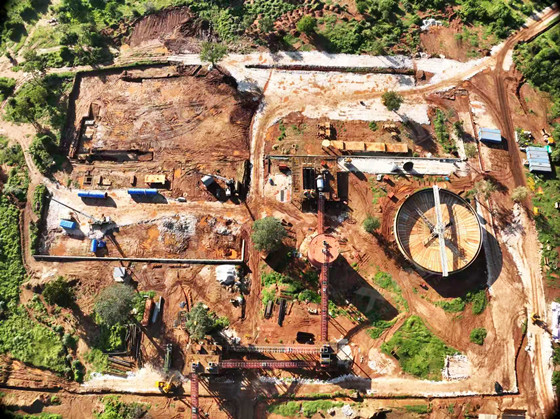
Mongolia Large-Scale Heap Leach Gold Mine: Tailored low-temperature anti-freezing process and equipment to adapt Mongolia’s frigid climate, delivering 1.2 million tons and 3 million t/a heap leach projects that stably operate year-round.
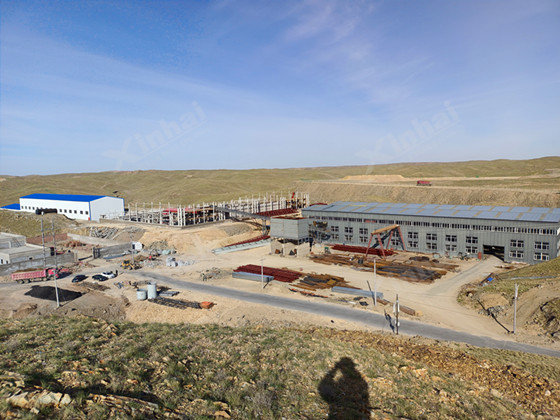
Guinea 6000t/d Gold Concentrator: A full EPC+M+O turnkey project covering mining, grinding, gravity separation and cyanidation, with automated tailings dewatering system to meet local strict environmental standards.
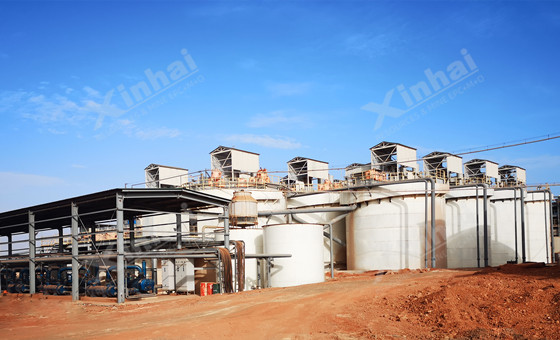
Malaysia 800t/d Gold Expansion Plant: Repeat cooperation client after our 500t/d plant achieved stable indexes; Xinhai optimized original process layout and supplied upgraded leaching equipment to hit new designed capacity.
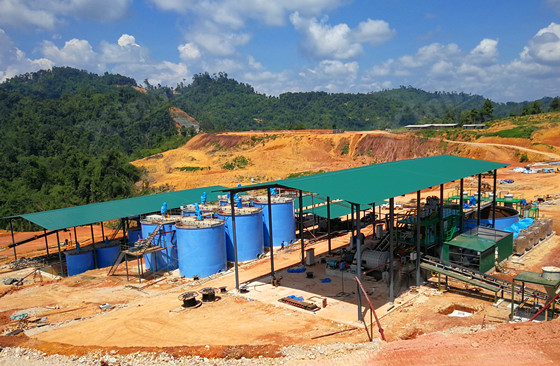
Zimbabwe 1000t/d Gold CIL Plant: Completed all construction and trial run work, reaching 90% gold recovery rate and meeting the client’s fast investment payback target.
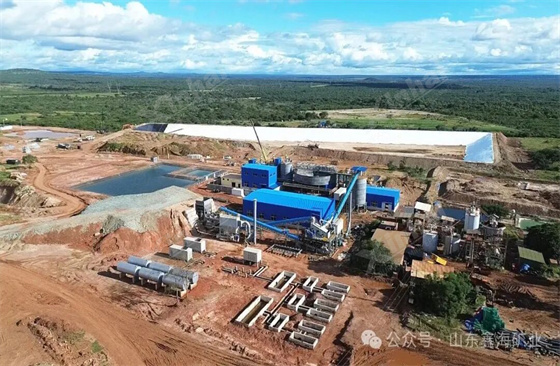
For cross-border clients lacking local engineering teams or document experience, Xinhai also compiles standardized technical materials for permit application and financing review, resolving technical and construction barriers throughout the whole mine development cycle.
Conclusion
This 10-step roadmap connects geological evaluation, capital arrangement and engineering operation into a closed loop. Every phase relies on the deliverables of the previous stage; skipping any step will trigger technical, financial or compliance risks. For global gold mine investors, following this standardized development logic can effectively reduce project uncertainties and shorten the cycle from ore discovery to profitable production. Supported by full-process EPC turnkey capacity and rich cross-continental gold mine track records, Xinhai Mining acts as a reliable technical partner for overseas clients to build efficient, low-consumption and eco-friendly gold concentrators and realize sustainable gold mining operations.
Share your project details and our engineers will get back to you shortly.
 CHAT
CHAT MESSAGE