
As the world's easily processed gold deposits become increasingly depleted, mining companies are turning their attention to arsenic-bearing gold ores and other refractory gold ores. Although these deposits often contain substantial gold resources, recovering that gold is rarely straightforward. Their complex mineralogy makes them some of the most difficult ores to treat economically.
The industry has long recognized this challenge:"The future of gold production increasingly depends on the successful treatment of refractory gold ores."
In the years ahead, mines that can efficiently recover gold locked within arsenic-bearing minerals will be in a much stronger competitive position.
The real challenge is not simply that arsenic is present—it's how the gold occurs within the ore.
In many arsenic-bearing deposits, gold is finely disseminated or locked inside arsenopyrite (FeAsS) and pyrite, either as microscopic inclusions or as part of a solid solution. Because the gold is encapsulated within these sulfide minerals, cyanide solution cannot easily reach it during leaching.
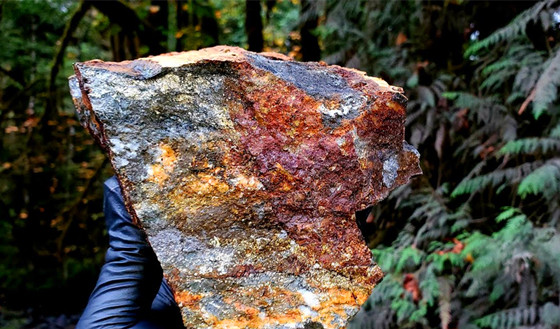
The result is a series of familiar processing problems:
Significantly lower cyanidation recovery
Reduced gold concentrate grades
Higher gold losses to tailings
Greater environmental pressure due to the presence of regulated arsenic
The impact extends well beyond gold recovery. Arsenic influences tailings disposal, wastewater treatment, environmental compliance, and even project permitting. To compensate, many operations grind finer, consume more reagents, or introduce additional pretreatment stages—all of which increase operating costs.
Ultimately, many projects find themselves caught between three competing pressures:
Recovery ↓ | Operating Cost ↑ | Environmental Risk ↑
Without a well-designed process, an arsenic-bearing gold project can quickly become uneconomic or difficult to permit.
Fortunately, several mature technologies are available for treating arsenic-bearing gold ores. The most suitable option depends on the ore's mineralogical characteristics rather than a single "best" process.
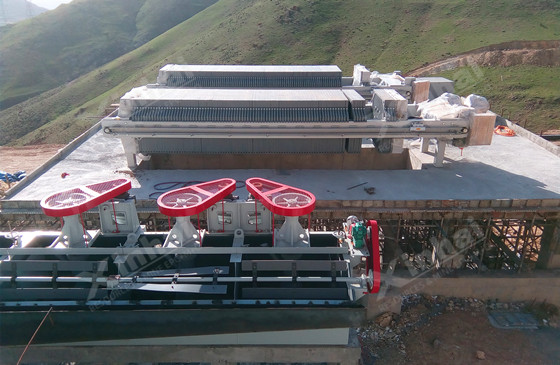
1. Selective Flotation
Selective flotation uses carefully optimized reagent schemes to separate arsenic- and sulfur-bearing minerals from valuable gold minerals. By selectively depressing arsenopyrite while recovering free gold and gold-associated sulfides, the process can produce higher-grade concentrates for downstream treatment.
2. Roasting–Cyanidation
Roasting breaks down sulfide minerals at high temperatures, releasing arsenic and sulfur while exposing the enclosed gold for cyanide leaching. Although this technology is well established and can achieve high recovery, it requires considerable energy input and effective emission control systems.
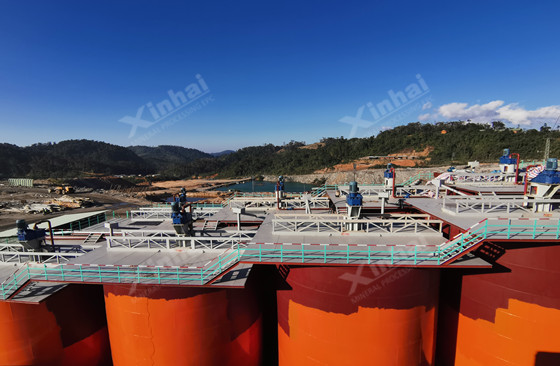
3. Bio-Oxidation
Bio-oxidation employs naturally occurring acidophilic bacteria to oxidize sulfide minerals under relatively mild operating conditions. Once the sulfide matrix is removed, the exposed gold can be recovered through conventional cyanidation. This approach is particularly suitable for large, low-grade refractory gold deposits and offers lower energy consumption than roasting.
4. Cyanide-Free Leaching
As environmental regulations become increasingly stringent, cyanide-free gold leaching technologies are attracting growing attention. Systems based on thiosulfate or thiocyanate can dissolve gold effectively while avoiding many of the environmental and safety concerns associated with cyanide.
Together, these technologies provide multiple pathways for improving both gold recovery and environmental performance.
One of the biggest misconceptions in refractory gold processing is that there is a universal process for arsenic-bearing gold ores.
In reality, two ores with similar arsenic grades may respond very differently during processing. Differences in arsenic mineralogy, gold occurrence (free gold, solid solution, or inclusions), particle size distribution, and gangue composition can all have a significant impact on plant performance.
As a result, a flowsheet that performs well at one mine may deliver poor recovery, high reagent consumption, or unstable operation at another.
That is why successful projects begin with metallurgical testing, not process selection.
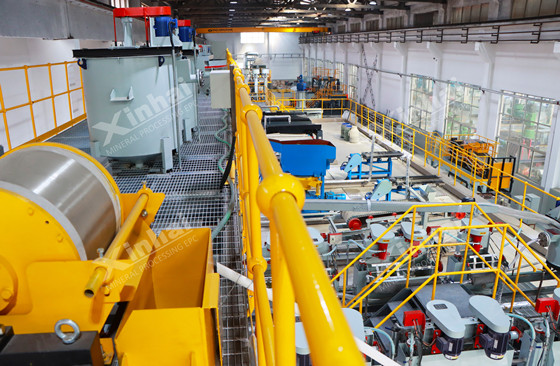
A comprehensive testing program typically includes:
Detailed mineralogical characterization
Batch flotation and leaching tests
Reagent optimization and condition testing
Locked-cycle tests and pilot-scale continuous testing
Only after understanding how the ore behaves can engineers develop a process that is both technically effective and economically viable. For many projects, this step ultimately determines whether the operation succeeds or struggles.
With more than three decades of experience in gold ore processing, Xinhai Mining Group has delivered projects in over 100 countries and regions worldwide. For arsenic-bearing and other refractory gold ores, we provide an integrated solution covering every stage of project development.
Ore Characterization → Metallurgical Testing → Process Development → Equipment Manufacturing → EPC/EPCM → Operation & Maintenance Support
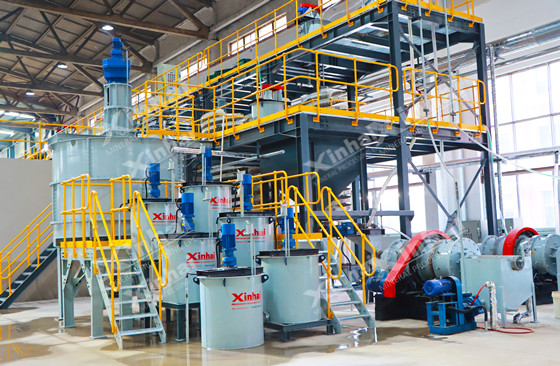
From the first ore sample to stable commercial production, our technical team works closely with clients throughout the project lifecycle. The objective is not only to maximize gold recovery, but also to improve operational stability, control operating costs, and meet increasingly demanding environmental requirements.
If your operation is processing arsenic-bearing gold ore or facing challenges with refractory gold recovery, share your ore characteristics and current processing issues with us. Xinhai's engineers can provide a preliminary technical evaluation and recommend a solution tailored to your specific deposit.
Share your project details and our engineers will get back to you shortly.
 CHAT
CHAT MESSAGE