
With global gold prices remaining at elevated levels, maximizing ore value while minimizing development risk has become a top priority for mine owners and investors. In modern gold processing, heap leaching and CIL/CIP (carbon-in-pulp) represent two of the most widely adopted gold extraction methods.
However, these processing routes differ significantly in terms of capital intensity, gold recovery performance, and ore suitability. Selecting the right gold processing method can transform low-grade resources into economically viable assets, while an inappropriate choice may lead to excessive capital expenditure and reduced project returns.
This article provides a practical, engineering-oriented comparison of these technologies to support informed decision-making in gold processing plant design and optimization.
Before comparing their economic viability, it is essential to understand the metallurgical principles. Fundamentally, the distinction lies in the mechanism of gold dissolution and recovery.
1. Heap Leaching
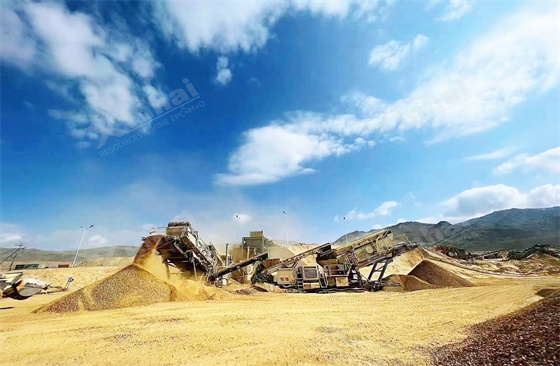
Heap leaching is a cost-effective hydrometallurgical method designed for processing low-grade gold ores. The process involves stacking crushed ore on an engineered impermeable liner and irrigating it with a dilute sodium cyanide solution via a drip or sprinkler system. As the solution percolates through the heap, it dissolves the gold. The resulting pregnant leach solution (PLS) is collected at the base and processed through activated carbon columns or zinc precipitation (Merrill-Crowe process) to recover the precious metal.
Key Features: Simple flowsheet, low capital intensity, ideal for bulk mining of low-grade deposits.
2. CIL/CIP Process
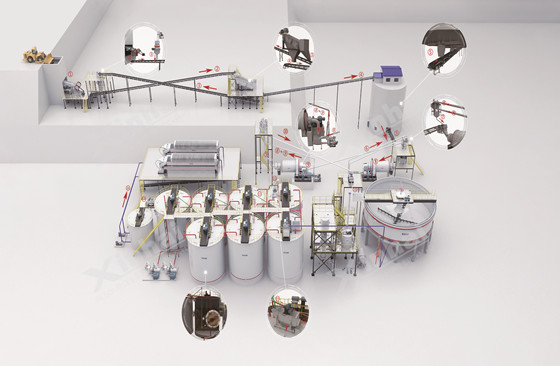
CIL (Carbon-in-Leach) and CIP (Carbon-in-Pulp) are conventional gold cyanidation processes based on all-sliming agitation leaching. The ore is ground into a slurry and subjected to cyanide leaching in mechanically agitated tanks, where dissolved gold is adsorbed onto activated carbon.
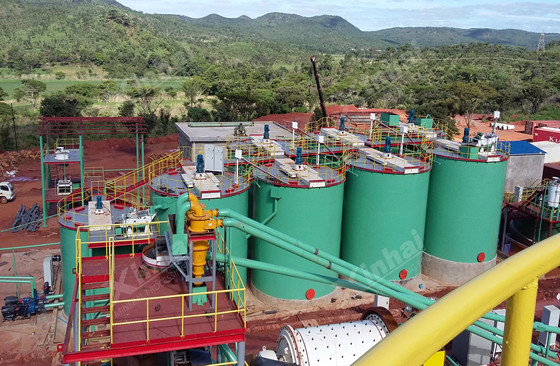
CIL (Carbon-in-Leach): Leaching and adsorption occur simultaneously within the same tank circuit, resulting in a more compact process layout and improved kinetics.
CIP (Carbon-in-Pulp): Leaching and adsorption are conducted in separate stages, allowing greater flexibility in adsorption control and circuit configuration.
Key Features: High gold recovery rate, high degree of mechanization, suitable for medium- to high-grade gold ores and more complex mineralogy.
To assist in the due diligence process, we have compiled a detailed comparison across five critical dimensions:
| Comparison Dimension | Heap Leaching Process | CIL/CIP Process |
| Suitable Ore Type | Porous, permeable oxide ores; low clay content. | Sulfide ores, high clay content, finely disseminated gold; wide adaptability. |
| Suitable Gold Grade | Low-grade ore (typically < 1-2 g/t), can treat waste rock as low as 0.5 g/t. | Medium to high-grade ore (typically > 3 g/t); economies of scale improve with grade. |
| Gold Recovery Rate | Moderate, typically 50% - 75%; higher residual gold in tailings. | Very high, consistently >90% - 95%, maximizing resource utilization. |
| CAPEX | Low. Minimal steel structures; relies on earthworks and liners. Short construction lead time. | High. Requires substantial grinding circuits, leaching tanks, and elution systems. |
| Environmental & Compliance | Risk of liner leakage. Requires rigorous groundwater monitoring and containment. | Controlled containment. Compatible with tailings dry stacking; easier EIA approval. |
1. Ore Characteristics: The “Gateway” to Process Selection
Metallurgical characteristics dictate process viability. If your ore grade is marginal (e.g., 0.5-1.5 g/t), the operational cost (OPEX) of a CIL plant—specifically grinding and reagent consumption—may exceed the value of the recovered gold. In this scenario, heap leaching is often the only economically viable option. Conversely, for ores with high clay content or fines that impede percolation, CIL/CIP is mandatory to facilitate forced aeration and agitation.

2. Recovery Rate vs. Profit: Maximizing Value vs. Minimizing Cost
While CIL/CIP offers superior metallurgical recovery (>90%), the capital outlay is substantial. Heap leaching, though lower in recovery (50-75%), offers a distinct advantage in“Cost per Ounce” for specific deposits.

Decision Point: If capital is constrained and the ore grade is low, the lower recovery of heap leaching is often offset by its significantly lower CAPEX and faster payback period. For high-grade assets where maximizing total ounces recovered is paramount, CIL/CIP is the superior choice.
3. Environment & Compliance: Key to Sustainable Development
With global environmental regulations tightening—particularly regarding cyanide management—“Green Mining” is no longer optional; it is an operational license.
Heap Leaching Risks: The primary environmental liability is the integrity of the heap liner. A failure can lead to soil and groundwater contamination. Projects must utilize high-quality geomembranes and comprehensive monitoring networks.
CIL/CIP Advantages: These closed-tank systems offer superior containment. Modern CIL plants integrate tailings dry stacking technology (filter presses), which detoxifies tailings and recycles process water. This significantly reduces the environmental footprint and facilitates compliance with the International Cyanide Management Code.
4. Investment and Risk Control
The CAPEX for a heap leach operation is typically a fraction (often 1/5th) of a CIL plant of similar throughput. For junior mining companies or exploration projects with limited funding, heap leaching provides a low-risk entry point with a rapid Return on Investment (ROI). CIL/CIP represents a “heavy asset” strategy, suited for established producers seeking long-term stability and maximum resource extraction.
Selecting the optimal gold extraction solution requires a holistic evaluation of technical and economic factors:
Ore type (oxide, sulfide, refractory)
Gold grade and recovery targets
Project scale and production capacity
Available budget and financing capability
Environmental and regulatory requirements
General Selection Guidelines
Choose Heap Leaching for low-grade, large-scale, cost-driven operations
Choose CIL (Carbon-in-Leach) for high recovery and efficient processing
Choose CIP (Carbon-in-Pulp) where enhanced process control is required
Ultimately, the most effective approach is a customized gold processing flowsheet aligned with the specific characteristics of the ore body and the overall project objectives.
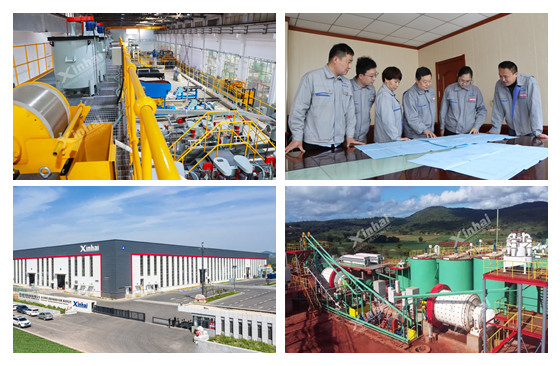
There is no universal “best” process, only the most suitable one. Many project failures stem not from a lack of resources, but from a misalignment between process and ore body. With over 20 years of global experience, Xinhai Mining adheres to the philosophy of “One Ore, One Process.”
Why Partner with Xinhai?
Data-Driven Decisions: We prioritize mineral processing testwork (lab and pilot scale). Our labs determine the precise leaching kinetics and recovery rates, allowing us to calculate the cut-off grade accurately. We replace guesswork with metallurgical data.
Green Technology Integration: We future-proof your operation. Our CIL/CIP designs incorporate efficient deep cone thickeners and filter presses for tailings dry stacking, ensuring compliance with international environmental standards. For heap leaching, we engineer robust anti-seepage systems to mitigate environmental risk.
EPC+M+O Service Model: From beneficiation testing and mine design to equipment manufacturing, installation, commissioning, and operation management, Xinhai offers a complete EPC+M+O solution for gold processing plants.
Ready to optimize your gold recovery strategy? Contact the Xinhai Mining technical team today. We provide preliminary technical consultations and comprehensive ore testing plans to ensure your mining project starts on a solid foundation.
Share your project details and our engineers will get back to you shortly.
 CHAT
CHAT MESSAGE