
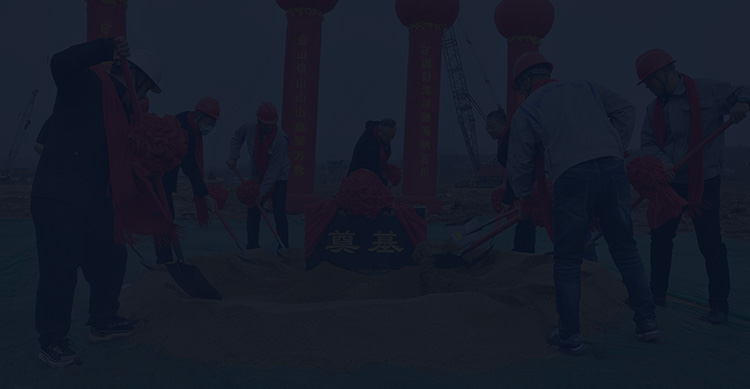
As global gold prices remain strong, time-to-production has never been more critical. In southern Africa, Xinhai Mining’s 500 t/d gold tailings EPC project in Zimbabwe is moving ahead at full speed.
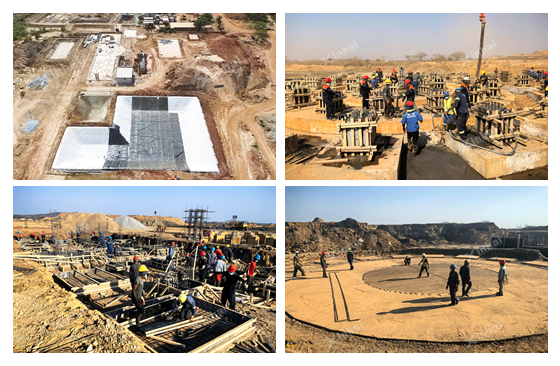
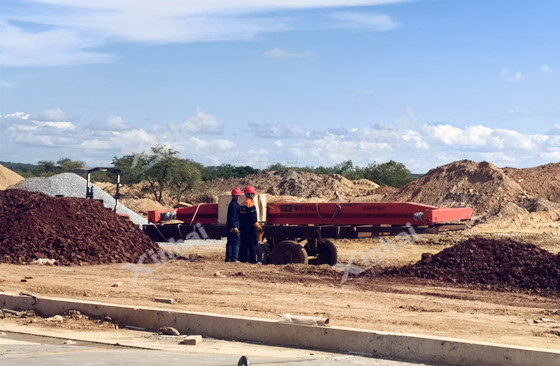
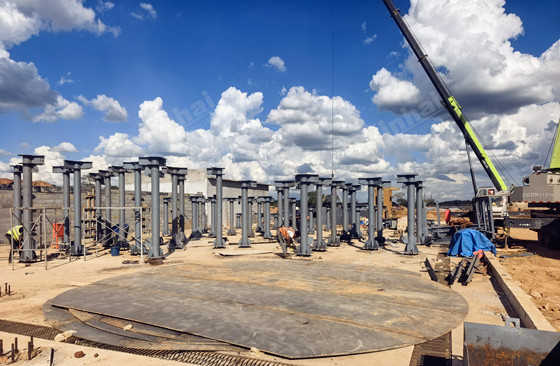
From the moment the civil works team mobilized on site, it took just 30 days to complete the foundations for all major process areas—far ahead of the typical three to six months required for comparable local projects. The scope included foundations for the ball mill, hydrocyclone cluster, thickener, leaching tanks, fine ore bin, and the crushing and screening system, enabling the project to transition rapidly into the equipment installation phase.
Behind this milestone lies a story of tight coordination, disciplined cost control, and on-the-ground innovation.
According to Mr. Chen, civil construction engineering Manager for the project, the team delivered structural foundations for all key process units within one month of site entry.
“Within 30 days, we completed the civil foundations across the grinding, classification, thickening, leaching, ore storage, and crushing circuits. That allowed us to hand over to the mechanical installation team on schedule and secure a critical step toward commissioning.”
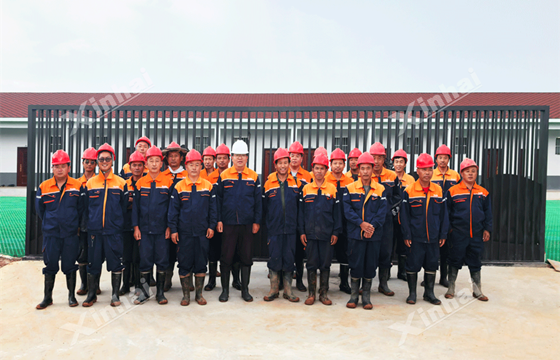
The accelerated schedule has effectively advanced the overall project timeline by an estimated two to three months, creating a strategic advantage in a favorable gold market environment.
Executing fast-track construction in Zimbabwe came with real constraints.
Material supply pressures were among the first hurdles. Basic construction materials such as cement and clay bricks were both expensive and subject to supply volatility.
Infrastructure instability, particularly intermittent power supply, also posed risks to continuous construction operations.
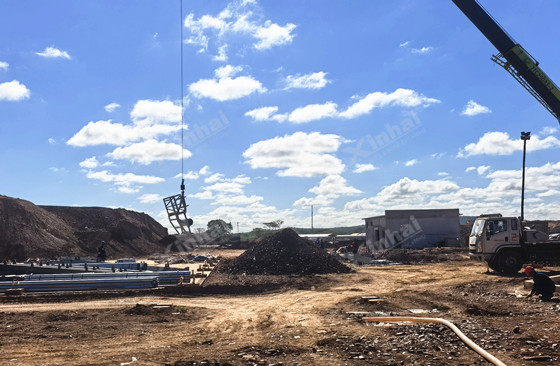
Rather than allowing these factors to dictate progress, the project team adopted proactive mitigation measures:
Deploying on-site diesel generator sets to ensure uninterrupted power for critical operations
Adjusting work schedules around peak outage periods
Strengthening early-stage material planning and inventory control
For key concrete pours that could not be interrupted, the team implemented rotating shift systems, with crews working extended hours to maintain continuous casting operations.
“Speed was essential,” Mr. Chen noted. “But maintaining structural integrity and quality was non-negotiable. Every accelerated activity was executed under strict supervision.”
Despite the compressed timeline, the project maintained a clear principle: progress and cost control must advance together.
To reduce dependency on high-cost local supply chains, the team introduced several practical innovations:
1. Local Production Strategy Cuts Brick Costs by 50%
Facing high prices for locally sourced clay bricks, Xinhai imported a brick-making machine from China and began producing cement bricks directly on site using locally available materials.
Brick cost reduced by approximately 50% per unit
Estimated savings: USD 30,000
This approach improved both cost efficiency and supply reliability.
2. In-House Concrete Operations Deliver Six-Figure Savings
Instead of purchasing expensive ready-mix concrete, the team established on-site mixing operations.
Savings of approximately USD 60 per cubic meter
Total projected savings: USD 180,000
The move ensured quality control while significantly lowering expenditure.
3. Modular, Low-Carbon Construction Enhances Speed and Efficiency
Drawing from prior African project experience, the team adopted modular and prefabricated solutions wherever feasible:
Locking sandbag blast walls replacing certain reinforced concrete retaining walls
Prefabricated resin drainage channels instead of traditional brick-built drains
Light steel prefabricated structures for offices and accommodation areas
These measures reduced wet works, shortened construction time, minimized waste generation, and supported lower-carbon project delivery.
The underlying strategy: local transformation, controlled execution, and optimized workflows—reducing reliance on external supply chains and increasing operational autonomy.
With international gold prices at elevated levels, early production carries significant commercial value. By transforming a bare site into a fully structured processing plant foundation in just 30 days, the project team has positioned the client to capture favorable market conditions sooner.
“This milestone is more than a construction achievement,” Mr. Chen emphasized. “It demonstrates speed, efficiency, and resilience under overseas operating conditions. It also strengthens our confidence in delivering future projects in similar environments.”
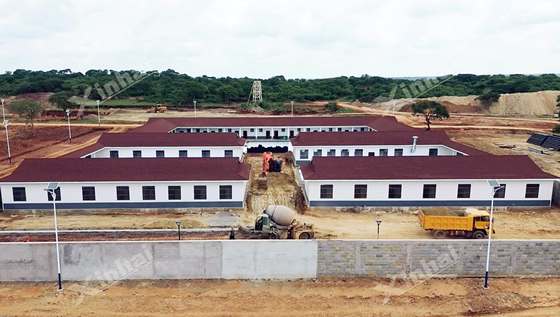
Civil foundation works have now been fully completed, and the site has transitioned into intensive equipment installation. The project team continues to push forward according to the established commissioning schedule.
From greenfield ground to structured plant infrastructure in one month, the Zimbabwe gold project stands as another benchmark of Xinhai’s execution capability in overseas EPC+M+O delivery—where schedule discipline, cost management, and adaptive engineering converge to turn ambitious timelines into measurable results.
Share your project details and our engineers will get back to you shortly.
 CHAT
CHAT MESSAGE