
In the rapidly evolving landscape of global renewable energy, advanced manufacturing, and power infrastructure, copper and cobalt stand out as essential base metals and strategic minerals, with demand surging relentlessly. Recent spikes in copper prices have only amplified the economic significance of these resources.
Conventional mixed flotation processes often result in mutual contamination between copper and cobalt, leading to low-grade concentrates and excessive impurity entrainment.
To address these challenges, this article outlines a highly selective preferential flotation testing protocol designed to achieve efficient and sequential separation of copper from cobalt sulfides, while ensuring high recovery rates and optimal resource utilization.
The primary hurdle in beneficiating copper-cobalt ores lies in the intimate intergrowth of sulfide minerals, their similar floatability, and poor selectivity. To overcome this, Xinhai Mine Research Institute adheres to the technical principle of "selective depression and sequential separation" in process design:
Preferential Flotation Approach: Prioritize recovery of high-value copper minerals, followed by stepwise extraction of cobalt minerals.
Selective Depression at High pH: Effectively suppresses iron sulfides and interfering gangue in the initial stages to ensure targeted copper flotation.
Staged Activation and Recovery: Regulate conditions in phases to recover different target minerals within their optimal windows.
Minimized Entrainment and Cross-Contamination: Control mineral surface properties to enhance concentrate grade and recovery stability.
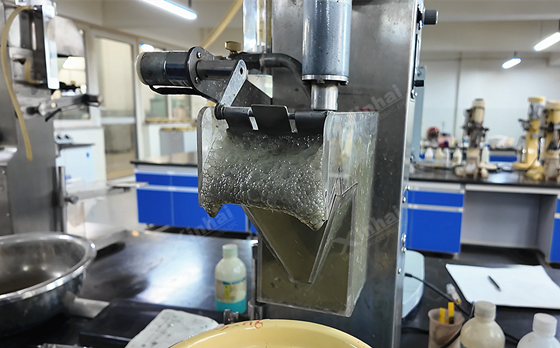
This methodology diverges from traditional bulk flotation strategies, emphasizing selective separation and process controllability. It is well-suited for high-grade copper-cobalt ores requiring efficient upgrading, as well as low-grade, complex refractory ores demanding comprehensive recovery.
To guarantee reliable, reproducible results with strong practical guidance, Xinhai has developed a standardized full-flow testing framework. The main stages are as follows:
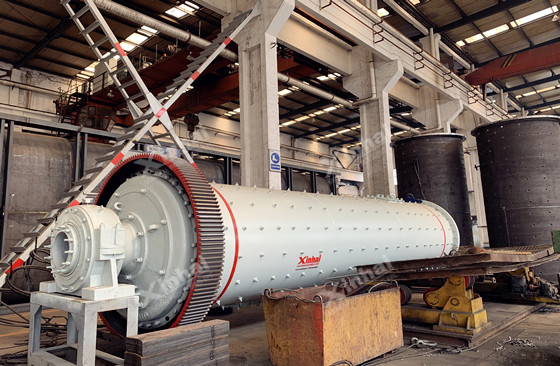
1. Grinding and Slurry Conditioning Pretreatment
The raw ore undergoes grinding to achieve sufficient liberation of target minerals.
During grinding, environmental adjustments and initial depression are integrated to optimize slurry properties, mitigate interference from readily floatable gangue, and lay a solid foundation for subsequent separation.
2. Preferential Copper Mineral Flotation
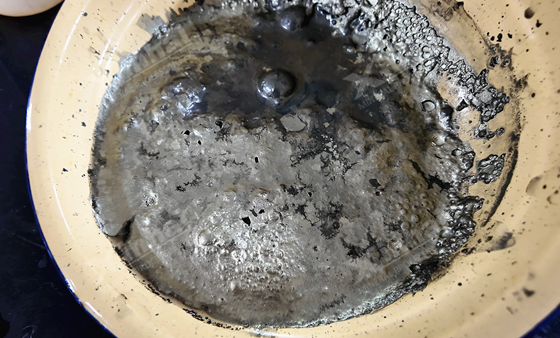
Rougher Flotation: Employ highly selective collectors under depressive conditions for targeted capture and enrichment of copper minerals.
Scavenger Flotation: Subject rougher tailings to multiple scavenging stages to maximize recovery of residual copper and minimize metal losses.
3. Cobalt-Sulfide Mineral Activation and Separation
Activation: Recondition the slurry from copper flotation tailings to restore the floatability of cobalt sulfides through activation processes.
Separation: Use tailored collectors for roughing and scavenging of activated cobalt sulfides, yielding a cobalt-sulfide rough concentrate.
4. Concentrate Upgrading
Perform multi-stage cleaning on both the copper rough concentrate and cobalt-sulfide rough concentrate.
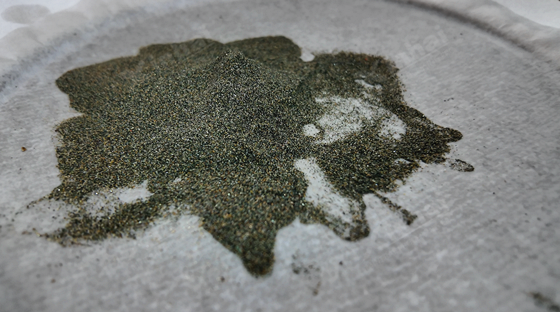
Through fine-tuned environmental controls and moderate agitation, further remove intergrown particles and impurities, ultimately producing high-grade copper and cobalt concentrates that meet quality specifications.
Drawing on this process framework, preferential flotation testing for copper-cobalt ores demonstrates clear benefits in real-world applications:
★ Superior Selectivity and Product Quality: Precise depression and activation controls effectively reduce entrainment of iron sulfides and gangue, resulting in high-grade copper and cobalt concentrates with minimal impurities and strong market competitiveness.
★ High Metal Recovery and Resource Efficiency: The closed-loop "copper-first, cobalt-follows" sequence, combined with multi-stage scavenging and cleaning, maximizes copper and cobalt extraction, enhancing overall resource value.
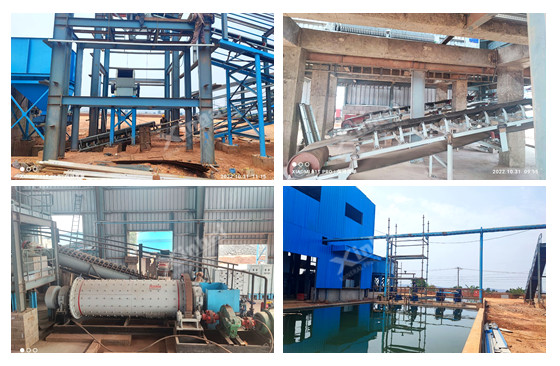
★ Stable and Controllable Process with Robust Data Insights: Standardized operations and dynamic parameter adjustments ensure process reliability and result repeatability, providing accurate, dependable data for industrial scale-up and optimization.
★ Broad Ore Adaptability: By fine-tuning reagent regimes and process parameters, this approach flexibly handles copper-cobalt sulfide ores from diverse origins, grades, and dissemination characteristics, offering customized solutions.
Conducting copper ore beneficiation tests allows you to assess technical feasibility, economic boundaries, and risk profiles before project launch, avoiding blind investments and costly trial-and-error.
Beyond its proven preferential flotation protocol for copper-cobalt ores, Xinhai Mine Research Institute offers standardized, specialized, and one-stop beneficiation services. These include ore amenability evaluations, process optimizations, separation scheme designs, and performance enhancement validations. If you have requirements, feel free to contact us anytime.
Share your project details and our engineers will get back to you shortly.
 CHAT
CHAT MESSAGE