
Driven by artificial intelligence, data centers, electric vehicles, and increased defense spending, global copper demand is entering a new growth phase. According to S&P Global, copper consumption is expected to rise by nearly 50% by 2040, reaching approximately 42 million tonnes per year. Without a significant expansion in mining and recycling capacity, the annual supply gap could reach 10 million tonnes.
This shift means copper is no longer just an industrial metal—it has evolved into a strategic material essential for global electrification, digital infrastructure, and national security. However, the primary challenge for the industry is not a lack of geological resources, but the technical ability to economically recover copper from increasingly complex ores.
While global copper reserves remain substantial, newly discovered deposits are increasingly difficult to process. Modern mining projects frequently encounter the following hurdles:
Declining Ore Grades: Massive volumes of low-grade ore must be processed to yield the same amount of concentrate as in the past.
Complex Mineralogy: The prevalence of mixed sulfide-oxide ores and high impurity levels (such as arsenic and antimony) often renders traditional flotation methods ineffective.
Environmental Constraints: Strict mandates require reduced energy consumption and zero-discharge tailings management.
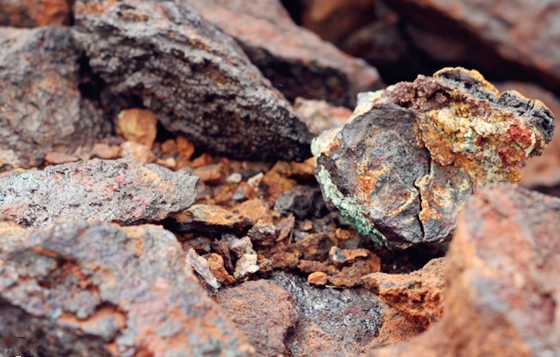
These factors significantly increase ore complexity, making it difficult for a standard copper flotation process to achieve high recovery rates and premium concentrate grades simultaneously. Consequently, the industry is transitioning from an "exploration-led" era to one defined by "processing and beneficiation efficiency." In this landscape, the competitive edge belongs to those who can efficiently extract copper from complex, low-grade sources.
Against the backdrop of sustained copper demand growth, the economic model for mineral processing plants is undergoing a fundamental change.
For a medium to large-scale copper project, a mere 1% increase in copper recovery can translate to tens of millions of dollars in additional revenue over the mine's lifecycle.
This means that the following factors have become critical to a project's success:
Compatibility between copper flotation and leaching processes
Concentrate grade and impurity control.
Metal losses in tailings
Operational stability of the entire system
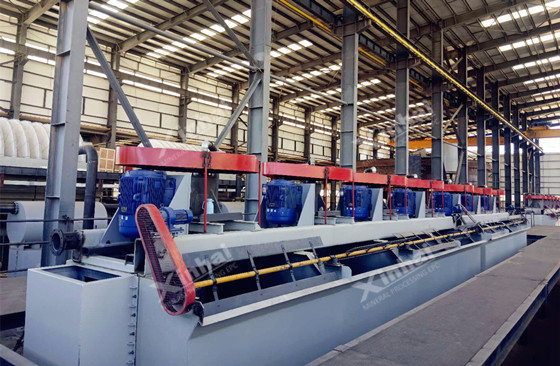
For oxide, mixed, and refractory sulfide copper ores, more projects are integrating copper leaching with traditional flotation to create customized, hybrid flowsheets that ensure economic viability.
In the current resource landscape, there is no "universal formula." Because the mineral composition and liberation characteristics of every copper deposit are unique, professional testing and flowsheet validation are mandatory to determine the optimal solution.
This is why laboratory and pilot-scale testing have become the critical first steps for any successful copper project. Without robust test data, subsequent process design and investment decisions lack a reliable foundation.
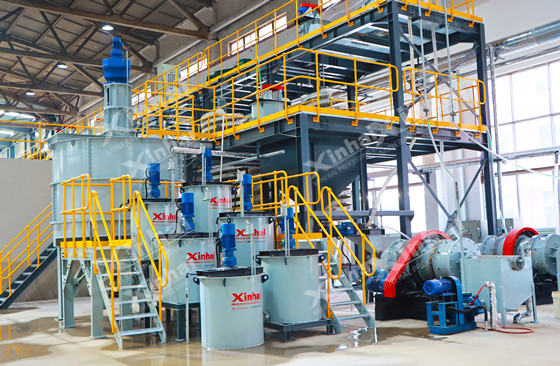
To navigate these complexities, mine operators require the support of technical service providers with comprehensive experimental and engineering capabilities. Xinhai Mining operates a CNAS-accredited laboratory and a pilot testing center, providing full-process metallurgical testing for over 70 types of ores—ranging from initial lab-scale tests to semi-industrial pilot validations.
Bridging the future copper supply gap depends not only on discovering new deposits but also on:
Customized mine and concentrator design (copper processing flowsheet)
Scientific selection and manufacturing of beneficiation and processing equipment
Project delivery (EPC or EPC+M+O) and on-site commissioning
Production startup and ramp-up to design capacity
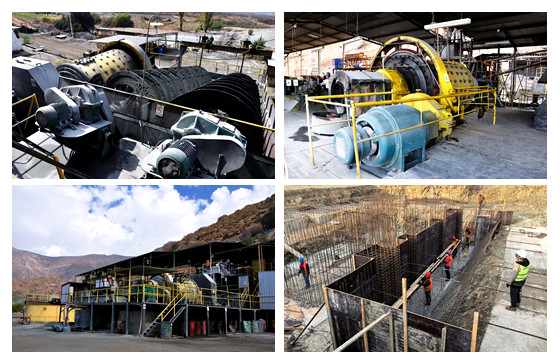
These elements are intricately linked and indispensable. Possessing this complete, integrated capability is precisely what the global mining industry increasingly values.
When selecting partners, most international mining clients look not only for advanced solutions but also for a partner's ability to deliver integrated services spanning testing, design, equipment, on-site execution, and operational management.
With extensive experience, Xinhai has provided technology and services for over 2,000 mines worldwide, including more than 500 EPC+M+O mining projects. Our products are exported to over 90 countries and regions.
To see how EPC+M+O services bridge the supply gap, consider Xinhai’s 1,500 t/d copper beneficiation plant in Pakistan. This project perfectly illustrates how technical expertise transforms a complex mineral deposit into a high-value asset.
The ore was a complex sulfide-oxide mixed copper ore with an average grade of only 0.8%. The minerals were unevenly distributed and contained significant slime, making it extremely difficult to achieve high recovery rates through standard flotation methods.
After rigorous mineral processing tests, Xinhai’s engineers designed a custom Three-Stage Crushing, One-Stage Grinding, and Mixed Flotation process.
Process Innovation: We implemented specialized "Pre-separation and Desliming" technology to handle high slime content, ensuring the stability of the subsequent flotation circuit.
Equipment Optimization: High-efficiency KYF/XCF flotation cells were utilized to process large volumes of low-grade material while minimizing energy consumption.
Full Lifecycle Management: From initial design to onsite installation and operational training, Xinhai China ensured the plant reached its target capacity in record time.
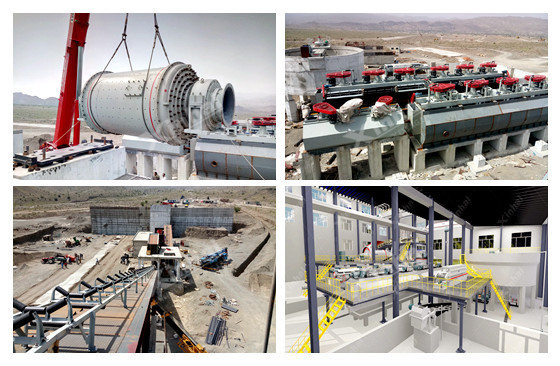
The plant successfully achieved a 90% recovery rate, producing high-quality copper concentrate that exceeded the client's expectations. This project stands as a benchmark for maintaining high profitability in low-grade copper mines.
The S&P Global report highlights that without expanded mining and recycling, the global economy faces a supply crisis. For mining operators, this crisis is an opportunity.
By partnering with a provider that offers integrated mining solutions (EPC+M+O), you ensure that your plant is not just a collection of machines but a finely tuned system engineered to handle the volatility and complexity of 21st-century copper deposits.
Are you ready to optimize your copper recovery for the AI era?
Share your project details and our engineers will get back to you shortly.
 CHAT
CHAT MESSAGE