
Gold tailings represent the solid waste left after primary treatment in a gold process plant—still containing recoverable gold but historically considered uneconomic.
With gold prices remaining elevated, advances in mineral processing technology, and increasingly stringent environmental regulations, gold tailings reprocessing is now a key driver of sustainable and high-quality mining development.
This article explains how to recover gold from tailings, reviews proven gold tailings processing methods, and highlights practical case studies that demonstrate how tailings are being transformed from waste into valuable secondary resources.
In real-world mining and processing operations, tailings become candidates for secondary gold recovery when their gold grade supports economic viability and suitable processes can achieve high liberation and extraction. Drawing from extensive industry experience, recoverable gold tailings fall into two primary classification systems, each with distinct origins and processing characteristics.
1. Classification by Original Processing Method
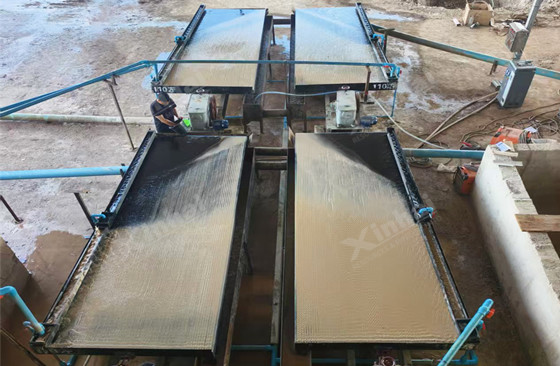
Gravity Tailings
Origin: Residual material from gravity separation equipment (shaking tables, spiral concentrators, centrifugal concentrators) in the primary flowsheet, where coarse gold was targeted but not fully recovered.
Key Features: Gold occurs mainly as relatively coarse, free-milling particles or associated with heavy minerals. Liberation is straightforward—secondary gravity methods or regrinding deliver efficient recovery.
Flotation Tailings
Origin: Residue from flotation circuits that targeted gold minerals and associated sulfides (e.g., pyrite, chalcopyrite, or tungsten minerals), often leaving behind fine gold fractions.
Key Features: These tailings respond well to combined flotation-gravity flowsheets or preconcentration followed by targeted extraction, significantly boosting overall resource recovery.
Cyanide Tailings
Origin: Material remaining after cyanidation processes (heap leaching, agitated tank leaching, Merrill-Crowe, or carbon-based methods).
Key Features: Residual gold—often encapsulated or refractory—can be further extracted via re-leaching, combined leaching-flotation, roasting, or other intensive treatments.
2. Classification by Gold Occurrence and Tailings Properties
Low-Grade Tailings (typically 0.2–2 g/t Au)
Rising gold prices and improved technology have made these economically attractive. Operators apply combinations of gravity, flotation, and cyanidation to achieve strong recovery.
Sulfide / Refractory (Locked) Gold Tailings
Gold particles are tightly encapsulated in sulfides such as pyrite or arsenopyrite, limiting primary recovery. Operators destroy the host structure through oxidation or chemical pretreatment, then apply flotation or leaching—often achieving >80% overall recovery in combined metallurgical flowsheets.
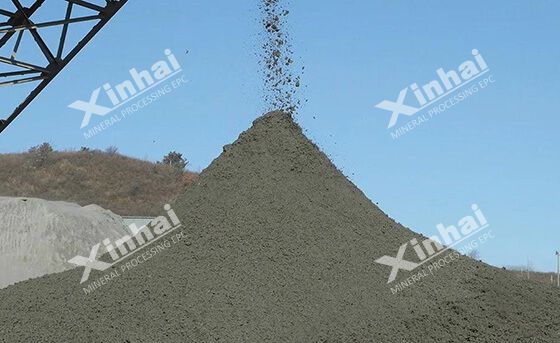
Fine and Ultra-Fine Gold Tailings (often < -200 mesh)
Traditional methods struggle to capture these tiny particles. Regrinding to improve liberation, followed by enhanced flotation or direct CIL leaching, markedly increases recovery rates.
Industry practice centers on tailored, hybrid flowsheets that match the tailings' gold deportment, particle size, and mineralogy. Below are established approaches by tailings type.
Gravity Tailings
Challenge: Primary gravity captured coarse gold, leaving finer or poorly liberated fractions.
Solution: Apply secondary gravity concentration, with classification or regrinding as needed to enhance liberation, followed by centrifugal concentrators or shaking tables.
Advantages: Low capital cost, rapid payback—ideal for higher-grade, coarser gold tailings.
Flotation Tailings
Challenge: Inadequate reagent suites or incomplete liberation of gold-sulfide associations in the original circuit.
Solution: Optimize reagents for secondary flotation; regrind fine fractions to improve liberation before flotation; or preconcentrate gold-bearing sulfides via flotation, then cyanide the concentrate separately.
Advantages: High recovery of fine and associated gold.
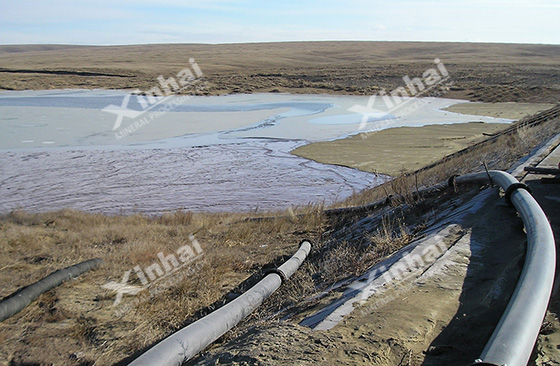
Cyanide Tailings
Challenge: Residual encapsulated or slow-leaching gold remains.
Solution: Regrind and apply secondary CIL (Carbon-in-Leach) or CIP (Carbon-in-Pulp); for refractory portions, pretreat via oxidation before leaching.
Advantages: Substantially boosts extraction from previously treated material.
High-Sulfide / Refractory Tailings
Challenge: Gold locked in sulfides (pyrite, arsenopyrite), resistant to direct leaching.
Solution: Flotation to produce a sulfide concentrate, followed by oxidation pretreatment (to break down encapsulation), then cyanidation.
Advantages: Mature, reliable technology for the most challenging tailings.
Ultra-Fine Tailings
Challenge: Extremely fine gold particles evade traditional capture and liberation.
Solution: Intensive regrinding to liberate particles, followed by enhanced flotation or direct CIL.
Advantages: Directly addresses fine-particle recovery bottlenecks.
These examples from Xinhai Mining highlight tailored solutions for different scales and challenges, delivering strong technical, economic, and environmental outcomes.
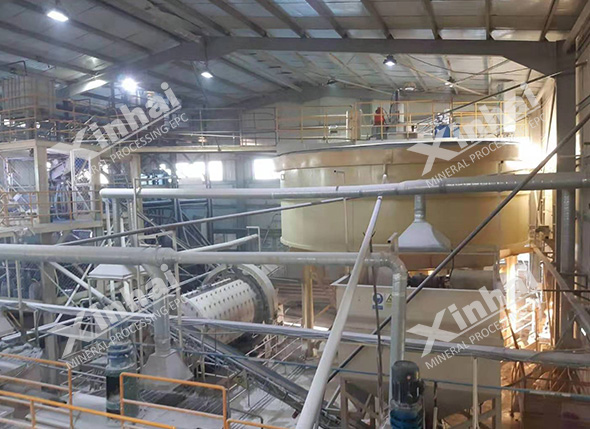
1. Mongolia 120tpd Gold Mine Tailings Cyanide Removal Plant
Challenge: High cyanide levels (~400 ppm) in filtered tailings posed severe environmental risks if discharged untreated.
Process: Chemical oxidation using bleaching powder (calcium hypochlorite) in series high-efficiency and double-impeller agitation tanks, converting toxic cyanide to harmless CO₂ and nitrogen.
Highlights:
Closed-loop filtrate recycling reduces freshwater consumption and supports green operations.
Plate-and-frame filter press ensures deep dewatering for safe transport and stacking, with complete filtrate recovery.
2. Guizhou 700t/d Gold Ore Tailings Dry Stacking Project
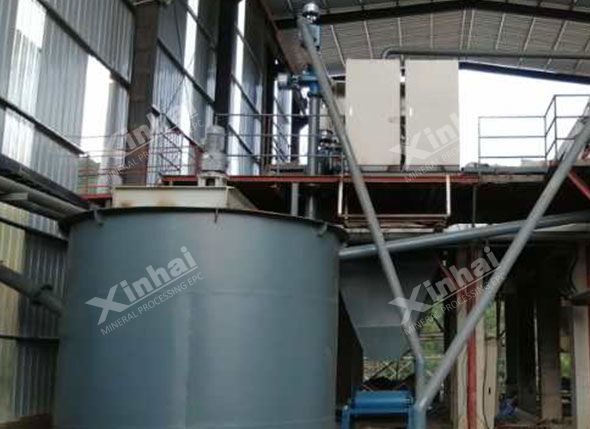
Challenge: Conventional wet tailings storage created dam-break risks, land occupation, and groundwater contamination threats.
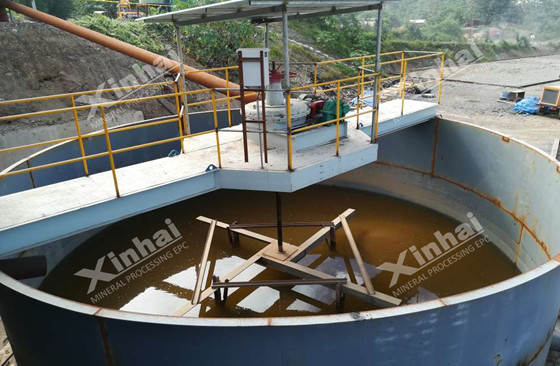
Process: Thickening (24 m diameter thickener) followed by filter pressing for dry stacking.
Highlights:
Eliminates dam failure hazards and minimizes seepage/groundwater pollution.
Overflow and filtrate return fully to the flotation circuit—achieving zero wastewater discharge, conserving water, and cutting costs.
3. Hebei 400t/d Gold Tailings Dry Stacking Project
Challenge: Uneven particle size distribution reduced dry stacking efficiency and raised costs.
Process: Hydrocyclone classification splits material—overflow (fines) to filter press, underflow (coarse) to dewatering screen.
Highlights:
Tailored dewatering equipment per size fraction boosts efficiency and lowers energy use.
Closed-circuit operation with fines return ensures zero material loss.
These cases demonstrate the industry's shift from end-of-pipe treatment toward full resource recovery, harmlessness, and minimization—always prioritizing environmental protection, resource efficiency, and energy savings.
Modern gold tailings processing integrates resource recovery, environmental protection, and cost optimization. By applying advanced gold tailings processing methods and selecting the right gold tailings processing plant equipment, operators can:
Increase total gold recovery
Extend mine life
Reduce environmental liabilities
Improve ESG performance
As technology continues to evolve, gold tailings reprocessing will become even more efficient and economically attractive. What was once considered waste is now a valuable secondary resource—unlocking new opportunities for sustainable gold production worldwide.
Share your project details and our engineers will get back to you shortly.
 CHAT
CHAT MESSAGE