
With molybdenum prices remaining buoyant through 2026 amid supply constraints and resilient demand from key sectors, producers are doubling down on both new project rollouts and efficiency drives.
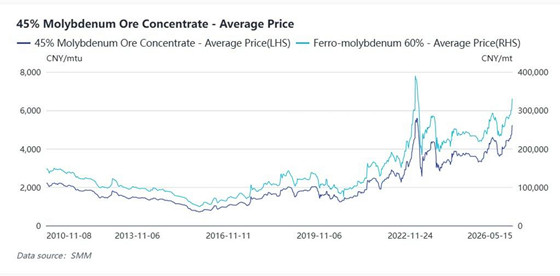
In this high-price environment, configuring molybdenum ore beneficiation equipment is a strategic imperative. Marginal improvements in recovery or power consumption can substantially bolster bottom lines.
This article provides a detailed overview of essential equipment in a molybdenum ore beneficiation plant, offering actionable insights on circuit design and operational strategies to enhance recovery while minimizing costs.
While strong metal prices typically incentivize production expansion, they also lay bare latent inefficiencies in legacy plants. Assets that were merely "acceptable" during low-price cycles quickly become bottlenecks when the priority shifts from volume to recovery optimization.
Today, operators face a confluence of pressures:
Declining ore grades and complexity. Finely disseminated molybdenite intergrown with chalcopyrite, pyrite, talc, or gangue minerals complicates both liberation and selectivity.
Escalating opex. Grinding remains the primary energy sink, while reagent, water treatment, and maintenance costs continue to erode margins.
Tightening ESG mandates. Modern operations must curtail water usage, de-risk tailings management, and minimize environmental footprints—all without compromising throughput.
Workforce constraints. With many assets located in remote regions, the drive toward automation, advanced analytics, and equipment reliability is no longer optional.
In this landscape, holistic circuit optimization—rather than piecemeal equipment upgrades—delivers the greatest leverage. A strategically engineered configuration enhances recovery, compresses energy intensity, lowers maintenance overhead, and ensures stable, long-term performance.
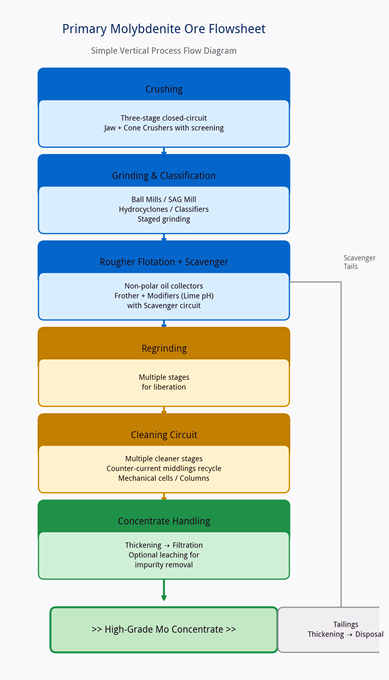
A typical molybdenum ore beneficiation plant consists of five major systems:
Crushing and screening
Grinding and classification
Dewatering and drying
Auxiliary equipment and intelligent control
Rather than selecting equipment independently, these systems should be designed as an integrated process based on metallurgical test results and production objectives.
Crushing and Screening Equipment
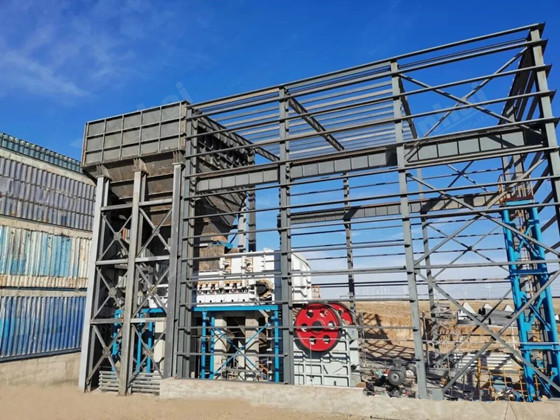
Modern molybdenum ore beneficiation plants adhere to a "crush more, grind less" philosophy—crushing is significantly more energy-efficient than milling. Optimization here directly governs downstream CAPEX and OPEX.
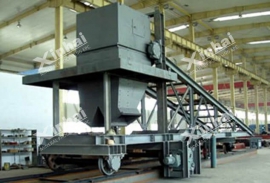
Typical circuits utilize jaw crushers for primary reduction, followed by cone crushers and closed-circuit vibrating screens to produce a 12–15 mm product. This precise sizing minimizes unnecessary grinding energy while maximizing throughput.
For low-grade deposits, XRT sensor-based ore sorting is increasingly standard. Installed post-primary crushing, these systems reject barren waste rock before milling. This "pre-concentration" slashes energy consumption, reduces grinding media wear, and effectively expands plant capacity—transforming marginal deposits into viable assets.
Grinding and Classification Equipment
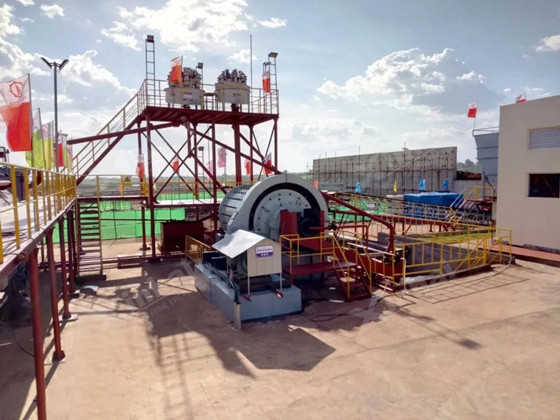
Grinding represents the single largest power draw in a molybdenum ore beneficiation plant, often exceeding 50% of total consumption. The objective is precise mineral liberation while avoiding deleterious overgrinding.
Configuration is dictated by ore hardness and liberation size:
Simple ores: Single-stage grinding suffices.
Complex ores: Two-stage circuits are standard, targeting 60–65% passing 200 mesh, with regrind mills achieving 80–90% passing 325 mesh for cleaner circuits.
Hydrocyclones are critical for stable classification, returning oversized particles to the mill while advancing liberated slurry to flotation. This closed-loop control is essential for consistent recovery and energy efficiency.
Flotation Equipment
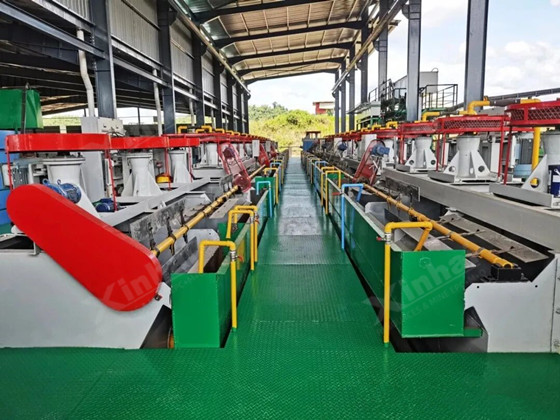
Flotation is the core value driver. Modern circuits employ a staged approach: roughing, scavenging, and multi-stage cleaning.
XCF and KYF mechanical cells remain the industry benchmark due to superior aeration efficiency and operational stability. Reagent schemes—collectors and gangue depressants—are strictly ore-specific and validated via laboratory testwork.
For copper-molybdenum ores, bulk flotation followed by selective separation under alkaline conditions maximizes metal recovery. Complex ores require tailored solutions: flotation columns for high-grade campaigns, pre-desliming for talc-rich ores, and high-gradient magnetic separation (HGMS) to remove magnetic iron ahead of flotation.
Dewatering and Drying Equipment
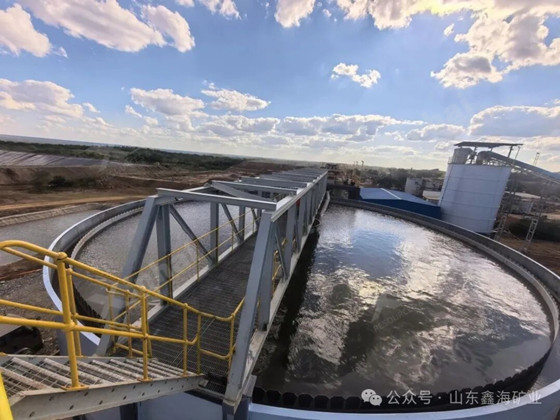
Efficient dewatering reduces logistics costs and satisfies stringent ESG mandates. A typical molybdenum ore beneficiation plant utilizes high-rate thickeners to achieve 40–60% solids underflow, minimizing the load on subsequent filtration.
Chamber filter presses or ceramic vacuum filters typically reduce concentrate moisture to 12–15%—suitable for bulk transport. For export markets requiring premium specs, rotary dryers can further reduce moisture to<1%.
Critically, tailings dewatering enables dry stacking, drastically cutting freshwater consumption and enhancing storage safety—particularly vital for operations in arid regions or areas with strict environmental oversight.
Auxiliary Equipment and Intelligent Control
While less visible, auxiliary systems determine plant reliability. Precision reagent dosing systems prevent costly metallurgical upsets, while robust slurry transport and process water networks ensure uninterrupted flow.
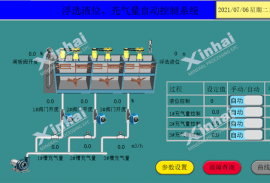
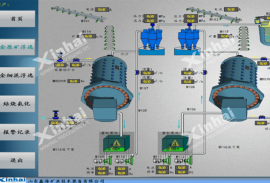
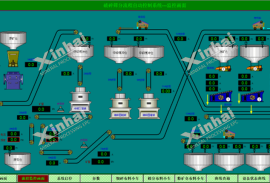
Digitalization elevates performance from reactive to predictive. Integrating online analyzers (density, particle size) with centralized control platforms allows for real-time circuit adjustments. Predictive maintenance algorithms further reduce unplanned downtime, ensuring the molybdenum ore beneficiation plant operates at peak availability and efficiency.
There’s no one-size-fits-all solution for molybdenum deposits. The best equipment setup depends on factors like mineralogy, ore grade, and production goals.
Single Molybdenite Ores
These deposits need conventional crushing, grinding, and flotation. Focus on achieving good mineral liberation while keeping operating costs low.
Copper–Molybdenum Ores
For these, use bulk flotation to recover both metals, followed by separation. Additional regrinding and cleaner flotation stages may be necessary to enhance selectivity and produce high-quality concentrates.
Low-Grade Molybdenum Ores
To improve economics, minimize waste entering the grinding circuit. Consider XRT ore sorting or gravity pre-concentration to reject barren material before flotation, which reduces energy use and boosts throughput.
Fine-Grained or Complex Ores
For finely disseminated molybdenite closely linked with gangue, employ two-stage grinding, regrinding, and multi-stage cleaning to optimize recovery and concentrate quality. Conduct laboratory and pilot tests to find the best grinding fineness and reagent strategy.
Conclusion
Sustained high molybdenum prices reward precision, not brute force. The path to higher returns starts with an integrated molybdenum ore beneficiation plant, where crushing, grinding, flotation, and dewatering function as a single, cohesive system.
True profitability stems from customization. Backed by rigorous metallurgical testing, the right molybdenum ore beneficiation equipment delivers higher recovery and lower opex than any off-the-shelf solution. Whether building a new facility or upgrading an existing one, remember: let the ore dictate the circuit. A tailored flowsheet remains the ultimate key to maximizing the value of every tonne processed.
Mine owners and investors currently evaluating or expanding molybdenum operations are invited to discuss technical requirements and obtain a preliminary process and equipment assessment tailored to their ore and project constraints.
Share your project details and our engineers will get back to you shortly.
 CHAT
CHAT MESSAGE