
Molybdenum is a vital strategic metal used in specialty steels, catalysts, and aerospace. Flotation is the primary recovery method, yet ore types differ greatly in mineralogy and floatability; unthinkingly copying processes reduces recovery and grade while increasing costs. Drawing on expert input, this paper presents optimized flotation schemes for five typical molybdenum ores—covering flowsheets, grinding, pulp density, pH, and reagents—to support stable, high-efficiency recovery in modern molybdenum processing plants.
The primary valuable mineral is molybdenite, with gangue consisting mainly of quartz, feldspar, and other silicate minerals. Molybdenite is brittle and prone to overgrinding-induced sliming, which forms hydrophilic surface films and severely impairs floatability. The molybdenum grade of run-of-mine ore typically ranges from 0.01% to 0.04%, whereas commercial concentrate grades must reach 45%–47%, necessitating an exceptionally high enrichment ratio.
Single Molybdenum Ore Flotation Process
This ore undergoes rough grinding and rough flotation, followed by re-grinding and multi-stage cleaning. Raw ore is ground to 55%~65% passing 200 mesh for rough flotation. The rough concentrate will be reground until 80%~90% passes 200 mesh, then undergo 4 to 10 rounds of cleaning to produce a qualified concentrate. Pulp density is controlled at 30%~45% during rough flotation and reduced to 15%~20% during cleaning to ensure the separation effect.
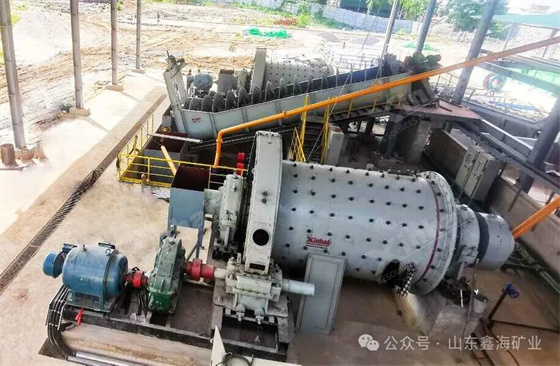
We recommend staged grinding ball mills to prevent over-grinding, and mechanical agitation flotation cells that deliver stable performance for multi-stage cleaning. For reagents, kerosene or diesel serves as a collector, pine oil or MIBC works as a frother, and water glass is used to suppress silicate gangue.
Predominantly porphyry-type deposits. Molybdenite is intimately associated with chalcopyrite and pyrite. Similar floatability between copper minerals and molybdenite creates significant separation challenges.
Copper Molybdenum Separation
The production process applies bulk flotation first, then proceeds to copper-molybdenum separation. Copper and molybdenum are floated together under a pH value between 8 and 11 to obtain a combined concentrate. Selective reagents are then added to depress copper minerals and float molybdenite independently. Operators need to control reagent dosage to avoid adverse effects on molybdenite strictly, and low-toxicity reagents are preferred to meet environmental standards.
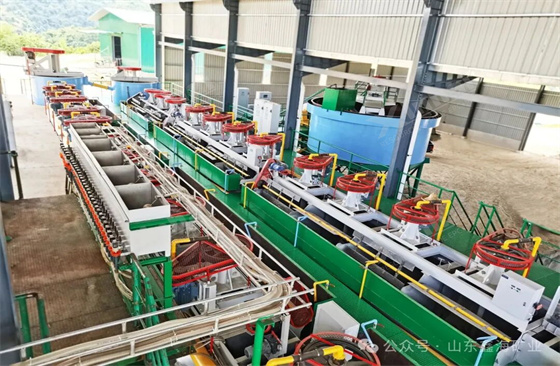
Large-capacity flotation cells are well-suited for bulk flotation operations. As for reagents, lime depresses pyrite, and xanthate is used as a collector in the bulk flotation stage. Sodium sulfide or Nokes reagent is adopted to selectively inhibit copper minerals, while kerosene acts as the collector for molybdenum.
Molybdenite coexists with scheelite or wolframite, often accompanied by copper, bismuth, sulfur, and iron. Gangue includes calcite and silicates.
Tungsten Molybdenum Ore Processing
Production follows the route of first floating molybdenum and then recovering tungsten from the subsequent tailings. Molybdenum flotation runs with pulp pH kept around 8. Tungsten recovery varies by mineral type: scheelite in tailings is recovered via flotation at pH 10-11, while coarse wolframite is separated by gravity separation. Fine tungsten particles are processed with a combined gravity and flotation flow. Operators flexibly adjust the water glass dosage to prevent the gangue from floating upward.
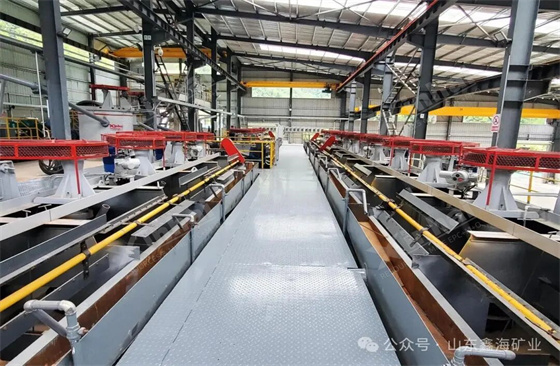
Jig machines and shaking tables are ideal for tungsten gravity separation, and integrated flotation units support continuous processing of molybdenum and tungsten. Recommended reagents include kerosene for molybdenum collection, sodium carbonate for pH adjustment, water glass as gangue depressor, and fatty acid for tungsten collection.
Talc exhibits natural floatability similar to molybdenite, causing severe interference and representing the primary metallurgical challenge.
Flotation Process
The overall flow covers crushing, grinding, and classification; magnetic separation; desliming; and multi-stage flotation. Magnetic separation removes iron impurities, and subsequent desliming eliminates fine slime. Special composite reagents are added to suppress talc before the material goes through rough flotation, scavenging, and pre-cleaning. The obtained concentrate is reground to ensure that 75%~95% of particles pass through 0.038 mm, then delivered to the final cleaning procedures.
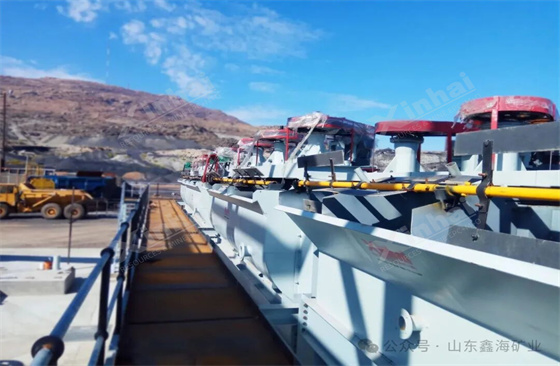
High-gradient magnetic separators efficiently remove iron impurities, and closed-circuit grinding systems match the whole production flow. Anti-sliming flotation cells are specially selected for stable operation. CF-3, CF-4, and CF-5 composite depressors are the preferred reagents for effectively inhibiting talc.
Derived from molybdenite alteration, including ferrimolybdite, molybdite, and wulfenite. Characterized by low natural floatability, high slime tendency, and refractory behavior.
Oxidized Molybdenum Flotation Process
We adopt targeted combined processes based on specific ore conditions. Iron-bearing oxidized ore uses a combined flow of flotation, magnetic separation and gravity separation. For heavily oxidized and slimed ore, sodium sulfide is applied to modify mineral surface and restore floatability, with one roughing and two scavenging procedures arranged. For ore mixed with sulfide and oxidized molybdenum, sulfide molybdenum is floated first, and oxidized molybdenum is recycled in a separate process.
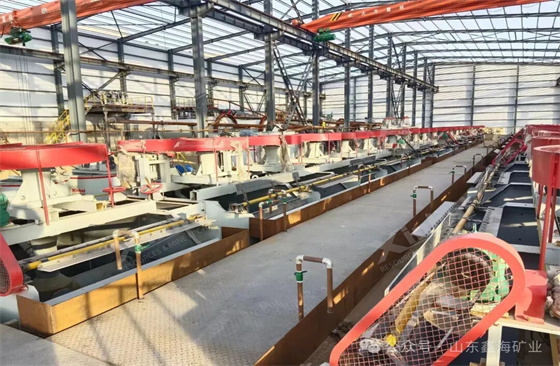
Complete sets combining flotation machines, magnetic separators and jig machines fit the combined processing flow. Lined ball mills help reduce slime generation during grinding. Recommended reagents include kerosene and pine oil for basic flotation, sodium sulfide as sulfidizing agent, modified water glass and RT collector specially for oxidized molybdenum.
Two molybdenum deposits may contain similar grades, but require completely different beneficiation strategies.
The difference usually comes down to:
Mineral association
Liberation characteristics
Gangue composition
Oxidation degree
Slime generation behavior
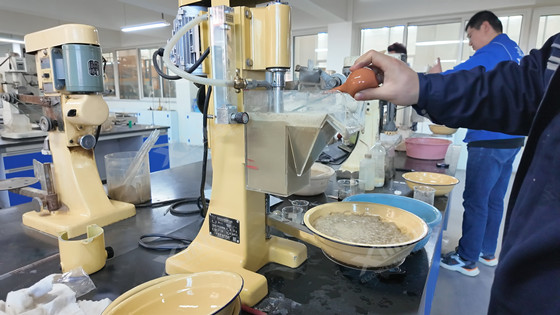
That is why molybdenum flotation is never simply about “using the right equipment.”It is about understanding the ore in detail first — and then designing a process that actually fits it.
Before building a plant or selecting a flowsheet, comprehensive mineral testing remains one of the most important steps to improve recovery, stabilize concentrate quality, and maximize long-term project value.
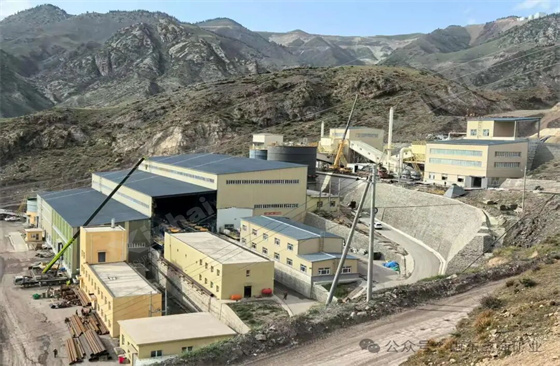
Xinjiang, China 2.0 Mt/a Gold Processing Plant
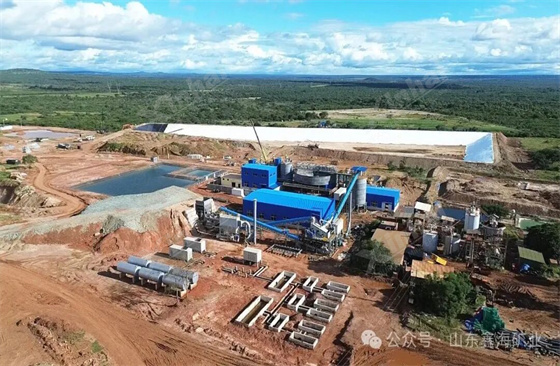
Zimbabwe 500 t/d Gold EPC Project
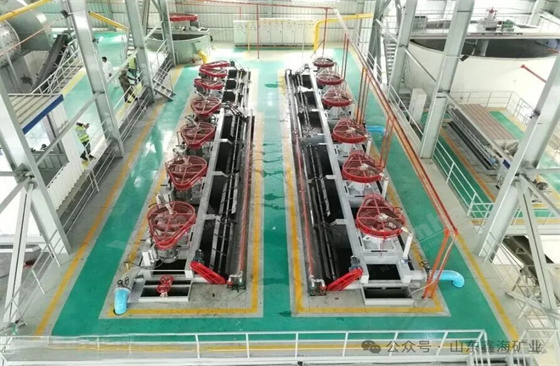
Pakistan 1,500 t/d Copper Processing Plant
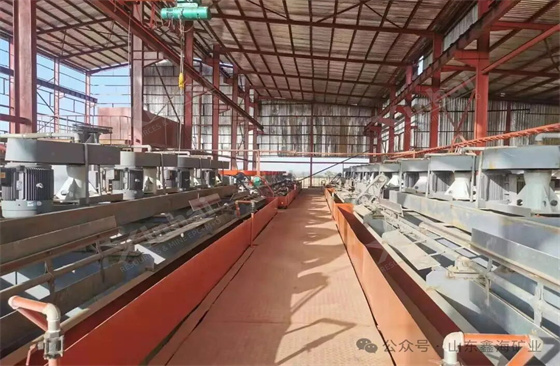
Nigeria 1,000 t/d Copper-Silver Processing Plant
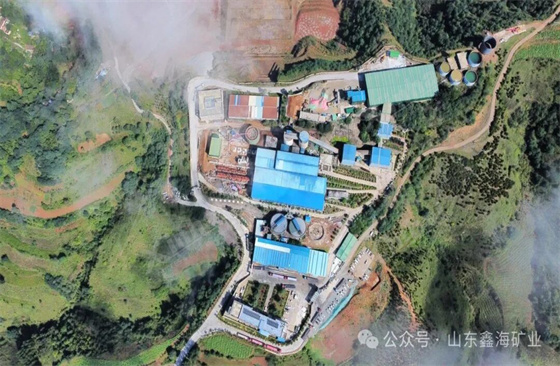
Henan, China 1,500 t/d Polymetallic Plant (Ag-Pb-Zn-Au)
Share your project details and our engineers will get back to you shortly.
 CHAT
CHAT MESSAGE