
Picking the right capacity for a gold processing plant rarely comes down to a simple daily tonnage number. Build too small and unit costs climb while output stays limited. Build too large and capital sits idle, ore supply struggles to keep up, and equipment runs below design rates.
The workable capacity is the one your mine can feed consistently, your process can treat at a realistic recovery, your site can support, and your financial model can justify. Most teams get there by checking ore supply first, then process and economics, infrastructure limits, a few capacity options, and a full feasibility study.
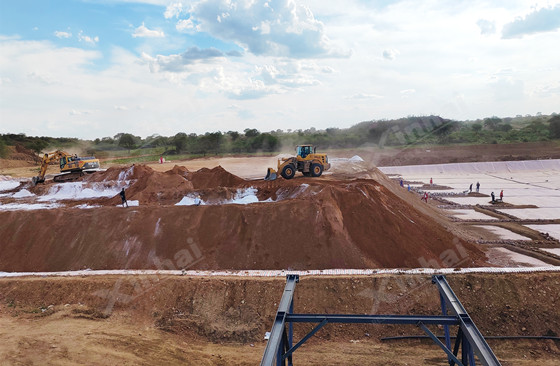
The first practical question is how much ore the operation can actually deliver year after year. When the plant sits next to its own mine, capacity has to follow mineable reserves, the mining schedule, grade, method, and expected life. Resource numbers alone are not enough. Only the material that can be mined economically and delivered on time counts.
Many projects discover this the hard way. A large resource looks impressive on paper, yet the mine plan only supports half the planned throughput. The plant then runs below capacity for years, driving up unit costs.
Other day-to-day issues often surface:
Grade swings that force frequent process adjustments
Higher dilution than expected
Seasonal haul-road closures or weather delays
Limited stockpile space that leaves the plant short of feed
Unreliable third-party ore deliveries when buying external material
For plants that depend on purchased ore, long-term contracts and a clear view of regional supply matter more than optimistic forecasts. Capacity only works when the ore keeps arriving.
Ore type and project numbers decide how large the plant should be. Gold ores vary widely in mineralogy, particle size, liberation, and leach response. Some need gravity concentration. Others respond to flotation, CIL or CIP, heap leaching, or refractory pretreatment. Metallurgical testwork should finish before the flowsheet and capacity are locked in.
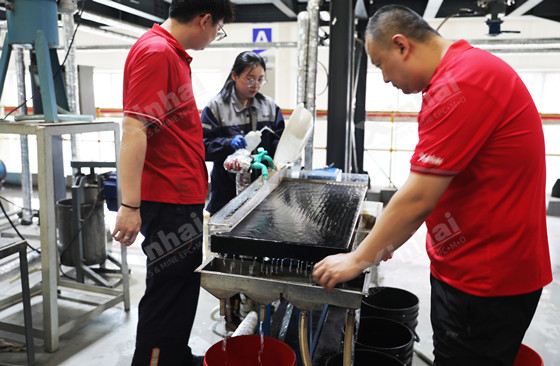
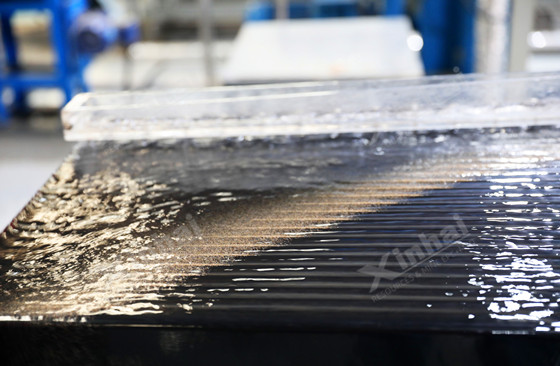
Common routes include gravity for free gold, flotation for sulfide-associated gold, CIL/CIP for cyanide-amenable material, heap leaching for suitable low-grade ores, and roasting or pressure oxidation when the ore is refractory. Grade alone does not choose the route. Test results do.
Once supply and process are clear, the economic question is straightforward. How much ore should the plant treat to make the numbers work?
A simple estimate runs like this:
Annual gold production ≈ annual throughput × head grade × recovery
Example only: 1,000 t/d × 330 operating days × 2.0 g/t × 92 % recovery gives roughly 607 kg of gold a year. Real results shift with grade variability, plant availability, recovery changes, and refining losses.
The financial model then weighs capital cost, operating cost per tonne, gold output, revenue, working capital, taxes, and project returns. Larger plants can lower unit costs through scale, but they also demand more capital and steadier ore feed. The lowest cost per tonne is not always the most profitable size.
Even a capacity that looks good on paper can fail when water, power, or tailings run short. Water is often the first constraint. Teams need a full balance covering fresh make-up, process use, recycling rates, evaporation, and seasonal limits. In dry regions, low recovery or limited storage can force the plant to cut throughput during the dry season.
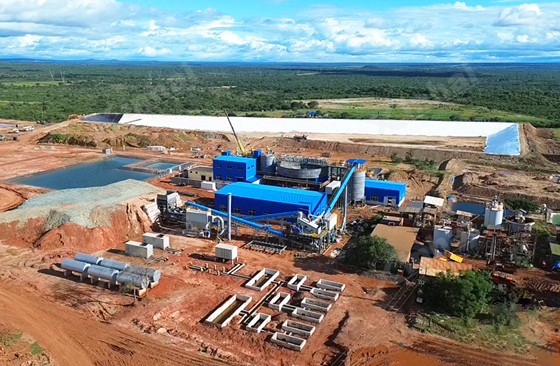
Power demand rises quickly with higher tonnage. Crushing, grinding, and pumping draw significant load. Weak grid supply, long transmission lines, or frequent outages can cap the practical capacity long before the mills reach design rate.
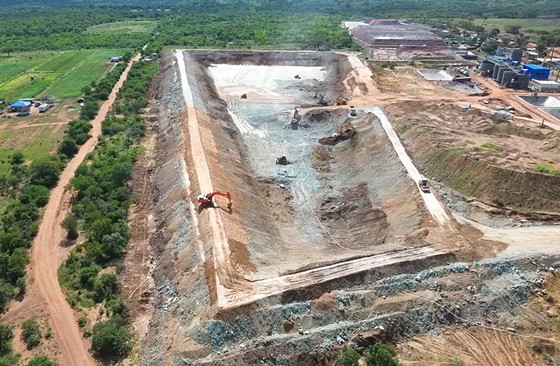
Tailings storage fills faster than many expect. Higher throughput means more volume. The design must cover annual generation over the full mine life, plus water content and deposition density. Projects using cyanide also face stricter environmental and permitting rules that can limit expansion later.
These site realities often set a hard ceiling on plant size.
Most projects benefit from testing several capacities rather than fixing one number early. Common options are 500 t/d, 1,000 t/d, and 2,000 t/d.
Factor | Smaller Plant | Medium Plant | Larger Plant |
Initial CAPEX | Lower | Moderate | Higher |
Unit processing cost | Usually higher | Moderate | Potentially lower |
Ore supply needed | Lower | Moderate | Higher |
Infrastructure demand | Lower | Moderate | Higher |
Production potential | Lower | Moderate | Higher |
Expansion flexibility | Higher | Moderate | Lower if built at full scale |
The goal is the capacity that balances output, cost, capital, and reliable ore supply. A 2,000 t/d plant may show attractive unit costs, yet if the mine can only sustain 1,000 t/d the extra capacity simply sits idle.
When future ore or financing remains uncertain, phased construction reduces risk. Build the first module to match proven production. Expand later once extra reserves or external feed are confirmed. The site layout, power system, water circuit, tailings facilities, and major foundations need to allow for that growth from day one. Otherwise expansion becomes expensive and disruptive.
Equipment lists or standard plant sizes should not set the final number. An integrated study should link the mine plan, ore supply, metallurgical results, process design, infrastructure, capital and operating costs, and the financial model.
The study needs to answer practical questions:
Can the mine keep feeding the proposed rate?
Will the process deliver the recovery shown in testwork under normal operating conditions?
Are water and power available at the required scale?
Will the tailings system last the planned life?
Is the capital cost realistic and fundable?
Does the capacity produce an acceptable return under reasonable assumptions?
Can the plant expand if more ore appears later?
The right capacity emerges when all these factors are weighed together.

The best capacity for a gold processing plant is rarely the largest one that can be built. It is the size that can be fed reliably, treated at a recovery supported by testwork, supported by site infrastructure, permitted under local rules, and justified by the financial model.
A practical path looks like this:
Ore supply → process and economics → infrastructure and environment → capacity comparison → feasibility study
Comparing several realistic scenarios early helps avoid the common problems of underfed plants, idle equipment, excess capital, and limited expansion options later.
Xinhai Mining Group provides integrated services for gold processing projects, from metallurgical testwork and process design to plant engineering, equipment supply, installation, and commissioning. Based on your ore characteristics, production targets, and project conditions, our team can help evaluate suitable processing capacities and develop a practical gold processing solution.
Share your project details and our engineers will get back to you shortly.
 CHAT
CHAT MESSAGE