
Copper-gold ore refers to mineral resources containing both copper and gold that are economically viable to extract. Due to significant variations in mineral composition, occurrence characteristics, and oxidation levels, processing flowsheets differ considerably. In practice, comprehensive mineralogical studies and metallurgical testing are essential to determine the optimal extraction strategy.
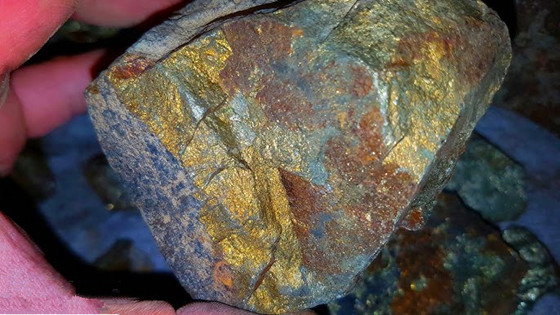
This article outlines four of the most common copper-gold deposit types worldwide, along with their typical mining methods and beneficiation processes.
While numerous copper-gold deposit types exist, a few dominate global production in terms of development scale, resource volume, and investment. The following table ranks the four primary types by industry significance:
Ranking | Deposit Type
| Global Significance | Typical Processing
|
| ★★★★★ | Porphyry Cu-Au | Absolutely dominant | Flotation
|
| ★★★★ | IOCG (Iron Oxide Copper Gold)
| Fewer deposits but very large scale
| Magnetic separation + flotation |
| ★★★ | Skarn Cu-Au | Relatively common
| Flotation / Gravity + flotation |
| ★★ | VMS (Volcanogenic Massive Sulfide) | Numerous but generally smaller scale | Polymetallic flotation |
1. Porphyry Cu-Au Deposits — The Global Leader
Porphyry copper-gold deposits represent the most important category in the industry and serve as the geological model for the majority of the world’s large-scale copper mines. Although copper grades typically range from 0.3% to 1.0% and gold grades are relatively modest, the enormous tonnage — often hundreds of millions to billions of tonnes — delivers exceptional economic value. The world’s largest copper operations are predominantly porphyry systems.
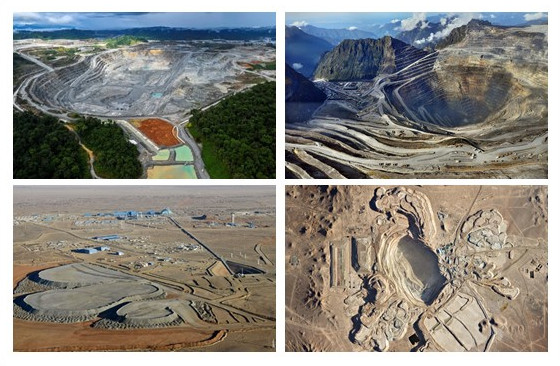
Key Locations: Primarily along the Pacific Ring of Fire, including Chile (the most concentrated region), Peru, Arizona (USA), British Columbia (Canada), Mexico, Indonesia, Papua New Guinea, Mongolia, and the Philippines.
Representative Projects
Project | Country | Highlights |
Escondida | Chile | World’s largest copper mine |
Grasberg | Indonesia | One of the world’s largest copper-gold mines |
Oyu Tolgoi | Mongolia | World-class underground copper-gold mine |
Ok Tedi | Papua New Guinea | Large-scale copper-gold operation |
Typical Process Flow: Crushing → Grinding → Bulk copper-gold flotation → Copper-gold concentrate → Gold recovery at smelter
For ores containing significant free gold, gravity separation is often added prior to flotation to enhance overall recovery.
2. IOCG (Iron Oxide Copper Gold) Deposits
Although less common than porphyry deposits, IOCG systems are characterized by very large individual tonnages and frequently carry valuable by-products such as iron, uranium, and rare earth elements in addition to copper and gold.
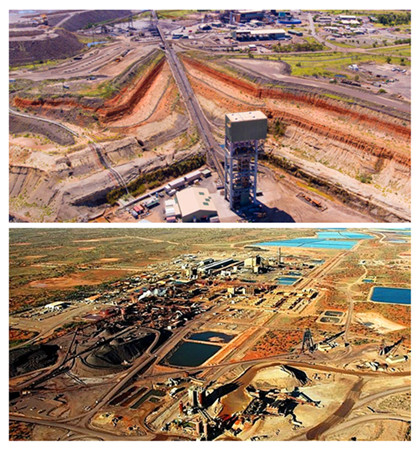
Key Locations: Primarily in Australia (world-class examples), Chile, Brazil, Sweden, and parts of China.
Typical Process Flow: Crushing → Grinding → Magnetic separation (iron recovery) → Flotation (copper-gold) → Integrated recovery of by-products
3. Skarn Cu-Au Deposits
Skarn deposits typically form at the contact zones between intrusive igneous rocks and carbonate sequences. They often feature higher grades than porphyry systems but smaller tonnages, offering strong development flexibility and making them a preferred choice for many mid-sized copper-gold operations.
Key Locations: China, Russia, Kazakhstan, Peru, and Mexico.
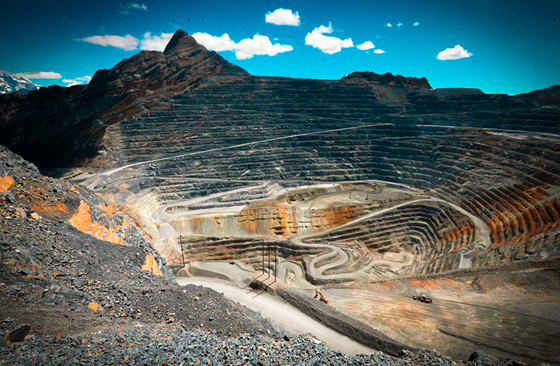
Representative Projects: Notable examples include Antamina in Peru (a large skarn copper polymetallic deposit). Significant skarn copper-gold resources are also found in China’s Anhui and Yunnan provinces.
Typical Process Flow:
When free gold is minimal: Grinding → Copper-gold flotation
When free gold is present: Gravity separation + flotation
4. VMS (Volcanogenic Massive Sulfide) Deposits
VMS deposits are primarily copper-zinc-lead systems, with gold and silver recovered as by-products. Although individual operations are generally smaller than porphyry mines, their widespread global distribution makes them an important source of polymetallic resources.
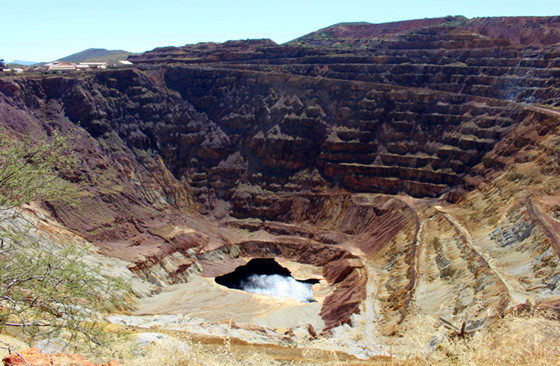
Key Locations: Canada, Australia, Japan, China, and Northern Europe.
Representative Projects: Kidd Creek (Canada) and Mount Lyell (Australia).
Typical Process Flow: Due to complex mineralogy, sequential flotation is common: Copper flotation → Lead flotation → Zinc flotation → Gold and silver recovery
Technology | Applicable Ore | Key Advantages |
Flotation | Sulfide copper-gold | Most widely applied; excellent combined copper and gold recovery |
Gravity Separation | Coarse free gold | Simple, low-cost; enables early recovery of coarse gold |
Flotation + Gravity | Free gold + sulfide copper | Improves gold recovery and reduces losses to tailings |
Flotation + Cyanidation | Gold remaining in flotation tailings | Recovers residual gold, boosting overall recovery |
Flotation + Bio-oxidation/Roasting + Cyanidation | Refractory gold-bearing sulfide ores and encapsulated gold | Effective for gold locked in sulfide minerals |
Leaching | Oxidized copper-gold | Acid leaching suitable for copper; gold typically requires supplementary recovery methods |
While flotation dominates the treatment of sulfide copper-gold ores, cyanide leaching and heap leaching remain important options for oxidized or low-grade gold-bearing materials associated with certain copper-gold deposits.
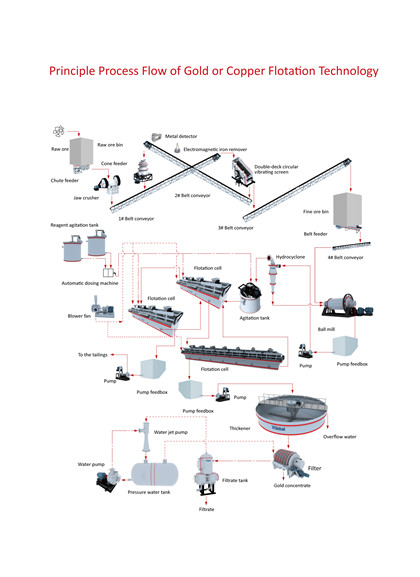
Copper-gold deposits often include minerals like iron, lead, zinc, silver, and molybdenum, complicating processing method selection. Extensive testing of polymetallic ore helps identify mineral properties and optimize processes before plant construction. Learn about Integrated Testing Solutions for Polymetallic Ores to see how testing improves project outcomes.
Different copper-gold ores require tailored processing methods. To design an optimal flowsheet, it's essential to consider factors such as deposit type, oxidation level, copper mineralogy (like chalcopyrite or malachite), gold form (free or encapsulated), and associated elements (like arsenic or lead). These elements affect reagent use, concentrate quality, downstream processes, and overall project economics.
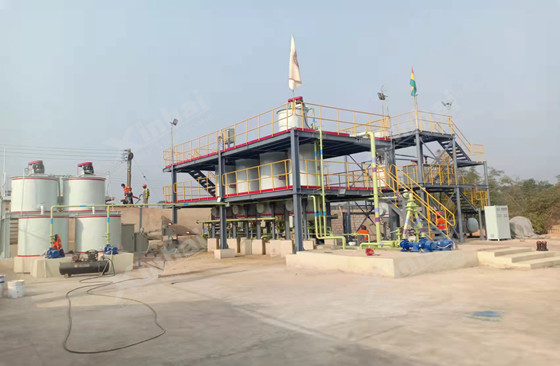
(17,000 t/a gold heap-leaching plant in Ghana)
Xinhai Mining Group has extensive experience in gold and polymetallic mineral processing, providing tailored leaching and flotation solutions for various ore types. Key projects include a 17,000 t/a gold heap-leaching plant in Ghana, a 1,000 t/d heap-leaching + CIL plant in Zimbabwe, a 20,000 t/m gold pool-leaching plant in Indonesia, and a 500 t/d cyanidation plant in Malaysia. These initiatives highlight the critical need for metallurgical testing, process optimization, and effective engineering to enhance metal recovery across different geological and operational scenarios.
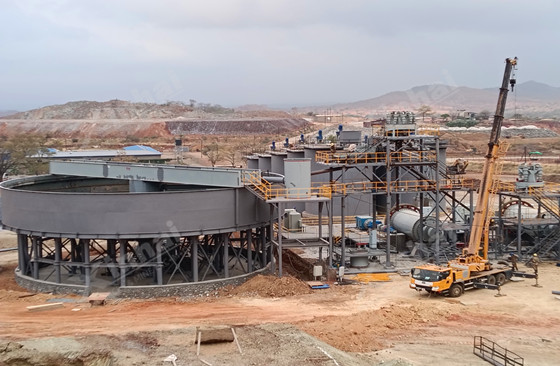
(20,000 t/m gold pool-leaching plant in Indonesia)
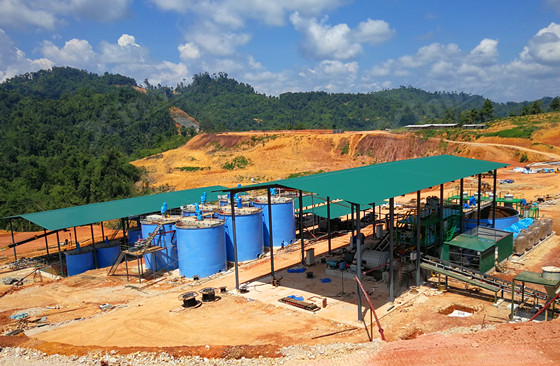
(500 t/d cyanidation plant in Malaysia)
Conclusion
Ultimately, deposit type provides only the starting point. Detailed mineralogical characterization and metallurgical testwork are indispensable for optimizing flowsheets that deliver the best balance of copper and gold recoveries with strong project economics—a principle consistently applied in major mining developments worldwide.
Share your project details and our engineers will get back to you shortly.
 CHAT
CHAT MESSAGE