
Many operational issues in mining projects stem from decisions made during the design stage. Problems such as process modifications, equipment bottlenecks, inefficient layouts, and high operating costs often arise from earlier engineering choices. Modern mineral processing plant design goes beyond just creating engineering drawings; it incorporates metallurgical testing, process development, equipment selection, plant layout, construction planning, and operational considerations into a cohesive solution.
This article discusses the key elements of effective mineral processing plant design and their impact on long-term performance.
A complete plant design begins with a thorough understanding of the orebody and extends to the systematic planning and optimization of process flows, equipment, civil works, power supply and distribution, automation, water supply and drainage, tailings management, environmental protection facilities, and operational readiness. Every engineering decision made during this stage can influence how efficiently, safely, and economically the plant performs after commissioning.
An experienced engineering team typically focuses on objectives such as:
Maximizing metal recovery while reducing specific energy consumption
Improving equipment maintainability and minimizing downtime
Providing flexibility for future capacity expansion
Optimizing lifecycle operating costs
Ensuring the plant can be efficiently constructed, commissioned, and operated
Ultimately, engineering design determines not only how a plant is built, but also how reliably and efficiently it performs throughout its operating life.
For any greenfield project, comprehensive metallurgical test work forms the foundation of process design. Ore characteristics can vary significantly, even within the same deposit. Differences in mineralogy, liberation size, oxidation degree, and grindability often require different processing strategies.
Before engineering begins, systematic metallurgical testing—including mineralogical characterization, comminution testing, flotation, gravity separation, magnetic separation, thickening, and filtration—is typically carried out to establish a reliable technical basis for subsequent design decisions. These results guide process selection, equipment sizing, and economic evaluation.
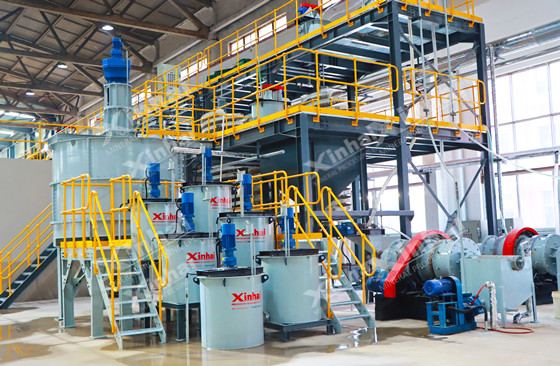
At Xinhai Mining, CNAS-accredited laboratories and a 3,000 m² pilot testing facility support a full range of metallurgical studies, from bench-scale investigations to semi-industrial pilot campaigns. Robust test data helps reduce technical uncertainty and provides a stronger basis for engineering decisions throughout the project.
No single process flowsheet is suitable for every orebody. For example, one gold deposit may achieve the best results through gravity concentration combined with CIL, while another may require flotation followed by cyanidation. Low-grade oxidized gold ores may instead be better suited to heap leaching. Copper ores can also require very different processing routes depending on oxidation levels, associated minerals, and ore texture.
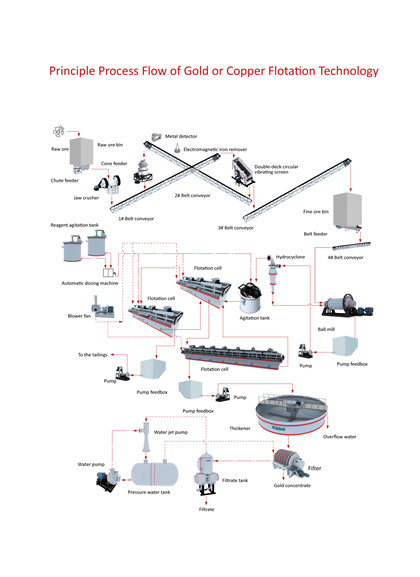
Rather than replicating established flowsheets, effective process engineering develops a solution tailored to the characteristics of the ore. Crushing, grinding, classification, beneficiation, dewatering, and water recovery systems must work together to balance metallurgical performance, energy efficiency, capital investment, and operating costs.
The objective is not to adopt the most sophisticated flowsheet, but to develop one that performs reliably under the specific conditions of the project.
Advances in equipment technology provide more options than ever before, but the most advanced equipment is not necessarily the most appropriate solution for every project.
Throughput requirements, ore hardness, pulp characteristics, and circuit configuration all influence equipment selection. A grinding mill that is not properly matched with the classification circuit, for example, can become a production bottleneck regardless of its individual performance.
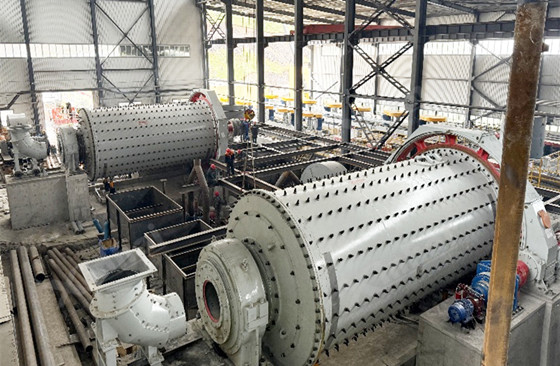
Successful equipment selection focuses on compatibility across the entire process rather than maximizing the specifications of individual machines. Well-balanced crushing, grinding, beneficiation, dewatering, and tailings systems contribute to stable production and improved operational efficiency.
Plant layout is often underestimated during project development, yet it has a lasting influence on operating efficiency and maintenance activities.
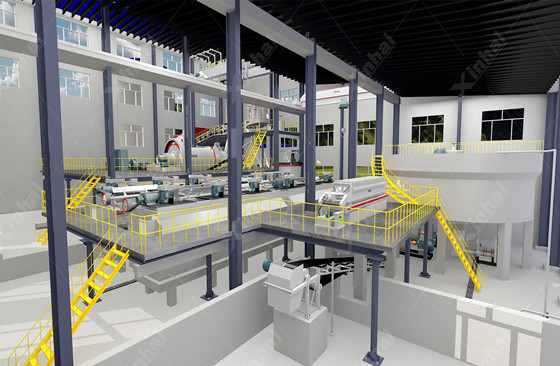
Equipment positioning, material handling routes, maintenance access, piping arrangements, lifting space, and traffic flow all deserve careful consideration. Questions such as whether a ball mill can be serviced safely, whether thickener locations interfere with haul roads, or whether pipelines create unnecessary congestion may seem minor during design, but can become significant operational constraints once construction is complete.
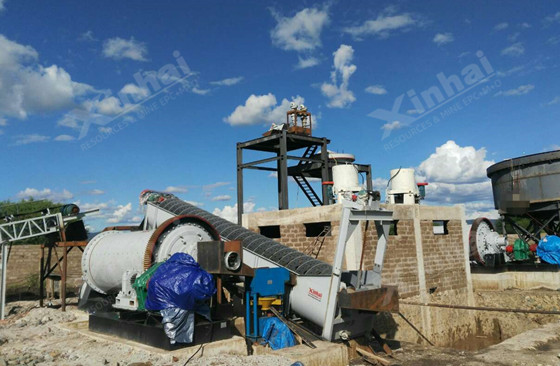
A well-planned layout shortens material transport distances, improves maintainability, reduces maintenance downtime, enhances workplace safety, and supports reliable long-term operation.
Technical performance alone does not determine whether a project is successful.
For example, adding an additional processing stage may improve recovery, but the increase in capital expenditure, operating costs, and maintenance requirements should be carefully evaluated against the expected economic benefit.
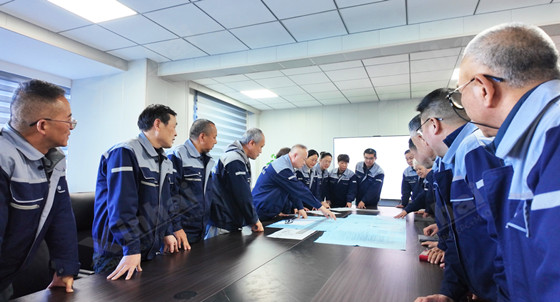
Engineering design therefore involves balancing technical and financial considerations. Capital investment (CAPEX), operating expenditure (OPEX), unit processing costs, project payback, and overall project economics should all be evaluated to support informed decision-making.
The most effective engineering solution is not necessarily the most technically complex, but the one that delivers the greatest overall value throughout the project's lifecycle.
Even the most technically sound engineering design creates value only when it can be successfully implemented in the field.
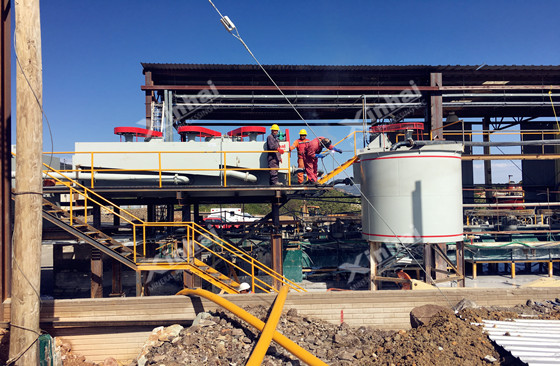
For this reason, many mining companies choose engineering partners capable of integrating metallurgical testing, engineering design, equipment manufacturing, procurement, construction, installation, commissioning, and operational support. This integrated approach improves constructability, aligns engineering with site conditions, and helps reduce the risk of costly design changes during project execution.
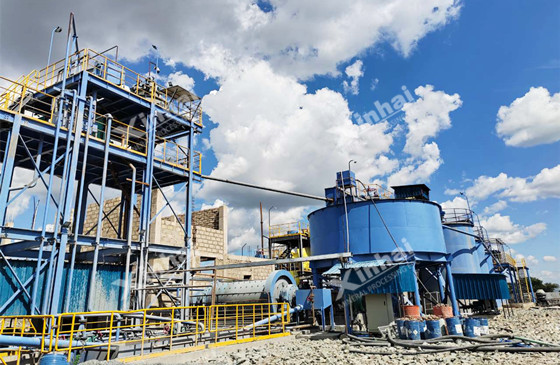
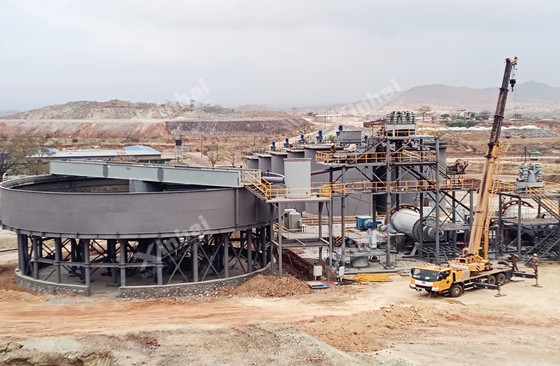
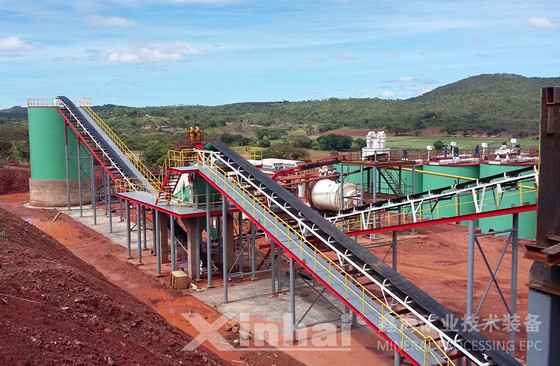
Xinhai Mining Group has delivered mineral processing projects across a wide range of commodities and regions, including a 10,000 t/d heavy mineral sands wet processing plant in Mozambique, a 50,000 t/d low-grade ilmenite concentrator in Xinjiang, a 6,000 t/d spodumene mining and processing project in Nigeria, a 1.5 Mt/a copper concentrator in Kazakhstan, and a 3 Mt/a gold heap leach project in Mongolia. Experience gained from these projects has strengthened Xinhai's capability to provide engineering solutions for diverse mineral processing applications.
Conclusion
A well-designed mineral processing plant is more than just a successful start; its true value lies in achieving a harmonious balance between metallurgical performance, engineering practicality, economic feasibility, operational reliability, and future development needs. To create an effective plant, it's essential to not only conduct thorough initial analyses but also to continually refine the design throughout its implementation.
Share your project details and our engineers will get back to you shortly.
 CHAT
CHAT MESSAGE