
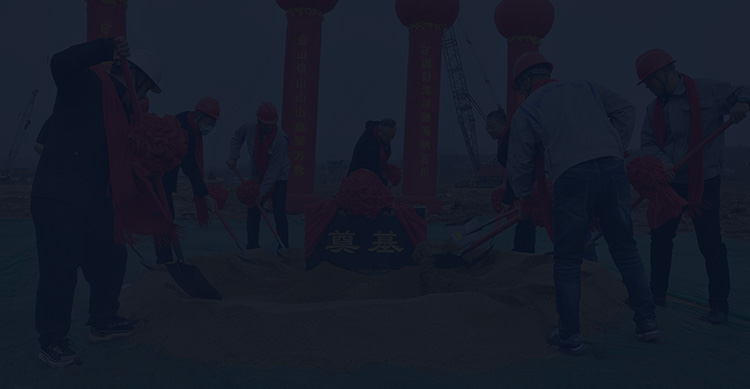
Imagine a newly built mineral processing plant, equipped with state-of-the-art machinery and advanced technology, yet failing to meet production targets with recovery rates far below expectations after commissioning—significantly diminishing the return on investment. This scenario is entirely preventable. The key often lies in one critical phase: process commissioning.
Process commissioning does not involve front-end design or equipment manufacturing. Yet, it is the crucial final step that brings design concepts to life and unlocks the full potential of the equipment. Without it, a mining project is like a racecar built with top-tier parts but never tuned—it will never perform to its true capability, no matter how advanced the design.
In this article, we explore how our commissioning team plays a vital role in EPC+M+O projects, ensuring mines achieve designed capacity and production targets while maximizing economic returns. Through real-world cases, we reveal the professional details that make all the difference.
At Xinhai Mining, our commissioning services are divided into two main categories: equipment commissioning and process commissioning. Equipment commissioning, handled by our Installation and Commissioning Department, ensures all mechanical systems operate stably. Process commissioning, led by the Process Commissioning Team from our Research Institute, focuses on optimizing the entire production flow. This article focuses on the latter—an indispensable safeguard within our EPC+M+O offerings.The core of process commissioning lies in accurately replicating the laboratory-tested process on an industrial scale.
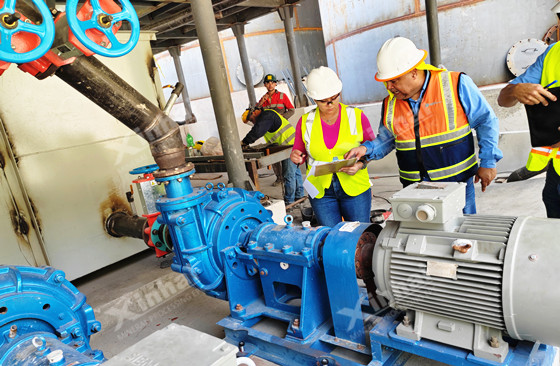
This requires close collaboration among commissioning engineers, installation teams, electrical and automation specialists, and others. The goal is to ensure smooth operation, compliance with technical indicators, achievement of design capacity, and full adherence to contract specifications.
Specifically, if the initial beneficiation test was conducted at Xinhai’s lab and the contract stipulates that on-site performance must match test results—including key parameters like recovery rate—our team guarantees what we call “Performance Guarantee.” We use scientific methodologies to ensure on-site recovery rates meet or even exceed lab results. For projects where Xinhai did not conduct the initial test or where the contract lacks such clauses, we focus on process optimization to guaranteed throughput and strive to improve recovery efficiency.
In mining production, ore characteristics are complex and variable, and site conditions often differ from the controlled lab environment. This demands highly experienced commissioning experts who can make real-time adjustments based on factors like particle size, moisture content, and impurities.
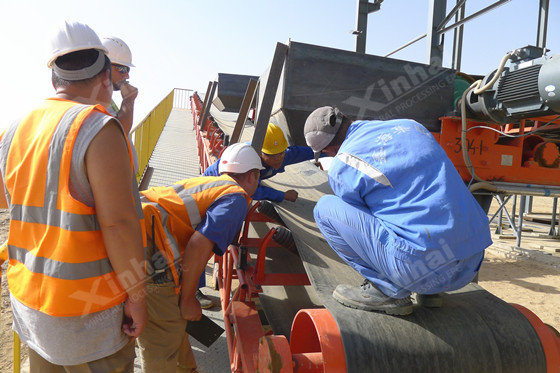
For example:
For clay-rich powdery ore prone to clogging, we optimize the feeding system.
For gold ores containing coarse particles, we apply gravity separation early in the process to avoid losses in subsequent leaching stages.
These nuanced adjustments not only boost recovery rates but also reduce energy consumption and operational costs, leading to more efficient and sustainable production.
Xinhai’s commissioning team consists of senior mining engineers well-versed in global mining standards. They have successfully commissioned hundreds of projects worldwide, from gold mines in Africa to lithium operations in Asia. Below are six successfully delivered projects.
1. Guinea 15,000 t/d Gravity Separation + CIP Gold Plant
This project involved a gold deposit with two main ore types: surface lateritic ore and quartz-vein ore beneath the weathered layer. The lateritic ore consisted mainly of unconsolidated laterite, cemented ferrocalcic rock, and breccia, with 80% being clay-rich powdery ore containing coarse gold particles. The average grade was 1.0 g/t. With few impurities and gold as the only target metal, the processing difficulty was moderate.
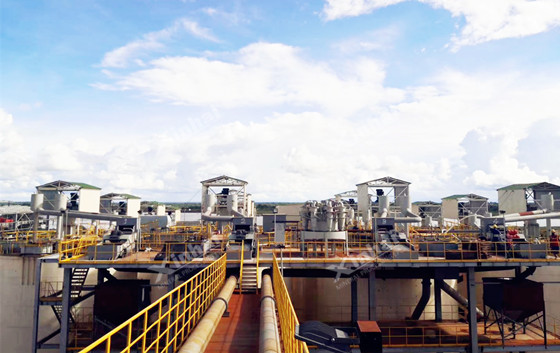
Xinhai implemented a gravity separation + cyanidation flowsheet, strictly adhering to the "recover early where possible" principle. During commissioning, we prioritized and enhanced gravity recovery to maximize coarse gold capture before cyanidation, preventing losses from incomplete leaching. Collaborating with the installation team, we optimized equipment layout and process parameters to address clogging issues caused by the powdery ore. By faithfully replicating the test flow sheet, the plant achieved an overall recovery rate of approximately 93%.
2. Guinea 6,000 t/d Gold Plant Retrofit
The ore processed was primarily oxidized, with 80% being clay-rich powder containing coarse gold. The initial geological report indicated an average grade of just 0.7 g/t. However, our experts identified that standard sampling and preparation methods could lead to gold loss due to the presence of coarse particles. We recommended bulk sampling and prioritized gravity separation during analysis, also accounting for gold particle adhesion to equipment surfaces. The final adjusted average grade for the deposit was 1.0 g/t, providing an accurate baseline for commissioning.
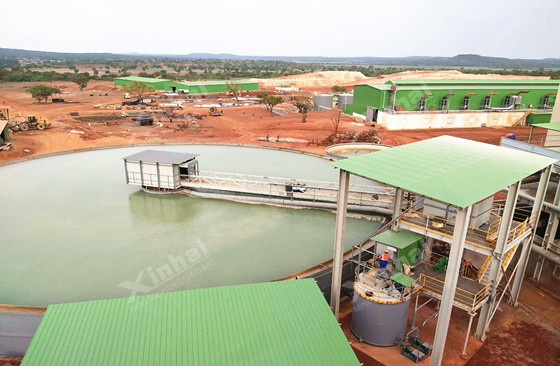
A major challenge was the high moisture content (25-30%), which caused clogging and feeding difficulties. Our tailored solution included:
1) optimizing the feed system with vibrating screens and agitators to handle the powdery ore, and
2) enhancing gravity separation and grinding to ensure efficient gold particle recovery.
Working closely with electrical and automation teams on-site for real-time monitoring and adjustment, the project achieved a gold recovery rate of about 90%. Post-retrofit, the plant saw stable capacity increase and significantly improved productivity, as confirmed by client feedback.
3. Guinea 3,000 t/d Gold CIP Plant
For this project, dealing with a head grade of 1.2 g/t, we applied a gravity + cyanidation process. The commissioning focus was on ensuring flow sheet smoothness and meeting target indicators. By meticulously replicating the lab-tested process and ensuring equipment-process compatibility on-site, the team achieved a recovery rate of approximately 93% with stable throughput.
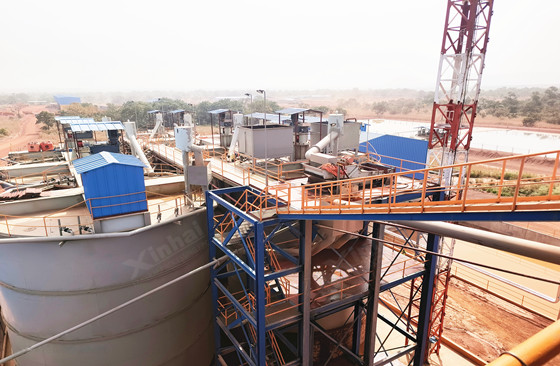
4. Zimbabwe 2 Million t/a Spodumene (Lithium) Concentration Plant
This lithium project presented the challenge of spodumene's complex dissemination. Our team optimized the flotation and magnetic separation processes to ensure a concentrate grade exceeding 5.5% Li₂O with a recovery rate of 59.5%. Through collaboration with the installation team, we adjusted grinding fineness and reagent regimes to address issues related to uneven particle size distribution.
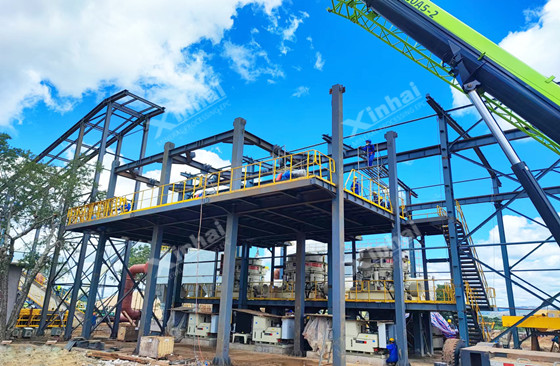
5. Mongolia 3,500 t/d Iron Ore Mining & Processing Project
For this magnetite ore project owned by a Mongolian coal mining company, the average feed grade was 36.85% Fe, with fine dissemination. Using magnetic separation, the commissioning process yielded two products: a premium concentrate with ~31% yield and grade >65% Fe, and a secondary concentrate with ~5% yield and grade between 50-60% Fe. On-site optimization by our team enabled highly efficient separation.
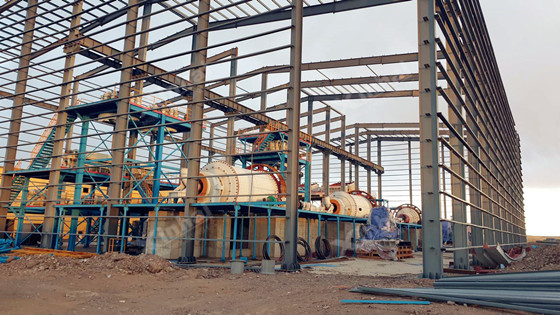
6. Henan 3,000 t/d Silver-Lead-Zinc-Gold Polymetallic Ore Flotation Plant Expansion
This polymetallic ore project commenced without prior beneficiation test data. Xinhai was responsible solely for process commissioning. Collaborating with the mine's design institute and the installation contractor, we optimized the flowsheet. The result was a throughput that exceeded design capacity, reaching over 1,800 TPD, generating comprehensive daily revenues of approximately 1 million RMB. This case demonstrates Xinhai's flexible commissioning capability even without baseline test data, enabling clients to achieve profitability rapidly.
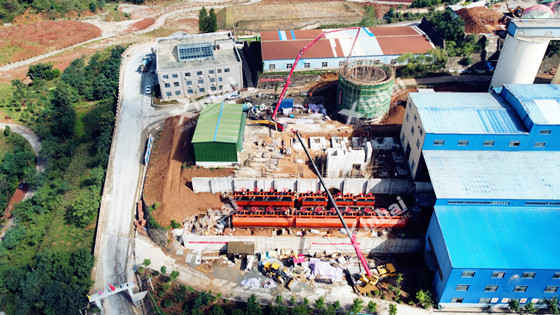
Within Xinhai's EPC+M+O service framework, commissioning is not an isolated task. It is an integral safeguard throughout the journey from testing to production: initial test work provides the basis for commissioning, the design phase incorporates flexibility for adjustments, and final commissioning ensures project success—forming a closed-loop "Design-Test-Commissioning" system.
Choosing Xinhai EPC means more than just acquiring mineral processing equipment; it means selecting end-to-end professional assurance for your project's success.
Share your project details and our engineers will get back to you shortly.
 CHAT
CHAT MESSAGE