
As the global energy transition accelerates, lithium has become one of the world’s most strategically important minerals. Demand from EV batteries and energy storage systems continues to rise, pushing lithium projects into rapid development across Australia, South America, Africa, and beyond.
But while lithium demand is growing fast, not all lithium ores behave the same in a processing plant.
Among granitic pegmatite deposits, spodumene and lepidolite are the two most common lithium-bearing minerals. On paper, both contain lithium. In practice, however, they behave very differently during crushing, grinding, flotation, and downstream recovery. That difference has a direct impact on plant design, equipment selection, operating costs, and ultimately project profitability.
In other words, a flowsheet designed for spodumene cannot simply be copied and applied to lepidolite ore.
Spodumene is a pyroxene-type lithium aluminum silicate mineral with a relatively coarse crystal structure. It often occurs as large prismatic crystals in pegmatite ore, making mineral liberation comparatively easier during crushing and grinding.
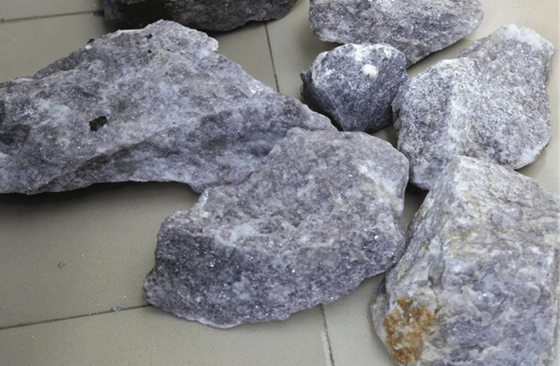
(Spodumene lithium ore)
Lepidolite, on the other hand, belongs to the mica family. Its layered, flaky structure gives it completely different processing characteristics. Lepidolite is usually closely intergrown with quartz and feldspar, and it often contains associated rare metals such as rubidium and cesium.
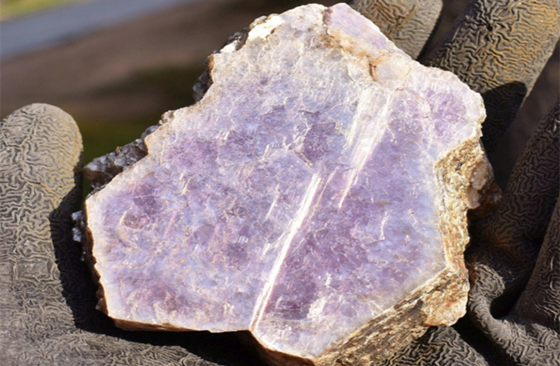
(Lepidolite lithium ore)
What makes things even more complicated is that spodumene and lepidolite can coexist within different zones of the same deposit. For plant designers, this creates a common challenge: the ore comes from the same mine, but it cannot be treated using the same process route.
That mineralogical difference is really where everything starts.
1. Crushing Stage: Similar Goal, Different Priorities
Spodumene Crushing Focuses on Throughput and Stable Particle Size
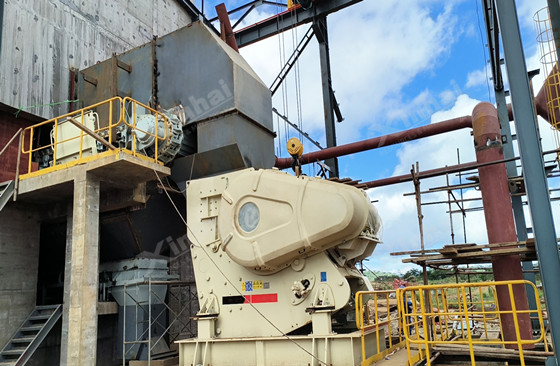
Run-of-mine spodumene ore is usually quite coarse, often reaching 300–500 mm. Before flotation can even begin, the ore needs to be reduced to a suitable grinding size through staged crushing.
Most spodumene plants use either two-stage closed-circuit crushing or three-stage crushing circuits, depending on plant capacity requirements. Jaw crushers are typically used for primary crushing, while cone crushers handle secondary and tertiary crushing. Vibrating screens keep the circuit closed and help maintain a consistent final product size, usually below 15 mm.
The key objective here is straightforward: maintain high throughput while avoiding excessive coarse particles or unnecessary over-crushing.
Lepidolite Crushing Is More About Controlling Sliming
Lepidolite behaves very differently because of its layered mica structure. Once excessive force is applied, the mineral tends to peel and break along its layers, generating fine slimes very easily.
And in flotation, too much slime is a problem.
That’s why lepidolite crushing circuits are generally more conservative. Two-stage crushing is commonly used, often combined with screening to reject some low-density gangue before fine crushing. Final particle size is usually controlled between 10–20 mm — enough to achieve preliminary liberation, but without creating excessive fines.
2. Dense Media Separation: Reducing the Load Before Grinding
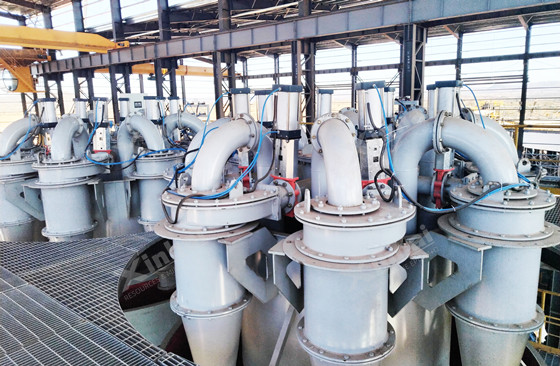
For lepidolite ores — and even some coarse spodumene ores — adding a Dense Media Separation (DMS) stage before grinding can significantly improve plant efficiency.
The principle is relatively simple: lithium minerals are generally denser than gangue minerals like quartz and feldspar. By using dense media cyclones, lower-density waste rock can be rejected early in the process.
This “pre-concentration” step helps reduce the amount of material entering the grinding circuit, which in turn lowers energy consumption, reagent usage, and overall operating costs.
In real plant operation, this early rejection step often makes a bigger economic difference than people expect.
3. Grinding Stage: One Prioritizes Liberation, the Other Prevents Overgrinding
Spodumene Grinding Aims for Full Mineral Liberation
Spodumene grinding usually follows a staged grinding approach. After crushing, the material enters wet ball mills, with grinding fineness commonly controlled at 60%–80% passing 200 mesh.
At the same time, desliming and washing operations are often added to remove surface impurities and improve flotation conditions.
The overall goal is to fully liberate spodumene from gangue minerals before flotation begins.
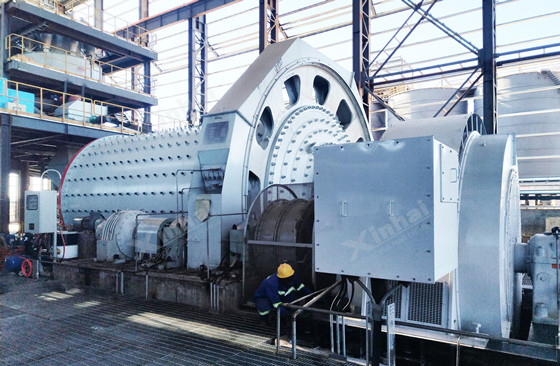
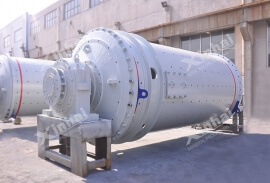
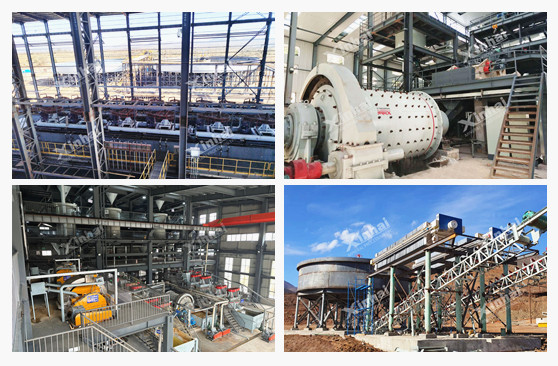
(Ball mill grinding system used in lithium ore processing plant)
Lepidolite Grinding Requires Careful Slime Control
Lepidolite grinding is much more delicate.
Because the mineral structure is soft and flaky, excessive grinding can quickly produce secondary slimes that coat mineral surfaces and interfere with flotation recovery.
To reduce this effect, plants often use rod mills or carefully controlled ball milling circuits combined with hydrocyclone classification. Grinding fineness is generally kept at 50%–70% passing 200 mesh, while coarse particles are returned for regrinding.
The idea is not simply “grind finer,” but rather “grind just enough.”
4. Flotation: The Biggest Difference Between the Two Ores
Spodumene Flotation Typically Uses Direct or Reverse Flotation
Spodumene flotation technology is relatively mature and generally follows either direct flotation or reverse flotation routes.
In direct flotation, the pulp is adjusted to alkaline conditions using sodium hydroxide or sodium carbonate. Fatty acid collectors are then used to float spodumene directly, while sodium silicate suppresses quartz and feldspar.
Reverse flotation works differently. Lime, starch, or dextrin are used to depress spodumene, while cationic collectors float the gangue minerals instead. The spodumene remains in the flotation cell as concentrate.
The choice between these two methods depends heavily on ore composition and concentrate quality requirements.
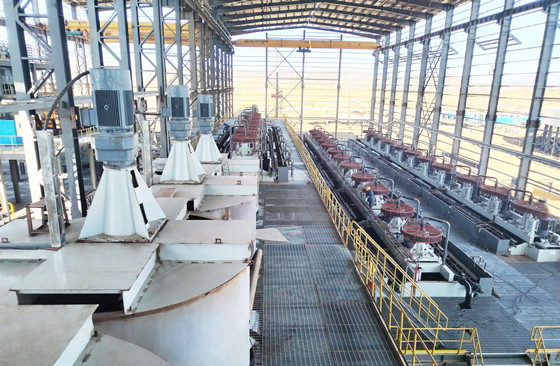
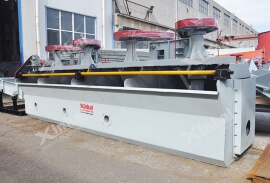
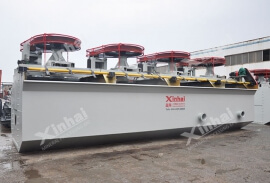
(Lithium flotation circuit for spodumene and lepidolite beneficiation)
Lepidolite Flotation Usually Requires Multiple Cleaning Stages
Lepidolite naturally has better floatability than spodumene, but the process is not necessarily simpler.
After DMS pre-concentration and magnetic iron removal, lepidolite flotation commonly uses amine collectors under neutral or acidic conditions. Multiple cleaning stages — usually two or three — are often necessary to improve concentrate grade.
And unlike spodumene, producing a flotation concentrate is usually not the final step.
Because lepidolite concentrates tend to have lower lithium grades and more complex mineral associations, they often require additional chemical extraction methods such as sulfuric acid roasting, pressure leaching, or chlorination roasting to fully recover lithium values.
5. Magnetic Separation: More Critical in Lepidolite Circuits
In spodumene plants, magnetic separation is mainly used to remove iron impurities and improve concentrate quality, especially for ceramic-grade products.
Lepidolite circuits, however, often face another challenge: iron-bearing lepidolite.
Since this mineral is only weakly magnetic, high-gradient magnetic separators are typically required. In many cases, magnetic separation is not just an impurity removal step — it also becomes an important mineral separation stage within the flowsheet itself.
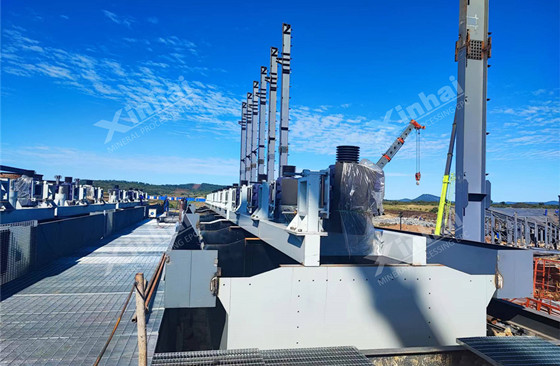
6. Dewatering: Lepidolite Requires Lower Moisture Content
Both spodumene and lepidolite concentrates generally follow the same basic dewatering sequence: thickening, filtration, and drying.
But the moisture requirements are different.
Spodumene concentrate is usually dried to around 8%–10% moisture, which is adequate for transportation and downstream processing.
Lepidolite concentrate, however, is often sent directly into hydrometallurgical lithium extraction systems, where moisture control becomes much stricter. In some cases, moisture content needs to be reduced below 3%, or even close to 1%.
At the same time, excessive mechanical damage to mica flakes must also be avoided during drying.
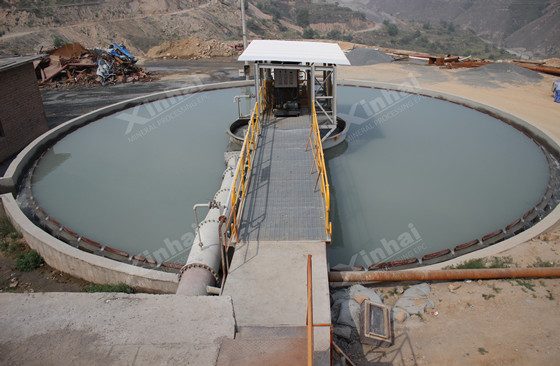
7. Tailings Handling: Lepidolite Tailings Are Harder to Manage
From an environmental perspective, both ore types require proper tailings thickening, water recycling, and safe dry stacking practices.
However, lepidolite tailings usually contain a large amount of ultra-fine mica particles, which settle very slowly. Without proper treatment, this can lead to poor water clarity and unstable tailings handling conditions.
As a result, high-efficiency thickeners and flocculants are often necessary to improve sedimentation and solid-liquid separation performance.
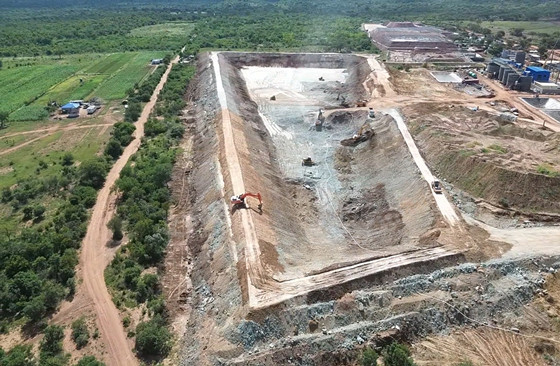
In lithium processing projects, flowsheet design should never begin with equipment selection alone.
Comprehensive metallurgical testing is what truly determines whether a project can operate efficiently and economically over the long term.
Mineralogical analysis helps identify lithium occurrence, liberation characteristics, gangue associations, and impurity distribution. Based on this data, engineers can optimize grinding parameters, flotation reagent schemes, and full-process recovery routes.
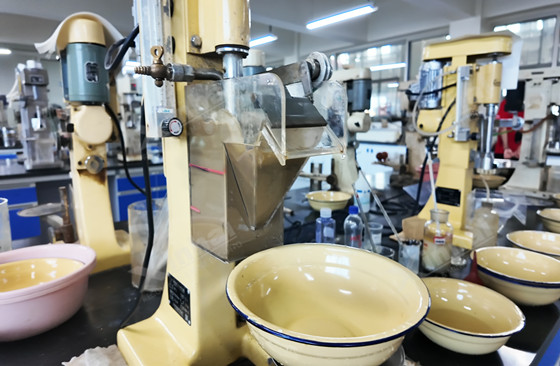
For deposits containing both spodumene and lepidolite, this testing phase becomes even more important. Small mineralogical differences can lead to major changes in recovery performance, operating cost, and final concentrate quality.
Ultimately, successful lithium plant design is not about applying a standard template. It is about building a process around the actual behavior of the ore.
Zimbabwe 2 Mt/a Lithium Processing Plant Project
Shanxi 300,000 t/a Quartz Sand Processing Plant Project
Hubei 900,000 t/a Quartz Sand Beneficiation Plant Project
Chile 700 t/d Copper Processing Plant Project
Nigeria 1,000 t/d Copper-Silver Processing Plant Project
Share your project details and our engineers will get back to you shortly.
 CHAT
CHAT MESSAGE