
Gold flotation is commonly considered for fine-grained gold associated with sulfide minerals, polymetallic ores, and other ores that respond well to flotation. The process uses differences in mineral surface properties to separate gold-bearing minerals from gangue. It can also concentrate associated metals into separate or combined product streams, depending on the ore and flowsheet.
The right route depends on the deposit. Mineral composition, how gold occurs, and the size and locking pattern of the gold particles all affect process design. A gold flotation flowsheet may include crushing and screening, grinding and classification, reagent conditioning, flotation, concentrate dewatering, and tailings management. Testwork helps determine which stages and operating conditions suit a specific ore.
A typical gold flotation plant prepares and classifies ore before flotation. The simplified sequence is:
Crushing and screening → grinding and classification → conditioning and reagent addition → roughing, scavenging, and cleaning → concentrate dewatering → tailings and water management
The exact circuit, grind size, reagent scheme, and flotation-cell selection depend on ore characteristics and testwork results.
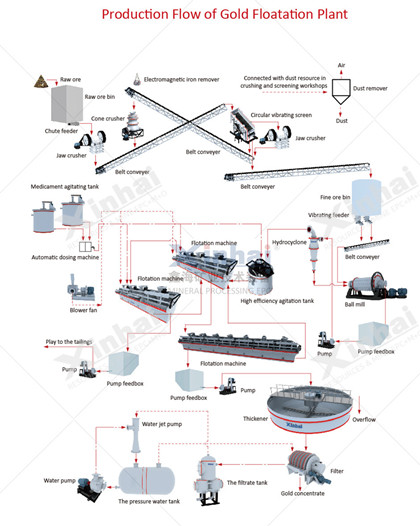
Crushing and screening prepare run-of-mine ore for grinding. The objective is to provide a controlled feed size and a stable feed to the grinding circuit.
A plant may use a two-stage or three-stage closed-circuit crushing flowsheet. Ore is fed to a jaw crusher for primary crushing, then screened. Oversize material returns for further crushing or passes to a cone crusher for secondary or tertiary reduction, while undersize material goes to the fine ore bin.
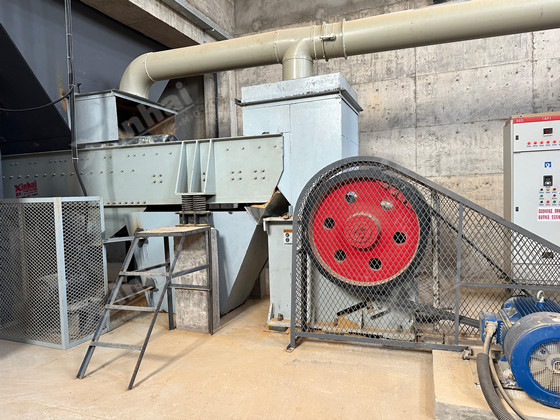
In a closed circuit, returning oversize material for further reduction helps control the mill-feed top size. This supports a more consistent feed to grinding and helps limit unnecessary size reduction.
Typical equipment for gold ore crushing includes a primary jaw crusher, a secondary or tertiary cone crusher, and a circular vibrating screen.
Grinding liberates gold-bearing minerals from gangue so that they can be separated by flotation. The target grind depends on the gold’s occurrence and locking size.
A common arrangement is a ball mill in closed circuit with hydrocyclones. Grate-discharge ball mills can be used for coarser grinding duties, while overflow ball mills are used for finer grinding. In a typical circuit, cyclone overflow proceeds to flotation and coarse underflow returns to the mill for further grinding.
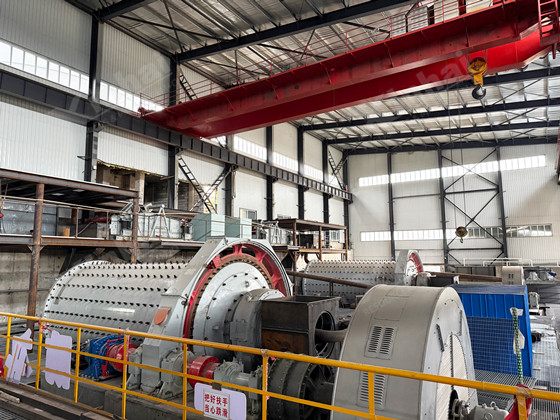
For gold flotation, the grinding fineness may typically range from 60% to 90% passing 200 mesh (−0.074 mm). This is an indicative range, not a design specification: the appropriate target should be established through testwork on representative ore samples.
Finer grinding is not automatically better. Over-grinding can produce slimes that coat mineral surfaces and interfere with flotation. The objective is to achieve adequate liberation while managing the amount of fine material.
Conditioning prepares the pulp for flotation by setting pulp concentration and distributing reagents. Pulp density is commonly in the range of 30% to 35% solids, though the appropriate value depends on the ore and circuit.
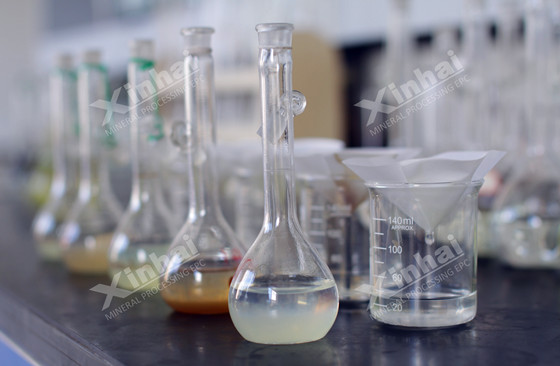
Reagents may be added in smaller doses at multiple points to maintain more consistent concentrations and reduce the risk of local overdosing. Three broad reagent classes are commonly used:
Frothers: Examples include 2# oil and MIBC. Frothers help form and maintain a froth that carries floated particles from the cell.
Collectors: Xanthates and dithiophosphates are commonly used collectors. They can render selected mineral surfaces hydrophobic, allowing particles to attach to air bubbles.
Regulators: Copper sulfate, lime, and other regulators may be used to adjust pH, activate minerals, or depress unwanted minerals. The choice depends on ore characteristics and test results.
Reagent selection interacts with mineralogy, pH, water chemistry, and temperature. A flotation testwork program can help establish the reagent scheme and addition points. Automatic dosing systems may be used to meter reagents at selected points in the circuit.
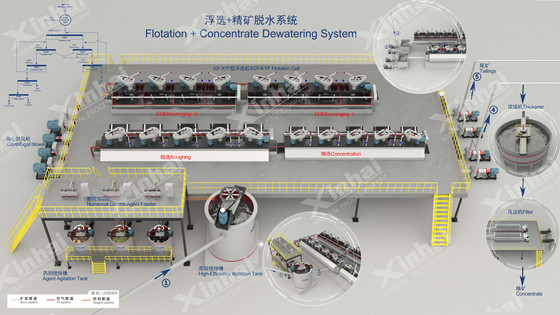
A gold flotation circuit may use roughing, scavenging, and cleaning stages. The number of stages and their arrangement are set for the ore and recovery and concentrate-grade objectives.
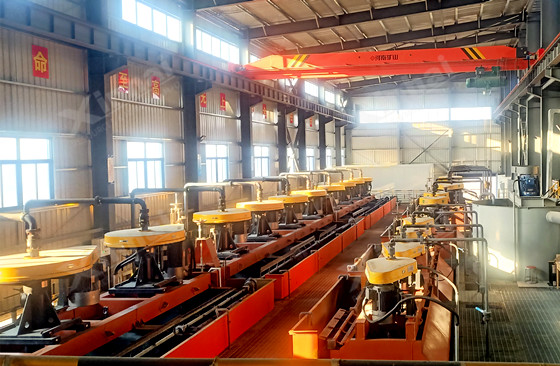
Roughing is the initial recovery stage. Conditioned pulp enters flotation cells, where agitation and aeration bring bubbles into contact with hydrophobic gold-bearing minerals. Froth containing the floated particles is removed as rougher concentrate.
Scavenging treats rougher tailings to recover additional floatable gold-bearing minerals that were not recovered in roughing.
Cleaning treats concentrate to improve its grade. One or more cleaning stages may be used; operating conditions and reagent additions are selected for the ore and desired product.
Middlings streams may be returned to earlier points in the circuit. These recycle streams link the stages and give the plant designer options for balancing recovery and concentrate grade.
A configuration might include one roughing stage, two scavenging stages, and multiple cleaning stages. This is an example, not a standard layout: the flowsheet should be confirmed through appropriate testwork, such as locked-cycle testing.
Flotation-cell selection depends on the duty, aeration requirements, pulp characteristics, and circuit design. The following cell types and models are listed in the source material as representative options:
Cell type | Representative models | Typical duty described in the source |
Self-aspirating mechanical | SF, BF | Small to medium plants or circuits with modest aeration demand |
Air-inflation mechanical | KYF, XCF | Rougher or scavenger duties where air volume is controlled |
Coarse-particle | CLF | Coarse or dense pulp where coarse gold and heavy minerals must remain suspended |
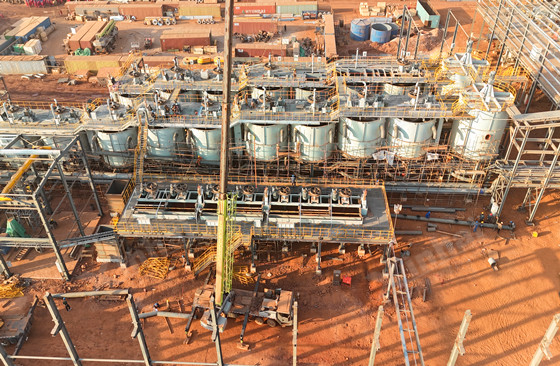
(Xinhai Large-Scale Flotation Machine – Project Site)
A KYF/XCF combination is one configuration used in flotation circuits. In this arrangement, the source describes XCF as the suction cell and KYF as the straight-flow cell. The U-shaped tank and rotor–stator arrangement are designed to promote pulp circulation and help keep coarse, dense particles suspended. The suitability of this or any other cell arrangement depends on the project design.
Flotation concentrate contains water and usually needs dewatering before transport or further processing. A common sequence is thickening followed by filtration. A thickener raises the pulp concentration; a filter press or disc vacuum filter can then reduce concentrate moisture.
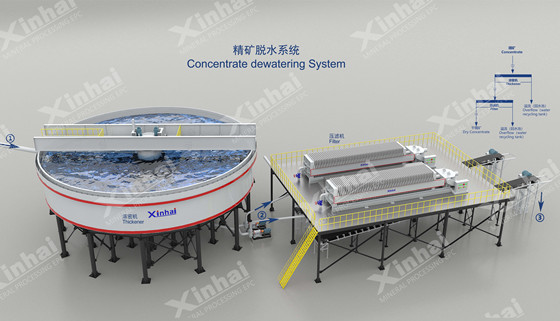
The source material gives below 15% moisture as a reference target for dewatered concentrate. Actual moisture will depend on the concentrate and the selected equipment. The resulting product may be bagged and shipped or sent to a subsequent recovery stage, as determined by the project flowsheet.
Tailings handling and water recovery are important parts of gold plant design. Two commonly used routes are dry stacking and conventional wet disposal.
Dry stacking mechanically dewaters tailings, using equipment that may include hydrocyclones, dewatering screens, thickeners, and filter presses. The source material gives a typical moisture range of roughly 12% to 15% before transport to a dry-stack facility. Dry stacking reduces the water retained in the tailings material and can make process water recovery easier; site conditions and tailings properties influence the final design.
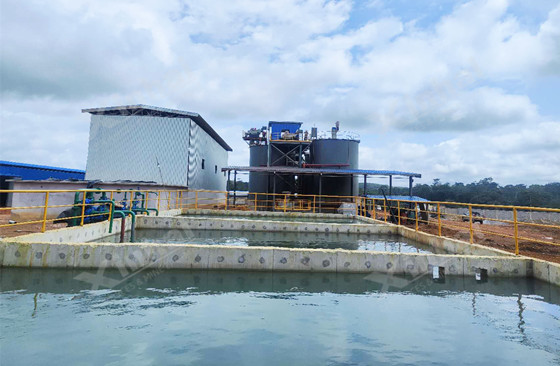
Conventional wet disposal pumps tailings as slurry to a tailings storage facility. Solids settle, and clarified water may be recovered and returned to the plant.
Water recovered from thickening, filtration, and tailings settling can be returned to the process where water quality and plant requirements allow. Water containing residual reagents may require treatment before discharge. Tailings-facility design, water balance, and discharge requirements should be addressed for the specific project and jurisdiction.
The project descriptions and capacities below are reproduced from the supplied source text. They are examples of Xinhai project experience, not process recommendations for other deposits.
Zimbabwe 500 t/d Gold Processing Plant: Two-stage closed-circuit crushing and screening; two-stage closed-circuit grinding and classification; gravity separation; cyanidation; desorption electrolysis; smelting; and tailings filtration and dewatering.
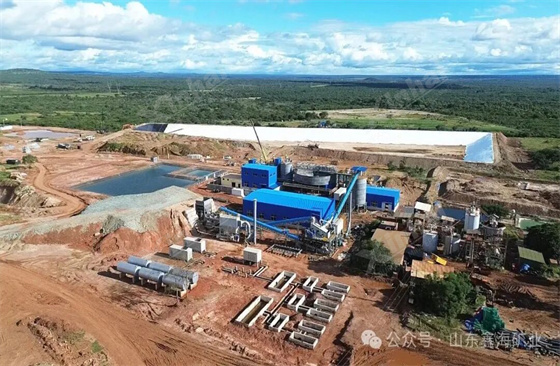
Xinjiang 2 Million t/a Gold Mine Expansion Project: Built on an existing 2,000 t/d line, the project added a 4,000 t/d flotation line and retained the original crushing and utilities systems to reach 2 million t/a.
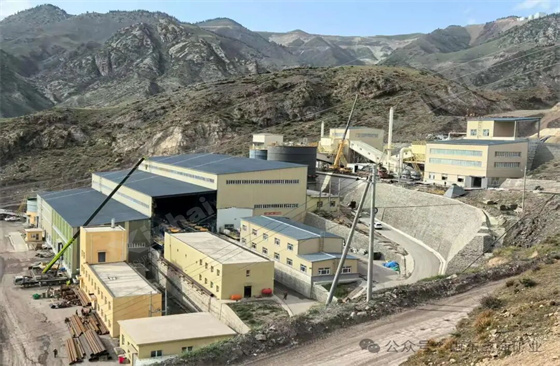
Mongolia 2 Million t/a Gold Heap Leaching Project: Heap-leaching flowsheet for low-grade gold ore.
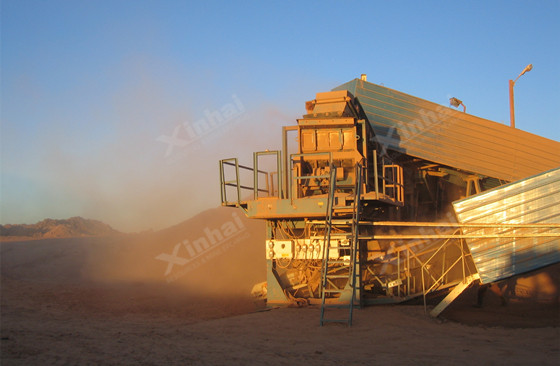
Eastern Europe region 500 t/d Gold Processing Plant: Gold processing plant delivered under Xinhai’s EPC+M+O service scope.
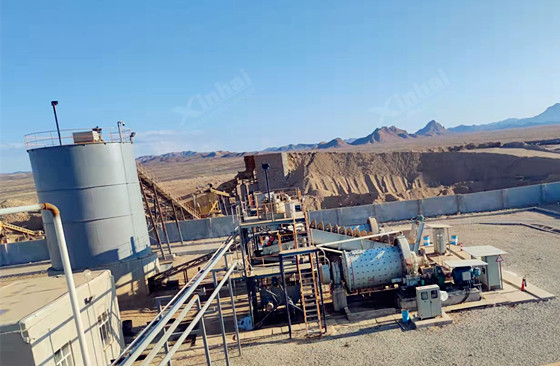
Malaysia 700 t/d Gold Processing Plant: Two-stage closed-circuit grinding; thickening before leaching; leaching and adsorption; and tailings dry stacking.
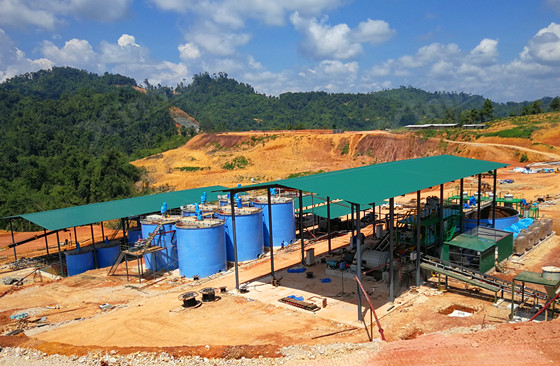
Additional gold flotation reference projects:
Shandong 1,000 t/d Gold Processing Plant: One-stage open-circuit crushing; one-stage open-circuit self-grinding; one-stage closed-circuit grinding and classification; flotation; and concentrate dewatering.
Tibet 600 t/d Gold Flotation Plant.
Henan 650 t/d Gold Processing Plant: Crushing; closed-circuit grinding; and flotation with one roughing, three scavenging, and four cleaning stages, followed by concentrate dewatering.
Guinea 15,000 t/d Gold Processing Plant.
For related information, see Xinhai’s gold flotation production line, gold processing overview, grinding and classification guide, tailings dry stacking solution, and EPC+M+O service.
Technical parameters in this article are indicative ranges for general reference and vary with ore properties. Definitive process parameters should be established through mineral-processing testwork on representative samples. Contact Xinhai technical staff for information specific to your project.
Share your project details and our engineers will get back to you shortly.
 CHAT
CHAT MESSAGE