
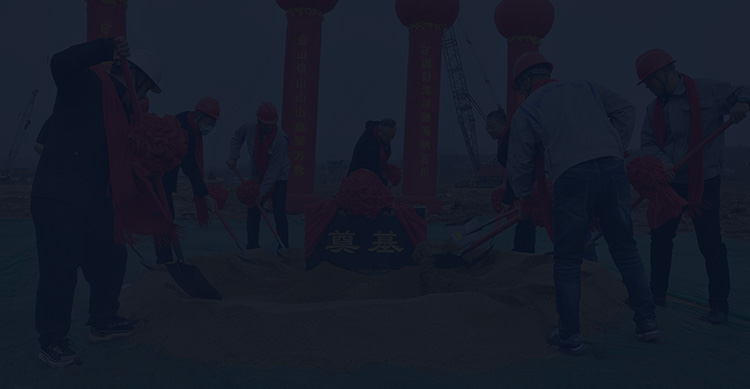
Finding a big copper-gold deposit is exciting. Turning it into a working mine that actually delivers metal year after year is a different story entirely.
In the Philippines, recent moves by SM Investment Group and DMCI Group to consolidate assets—including the Toledo copper mine in Cebu and the Tampakan copper-gold project in Mindanao—have put large-scale copper-gold development back in the spotlight.
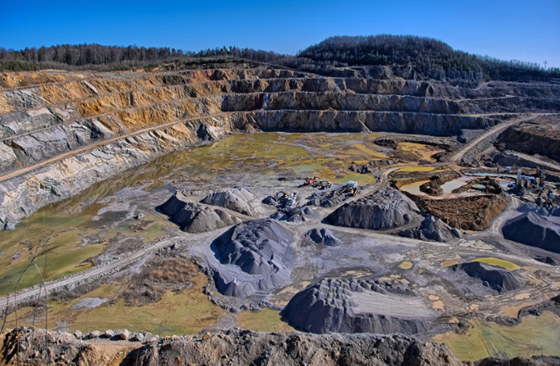
Tampakan is one of the largest undeveloped copper-gold deposits in Southeast Asia, with roughly 2.94 billion tonnes of resources grading about 0.51–0.6% copper and 0.19–0.2 g/t gold. If it moves forward, the project is expected to produce around 375,000 tonnes of copper and 360,000 ounces of gold in concentrate each year for 17 years.
But owning that kind of resource is only the first chapter. The harder part comes next: understanding exactly how the metals sit in the rock, choosing a process that recovers both copper and gold without leaving money on the table, and scaling a laboratory flowsheet into a plant that keeps running when the ore starts to change.
Just because copper and gold appear together in a resource statement doesn’t mean they behave the same way in a processing plant.
Before anyone draws a flowsheet, the team needs a clear picture of the mineralogy. Copper might be present as chalcopyrite, bornite or chalcocite. Gold could be free, locked inside sulfides, or tightly associated with the copper minerals. The real question is simple: how are these two metals related, and at what size do they liberate?
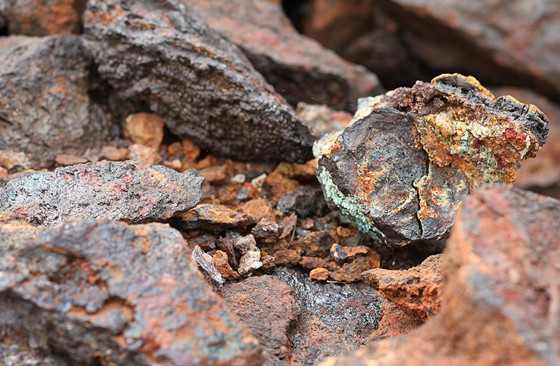
When gold travels with the copper sulfides, flotation can usually pull both into the same concentrate, making the selection of an appropriate gold flotation production line an important part of process design. If there’s a decent amount of free or coarse gold, gravity recovery often makes sense upstream of flotation. Grinding and ball mill selection matter just as much. Most copper sulfide circuits aim for a primary grind P80 somewhere between 75 and 150 μm—fine enough for good liberation, coarse enough to keep energy costs under control. Going finer can help, but only if the extra recovery justifies the extra power.
That’s why proper metallurgical testing is non-negotiable. A single “good” sample can look impressive in the lab and still misrepresent the full orebody. Variability in hardness, mineral associations and grade is almost always present, and the process has to cope with it.
There is no one-size-fits-all flowsheet for copper-gold ore, just as different copper and polymetallic ore dressing processes require different approaches to mineral separation. Everything depends on the specific mineralogy and the right mineral processing solution.
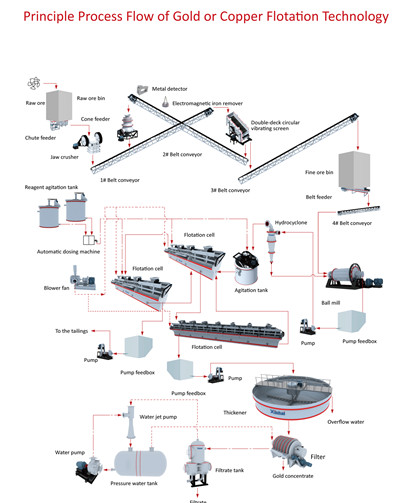
For many sulfide deposits the backbone is straightforward: crush, grind, float, and produce a copper concentrate through flotation that also carries most of the gold. Where gravity-recoverable gold shows up, the circuit often becomes: Crushing → Grinding → Gravity → Flotation
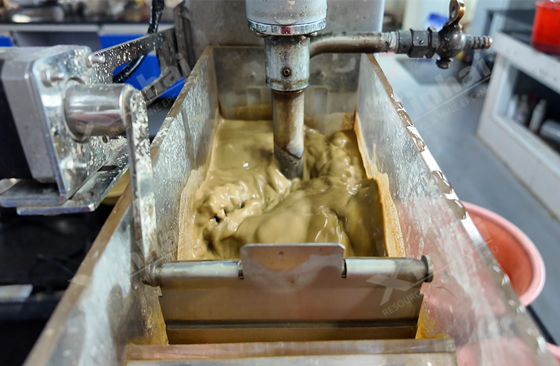
In practice, well-run plants commonly achieve copper recoveries in the 85–95% range. Gold recovery is frequently a few percentage points lower—sometimes 5–15% behind copper—depending on how the gold is locked. Some operations, like Telfer, have pushed both metals above 90%. Laboratory locked-cycle tests regularly report copper recoveries between 86% and 97% under favourable conditions.
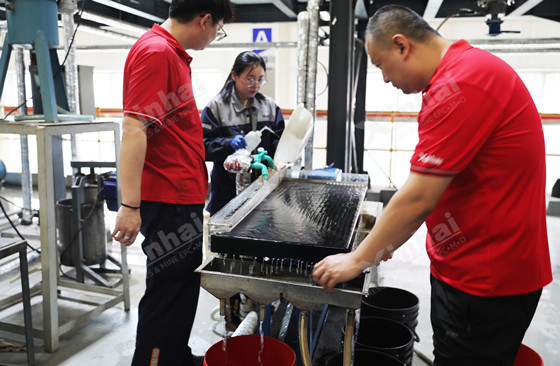
The key is not to chase the highest single number. A one- or two-point gain in recovery on a deposit the size of Tampakan can mean tens of thousands of extra tonnes of copper or hundreds of thousands of ounces of gold over the life of the mine. But if that gain comes at a steep cost in energy, reagents or capital, the economics may not stack up. The goal is the best overall balance of recovery, concentrate quality, throughput and operating cost.
A flowsheet that looks excellent on paper can still struggle once the plant is running. Ore changes. Grades shift. Hardness varies. A design that only works on the “best” sample is a risk.
Throughput and recovery have to be considered together. Equipment has to be matched across the whole circuit—if the mills are the bottleneck, adding more flotation cells won’t help. Mineral processing plant design needs to account for the real range of feed the mine will deliver, not just the ideal case.
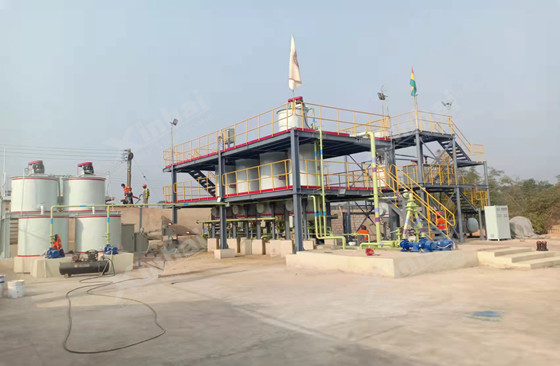
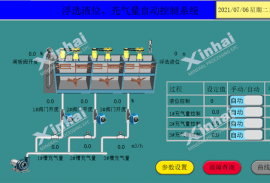
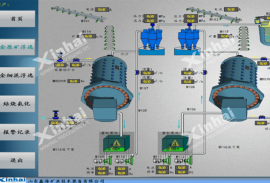
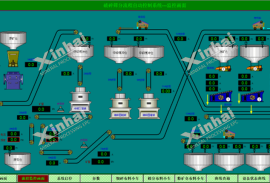
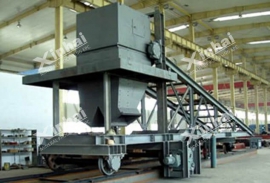
Real projects show what this looks like in practice. On a recent 1.5 million tonne-per-year (5,000 t/d) copper flotation plant in Kazakhstan that Xinhai delivered under an EPC contract, the design targets 90% copper recovery into a 22% copper concentrate from an average feed grade of about 0.86% Cu. At a 1,000 t/d copper plant in Yunnan, China, the same approach—one roughing, three scavenging and three cleaning stages—delivered 23% copper concentrate at 91.21% recovery from 0.87% Cu feed. A smaller 200 t/d copper plant in the Philippines reached 95% recovery into a 26.5% concentrate. These results didn’t happen by accident; they came from thorough testing, carefully matched equipment and a process design built for the actual ore.
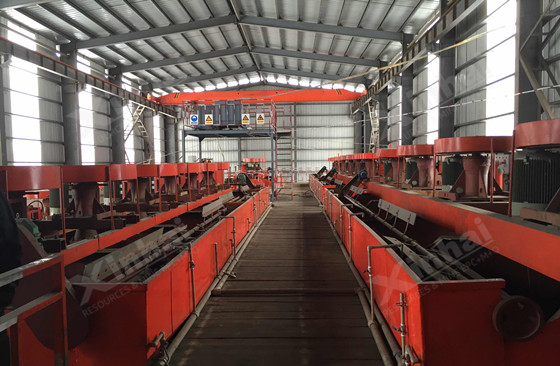
(1,000 t/d copper plant in Yunnan)
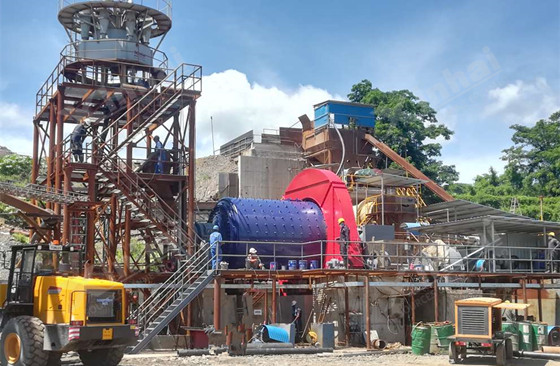
( 200 t/d copper plant in the Philippines)
How are the copper and gold hosted, and how are they associated?
What grind size gives the best trade-off between liberation and cost?
Where do the metals actually report in the process—and where are the losses?
How does the circuit handle the natural variability in the orebody?
Can the chosen flowsheet be scaled up without destroying the economics?
Getting these answers early, and keeping them connected—from metallurgical testing through process design to equipment selection—reduces the chance of expensive surprises later. For any large copper-gold project, that integrated approach is usually the difference between a plant that looks good on paper and one that keeps producing reliably for decades.
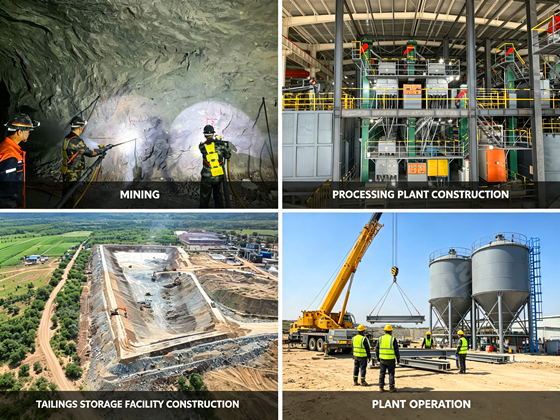
If you are considering a new copper-gold mining project, we’d love to discuss your technical questions, from ore characteristics and metallurgical testing to process design and equipment selection.
At Xinhai, we believe the best solution is tailored to your ore and project conditions, not a standard flowsheet.
Share your copper-gold project with us. Let’s tackle the technical challenges together.
What’s the most common way to process copper-gold ore?
Flotation is the workhorse for most sulfide deposits. Gold that is associated with copper sulfides often reports with the copper into the concentrate. Typical copper recoveries sit in the 85–95% range; gold is often a bit lower. The right circuit is always confirmed by testwork.
Can copper and gold be recovered together?
Yes. When the gold is locked with the copper minerals, both can report to the same concentrate. Free or coarse gold may justify a gravity step ahead of flotation.
Why bother with detailed metallurgical testing?
Because it tells you how the ore actually behaves, what grind size works, what recoveries are realistic, and which flowsheet makes sense. Without it, plant design is guesswork.
What equipment does a copper-gold plant usually need?
Crushers, grinding mills, flotation cells, thickeners and filters—selected and sized so the whole circuit works together at the target capacity and under the range of ore the mine will actually deliver.
Share your project details and our engineers will get back to you shortly.
 CHAT
CHAT MESSAGE