
As of 2026, phosphate rock remains a strategically important mineral. High-grade, easily processed deposits are limited, and many producing countries and regions have incorporated phosphate into critical or strategic mineral frameworks. China has strengthened policies covering exploration, development, protection, and supply security of strategic minerals, explicitly including phosphate rock. The European Union continues to list phosphorus among its critical raw materials. These developments reflect growing attention to long-term supply-chain resilience rather than short-term price movements alone.
In this environment, the economic utilisation of medium-to-low-grade and mineralogically complex phosphate beneficiation has become increasingly important. Decades of industrial practice indicate that froth flotation remains one of the most widely applied and effective technologies for upgrading such ores, particularly when physical methods alone prove insufficient.
Sedimentary phosphate ores, especially collophanite, commonly exhibit complex mineral assemblages and locked textures. Phosphate minerals are often intimately associated with quartz, feldspar, dolomite, calcite, and clay minerals. Fine dissemination frequently necessitates adequate grinding to achieve liberation.
Physical separation methods have clear limitations:
Gravity concentration is effective only where density contrasts are pronounced and particle sizes are relatively coarse.
Scrubbing and desliming can remove surface clays and ultra-fines but do not address tightly locked phosphate–gangue associations.
Thermal processes such as roasting must be evaluated carefully against energy consumption, emissions control, and residue management costs.
Froth flotation exploits differences in surface chemistry. With appropriate grind size, pulp chemistry, and reagent regimes, selective separation of phosphate from siliceous and/or carbonate gangue is achievable. On suitable medium-to-low-grade feed, flotation can raise concentrate P₂O₅ grade while reducing SiO₂, MgO, and other impurities to levels acceptable for phosphoric acid and fertiliser production.
No single flowsheet is universally optimal. Selection depends on mineral composition, dissemination characteristics, liberation size, impurity profile, target concentrate specifications, and overall project economics.
1. Direct flotation
Primarily applied to siliceous phosphate ores. Pulp chemistry is adjusted so that phosphate minerals report selectively to the froth, allowing separation from much of the siliceous gangue.
Key considerations include reagent selection, froth characteristics, dewatering behaviour, and the potential influence of residual carbonate minerals.
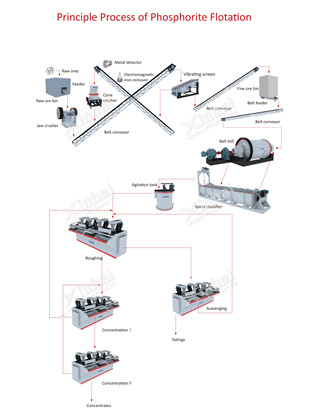
2. Reverse flotation
Particularly useful for high-magnesium (dolomitic) ores where MgO rejection is a primary objective. Carbonate gangue is floated while phosphate remains in the cell product.
In one industrial example treating carbonate-type phosphate (average run-of-mine P₂O₅ ≈ 26.5 %), a grinding circuit combined with three-stage reverse flotation achieved phosphate concentrate recovery above 90 %. Performance must still be balanced against concentrate quality, recovery, and operating cost under site-specific conditions.
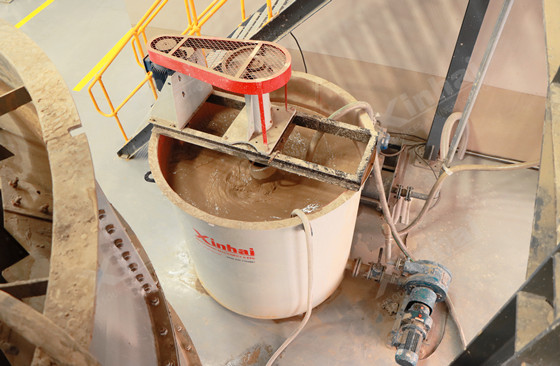
(Pilot-scale test of phosphate rock flotation)
3. Combined direct–reverse flotation
Applied when both siliceous and carbonate impurities must be controlled. Stages are sequenced so that each targets a different gangue type.
A representative complex collophanite operation employed two-stage closed-circuit grinding followed by carbon flotation, direct flotation, reverse flotation, and sulphur flotation, producing both phosphate and sulphur concentrates. Reported annual phosphate concentrate output was approximately 96 500 tonnes at ~30 % P₂O₅.
4. Double reverse flotation
An alternative for certain complex silica–magnesia ores. One major gangue type is reverse-floated first, followed by reverse flotation of the remaining gangue, leaving upgraded phosphate in the cell.
This configuration can sometimes improve dewatering characteristics compared with routes in which phosphate reports as froth product. It is not inherently superior; suitability is determined by ore-specific testing.
(Phosphate ore flotation project site)
Leading producers generally complete comprehensive process mineralogy and flotation test work before committing to large-scale plants. Ores labelled simply as “medium-to-low-grade phosphate” can differ substantially in mineralogy and response. Key elements of pre-feasibility work typically include:
Process mineralogy (MLA/QEMSCAN, XRD, liberation analysis) to identify locking relationships and the size at which apatite liberates.
Determination of an appropriate grind-size window; relatively small changes in the proportion of material finer than 0.074 mm can affect recovery by several percentage points.
Locked-cycle reagent optimisation (commonly involving soda ash, sulphuric or phosphoric acid, sodium silicate, fatty-acid collectors, and amine blends). Single collectors such as pure dodecylamine frequently produce difficult froth; compounded formulations are often required.
Continuous pilot-scale validation. Laboratory batch results do not automatically translate into stable plant performance under varying temperature, pulp density, and recycle-water conditions.
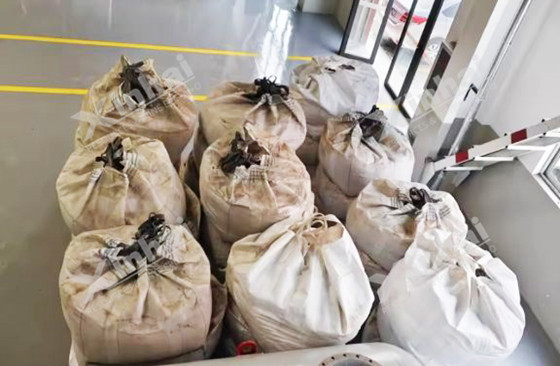
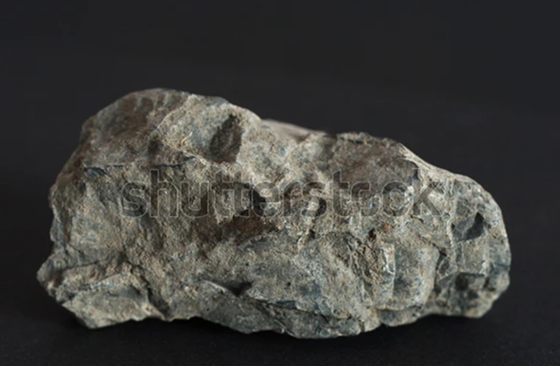
(phosphate rock pilot test sample)
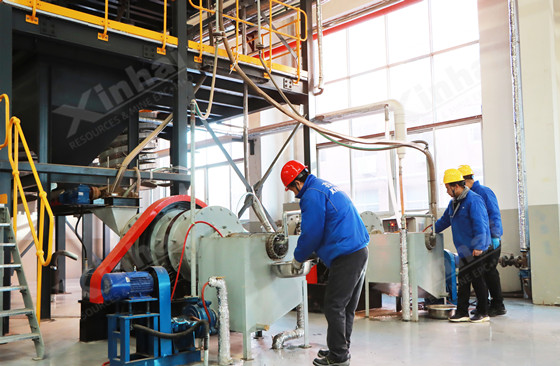
(Pilot-scale test of phosphate rock grinding and classification)
On phosphate projects, converting laboratory and pilot results into stable plant performance requires close integration of beneficiation testing, flowsheet design, equipment selection, and on-site commissioning. Xinhai’s EPC+M+O model is structured around this principle: all stages are aligned to a single set of process targets rather than treated as separate service packages.
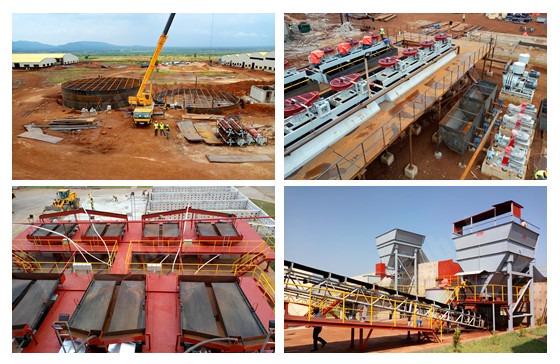
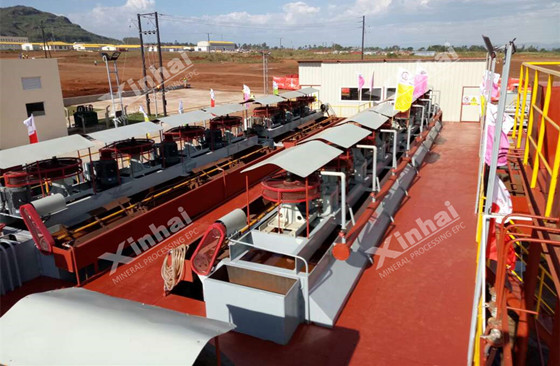
(Uganda 720tpd Phosphate Mine Processing Plant)
Whether a project is located in China, North Africa, Central Asia, Southeast Asia, or other phosphate-producing regions, the fundamental sequence remains the same—characterise the ore thoroughly, define the appropriate flowsheet through systematic testing, and translate laboratory metrics into industrial results that can be sustained over the long term.
For operators facing low-grade or complex phosphate ores, or seeking to improve recovery and concentrate quality, Xinhai offers comprehensive beneficiation testing and flowsheet development services as the starting point. Contact Xinhai to discuss how a tailored flotation solution can be developed for your specific ore.
Share your project details and our engineers will get back to you shortly.
 CHAT
CHAT MESSAGE