
After decades working across mining, mineral processing and tailings management, one pattern stands out in unsuccessful first-time gold investments: the deposit often contains gold—the failure lies in treating an engineering-driven business as a speculative bet.
New investors typically fixate on visible metrics: grade, gold price, projected output and plant construction cost. The most material risks, however, usually crystallize earlier—when major capital and construction decisions are locked in before geology, metallurgy and project economics have been adequately verified.
For first-time investors, success is less about locating a promising deposit than about systematically reducing uncertainty before committing substantial capital. The eight mistakes below warrant particular attention.
A grade of 5 g/t or 8 g/t can sound compelling, but grade alone does not establish economic viability.
What matters is how much gold can be mined and recovered economically over the life of the operation. That outcome depends on resource scale, orebody continuity, mining conditions, stripping ratio, dilution, metallurgical recovery and related factors.
Investors should keep a clear distinction:
Exploration Result ≠ Mineral Resource ≠ Mineral Reserve
A high-grade intercept, a rich ore section, or even a defined mineral resource does not automatically translate into economically mineable reserves.
The decisive question is not “What is the highest grade?” but:
“Under realistic mining and processing assumptions, how much gold can this project produce economically?”
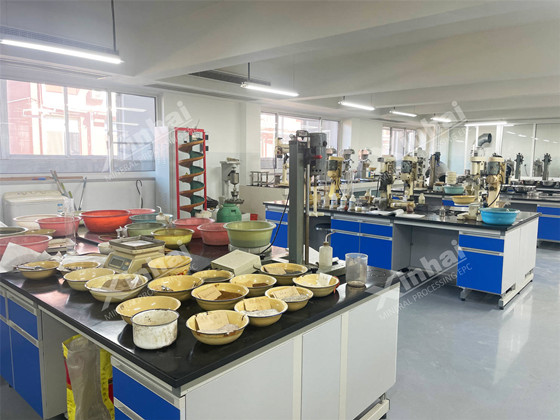
A metallurgical test may report 92% gold recovery. That figure should not be adopted uncritically as the long-term recovery assumption in a financial model.
Laboratory work is conducted under controlled conditions. Samples may be finely ground, reagents optimized, and the test material may not represent the full range of ore types encountered over the mine life.
A more robust technical pathway is:
Ore Characterization → Metallurgical Testwork → Process Flowsheet Development → Pilot or Scale-Up Testing → Design Criteria
The objective is not the highest laboratory recovery, but a recovery rate that can be sustained with representative ore under commercially practical operating conditions.
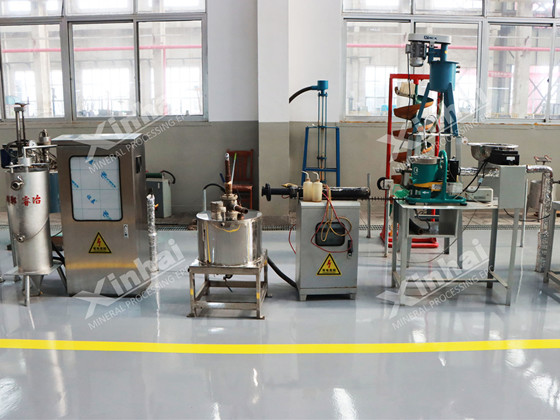
“Gold ore” is not a single material type. Gold may occur as free-milling particles, be associated with pyrite or arsenopyrite, or present as refractory ore requiring more complex treatment.
Depending on mineralogy, viable routes may include gravity separation, flotation, CIL, CIP, heap leaching, roasting or oxidation. The same commodity can therefore demand fundamentally different technical solutions.
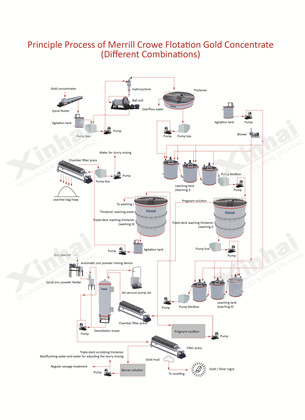
The correct sequence is:
Representative Sampling → Mineralogy and Ore Characterization → Metallurgical Testwork → Process Route Comparison → Process Selection → Engineering Design
Process selection should follow the ore—not the reverse.
At Xinhai, metallurgical testwork underpins process selection and equipment configuration. Defining the technical route before detailed engineering reduces the risk of costly redesign later in the project.
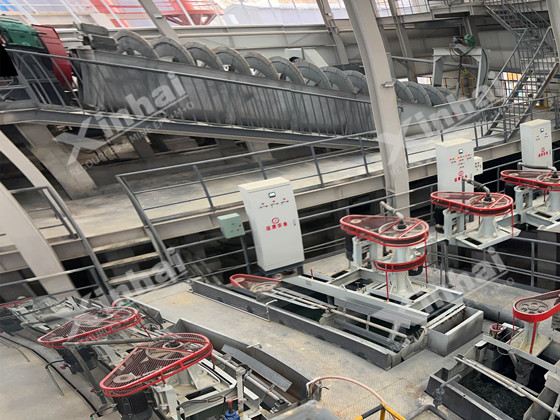
Many investors concentrate on processing plant cost while understating the capital required to develop and operate the full mining project.
Total CAPEX can encompass mine development, mining fleet, processing facilities, tailings storage, water and power systems, roads, logistics, camps, laboratories, environmental infrastructure, commissioning and working capital.
OPEX typically covers mining, processing, energy, reagents, labour, maintenance, tailings management and administration.
A plant may appear attractive in isolation. The project must be assessed as an integrated system—from mine to final product. Relying on plant construction cost alone can materially understate both capital intensity and operating pressure.
A 1,000 t/d plant does not guarantee 1,000 tonnes of ore will be processed every day.
If the mine can initially supply only 700 t/d, utilization falls to 70%. Where fixed costs are material, lower utilization raises unit processing cost.
Ore characteristics also affect achievable throughput. Harder ore, for example, can constrain grinding capacity even when the nominal design feed rate is unchanged.
Mine planning, ore supply and plant design must be tested against consistent assumptions. A project should not comprise three individually plausible plans that fail to function as one operating system.
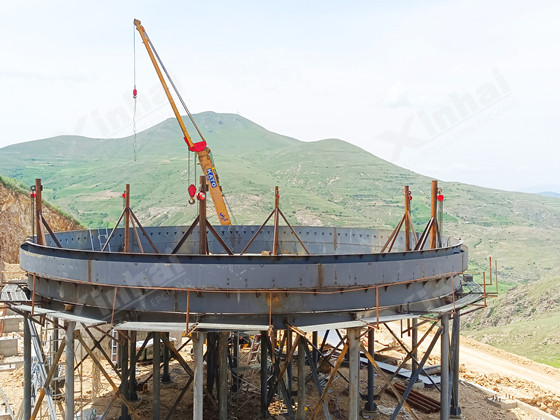
In many gold processing projects, major cost and schedule risks sit outside the process plant. Tailings storage, environmental compliance, power, water, roads and logistics can dominate both budget and timeline.
This is especially true for remote and overseas projects, where infrastructure availability can determine practical viability.
Tailings requirements, environmental standards, water availability and power reliability should be assessed early and embedded in the feasibility study and investment model—not appended as secondary line items after core plant design is complet
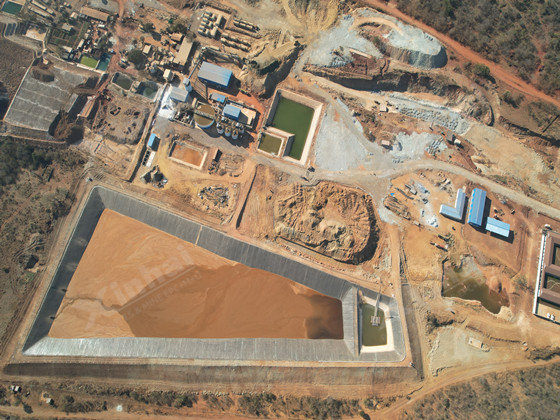
Purchasing major equipment before key engineering parameters are confirmed is a common and avoidable error.
Investors may seek to lock prices or compress schedules, only to discover that changes in ore characteristics, process design or capacity render the selected equipment unsuitable—leading to redesign, replacement or sunk cost.
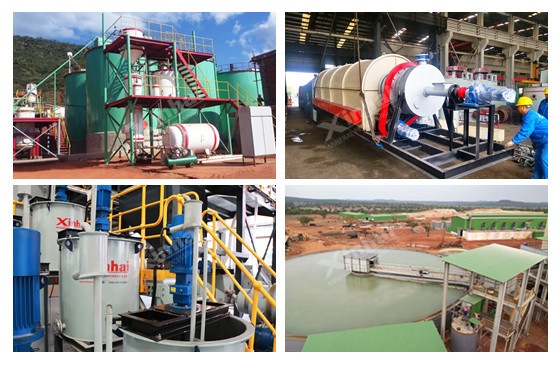
The correct sequence is:
Ore Characterization → Metallurgical Testwork → Process Design → Engineering Design → Equipment Selection → Construction → Commissioning
Equipment should support a verified process; it should not define it.
This is often the most consequential mistake.
Launching EPC execution before geological, metallurgical and economic uncertainties have been adequately closed means committing major capital to assumptions that may not hold.
A more disciplined decision pathway is: Geological Studies → Sampling and Testing → Metallurgical Testwork → Resource/Reserve Estimation → Economic Evaluation → PFS/FS → Detailed Engineering → EPC Execution → Operation
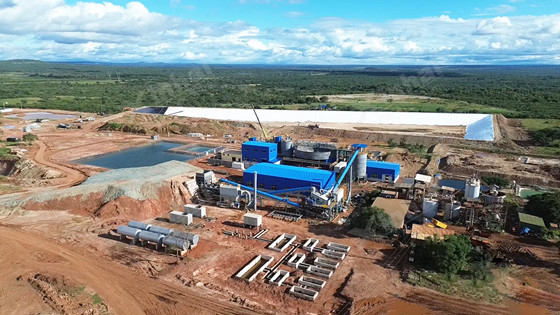
Each stage should generate sufficient evidence before the next major investment gate.
This logic underpins Xinhai’s full-process service model. From metallurgical testwork and process development through engineering design, equipment manufacturing and EPC+M+O delivery, the aim is to advance critical verification ahead of large-scale construction—so engineering decisions rest on data rather than assumptions.
Conclusion
Gold mining is capital-intensive, technically complex and long-cycle. The costliest mistakes often happen before construction—when ore characteristics, recovery potential or the process route have not been properly verified.
For first-time investors, the principle is simple: verify first, build second. Test the ore, confirm the process, set realistic design criteria, then build.
Xinhai follows this approach across the project lifecycle. In a Zimbabwe 1,000 t/d gold project, Xinhai conducted ore testing before engineering and then delivered the project through design, equipment supply, installation and commissioning, achieving about 90% gold leaching.
Explore more Xinhai mining project cases
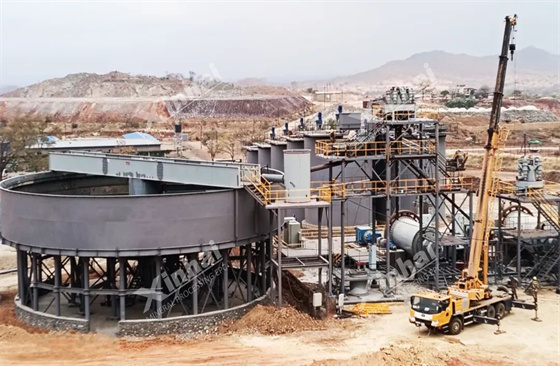
With experience across global gold projects, Xinhai integrates testwork, process design and engineering delivery to help investors identify risks before major capital is committed.
Share your project details and our engineers will get back to you shortly.
 CHAT
CHAT MESSAGE