
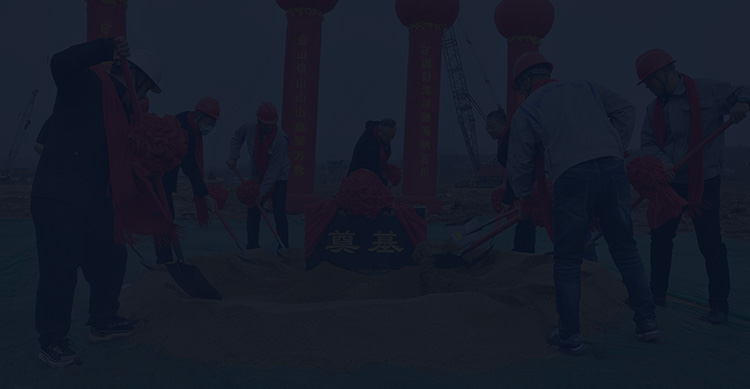
Beijing, May 15-16 – The 5th Asia Mining Innovation and Development Summit Forum convened in Beijing under the theme "Dual Drivers of Minerals and Finance: Forging New Avenues for Overseas Mining Growth." The event brought together industry leaders worldwide to explore synergistic mechanisms between mining and finance, fostering cross-disciplinary and in-depth integration.
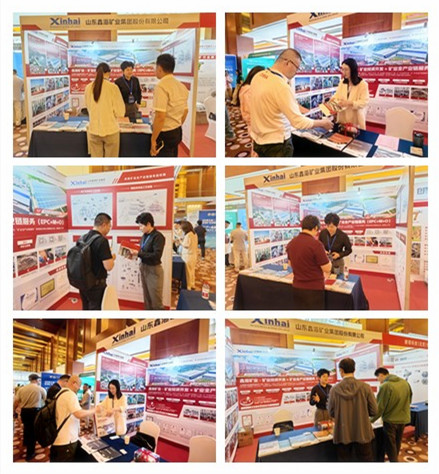
(Xinhai Exhibition Booth)
At the forum, Xinhai Mining’s exhibition space facilitated vibrant exchanges, with numerous delegates engaging with our team to learn more about the "Mining Industry Chain Service (EPC+M+O)." On the afternoon of May 15, chairman Ms. Zou Kuihuang presented a keynote address titled "Technical Experience and Strategy for Overseas Mining Investment." Her speech delved into technical challenges and practical insights from overseas mine development, supported by substantial content and concrete case studies, which garnered significant attention and sparked discussion among attendees.
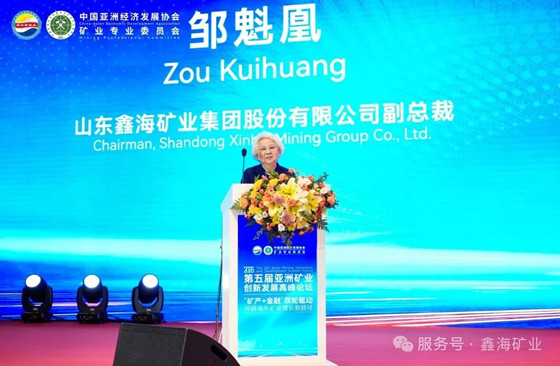
(Chairman Zou Kuihuang Delivers Speech)
Next, we will delve into the valuable practical experience in overseas mining investment shared by Ms. Zou at the summit.
Based on practical experience from global mining projects, three issues continue to appear frequently in overseas mine development:
capital expenditure exceeding initial estimates,
processing plants failing to achieve design capacity on schedule,
and prolonged technical retrofits shortly after commissioning.
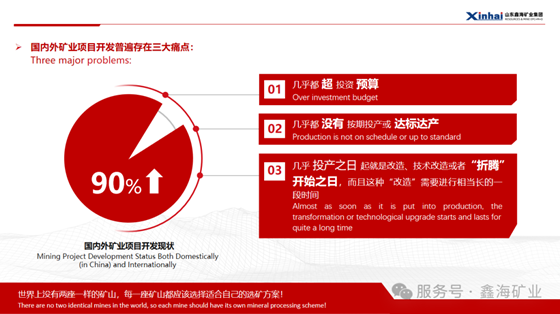
In many cases, these problems originate long before construction begins. Incomplete geological understanding, insufficient metallurgical verification, and unrealistic infrastructure assessment can all create significant downstream operational risks.
Drawing on nearly three decades of international project experience, Xinhai has consistently emphasized that successful overseas mining investment depends heavily on rigorous technical preparation during the early stages of project development.
Effective due diligence must go beyond basic site visits or document reviews. Reliable project evaluation requires detailed field investigation, technical verification, and direct communication with local stakeholders to confirm the accuracy of geological, infrastructure, and operational data.
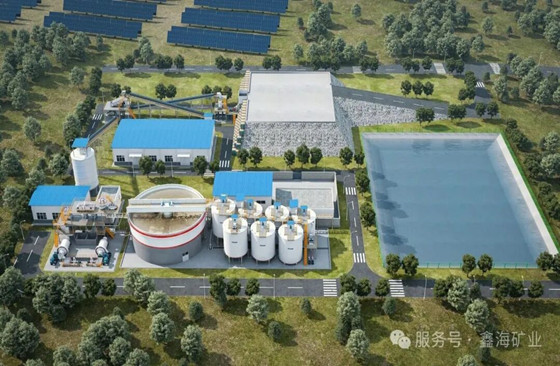
Xinhai also noted that many overseas projects underestimate auxiliary and indirect costs during the feasibility stage. While investors typically focus on mining, mineral processing, power supply, and tailings facilities, supporting systems such as infrastructure development, management costs, logistics, and long-term operational requirements are often underestimated.
Without comprehensive capital estimation at the beginning of the project, funding pressure and construction delays can emerge rapidly during execution.
One of the key technical topics discussed during the presentation was the importance of representative metallurgical sampling. We shared the example of a 5,000 t/d gold processing plant in Africa, where conventional geological averaging alone proved insufficient for process evaluation. The ore supplied from different mining pits showed significant variability, while the proportions of oxidized ore, transitional ore, and primary ore continuously changed as mining progressed.
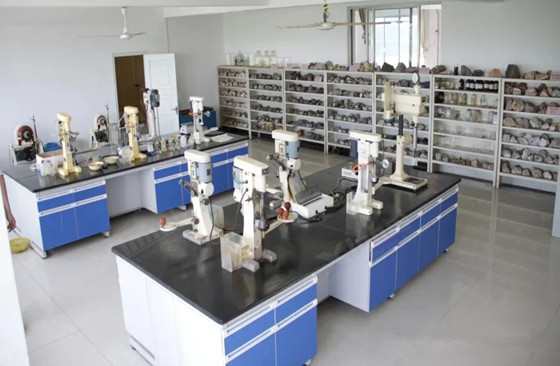
Xinhai explained that if metallurgical testing samples had not been blended according to the planned annual mining sequence — considering both pit location and ore type proportions — the processing plant would likely have faced ongoing instability after startup, requiring repeated process adjustments and equipment retrofits.
The case demonstrated how early-stage metallurgical preparation can directly affect long-term commissioning performance and operational reliability.
The presentation also highlighted several overseas projects where process innovation significantly improved project economics.
In one overseas gold project, local environmental regulations prohibited the use of sodium cyanide while also restricting alternative low-toxicity leaching reagents. Under these constraints, four domestic research institutes achieved gold recoveries of approximately 83% using flotation-only approaches.
Xinhai redesigned the flowsheet using a combined gravity concentration and flash flotation process, increasing overall gold recovery to 90%. The improvement transformed the project from a marginal resource into an economically viable mining operation and received recognition from the host country as an example of successful international mining cooperation.
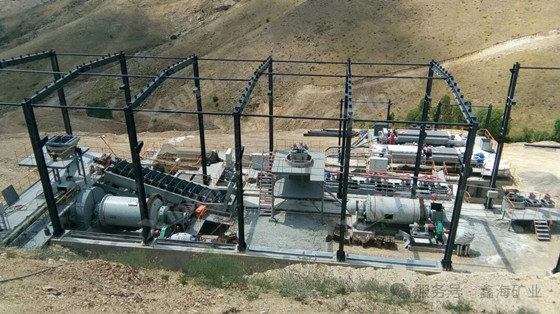
(Gold Mine Gravity Separation + Flotation Project)
The presentation also referenced a low-grade ilmenite project in China involving ore containing approximately 5% Ti and 15% Fe. To improve resource utilization, Xinhai developed a “Crushing + HPGR + Vertical Mill” comminution circuit integrated with dry pre-concentration for ultra-fine material, followed by a “High-Intensity Magnetic Separation + Flotation” process for titanium recovery.
By upgrading the titanium grade prior to flotation, the process enabled effective recovery from previously sub-economic material and generated substantial economic value from low-grade resources.
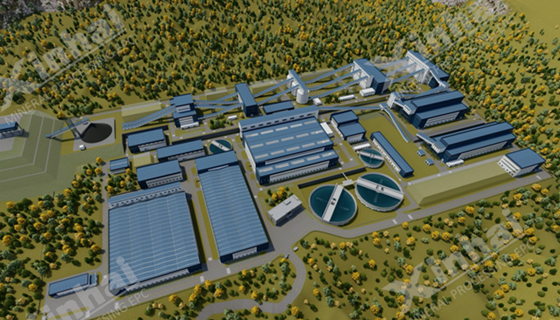
(Low-Grade Ilmenite Project)
The technical solutions presented at the forum reflect Xinhai Mining’s broader development strategy, which combines Mining Investment & Development with its integrated Mining Industry Chain Service (EPC+M+O).
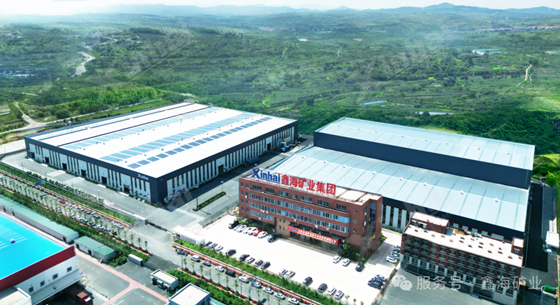
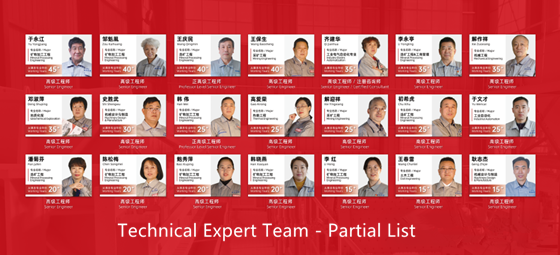
Xinhai’s engineering capability is supported by an integrated R&D and testing platform covering mining research, process design, intelligent equipment development, pilot-scale testing, and metallurgical validation. The company maintains more than 700 technical professionals and provides engineering services aligned with Australian, Canadian, and European technical standards, including internationally recognized reporting systems such as JORC and NI 43-101.
To support global project delivery, Xinhai operates three intelligent manufacturing bases capable of modular and prefabricated plant production. Its construction division also holds the Class-A Qualification for General Contracting of Mine Construction Projects, enabling integrated control across civil construction, equipment installation, commissioning, and operational transition.
To date, Xinhai Mining has served nearly 2,500 mines across more than 100 countries and completed over 600 mining industry chain service projects involving more than 70 mineral resources, including gold, copper, iron, lithium, titanium, and zircon.
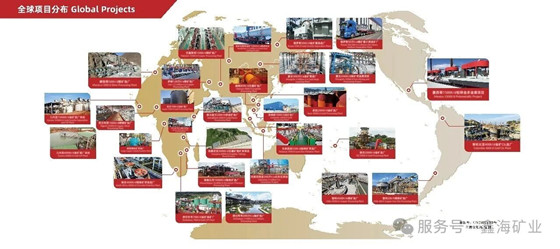
(Global mining projects and overseas operations supported by Xinhai Mining)
With subsidiaries and regional offices across Africa, Australia, South America, the Middle East, and Southeast Asia, Xinhai continues to provide localized technical support for overseas mining projects worldwide.
As overseas mining investment becomes increasingly complex, project success depends not only on financing and resource potential, but also on the quality of technical preparation, engineering execution, and operational planning.
With decades of international project experience, we remain committed to helping mining investors reduce technical uncertainty and improve long-term project performance through integrated solutions covering the full project lifecycle — from preliminary studies and metallurgical testing to plant commissioning and operational management.
Share your project details and our engineers will get back to you shortly.
 CHAT
CHAT MESSAGE