
At Canada’s Hope Brook Gold Project, a 2026 metallurgical test program examined a flowsheet involving grinding, copper flotation, concentrate cleaning and leaching of the cleaner tailings.
The program reported 90.3% copper recovery to concentrate and 88% overall gold recovery. These are results from metallurgical tests on specific samples under defined conditions. They should not be read as expected or guaranteed plant performance.
Drawing on this latest report, this piece offers a short discussion of the test results and their implications.
Minerals in the same ore can differ in density, particle size, mineral association and surface properties. These differences affect how they respond to processes such as gravity separation, flotation and leaching.
The company described the simplified flowsheet as:
Primary grinding → Copper flotation → Concentrate cleaning → Leaching of cleaner tailings
Gravity recovery was also evaluated, but as a possible addition to the process route. It should not be presented as a confirmed step in the main flowsheet.
A flowsheet is the sequence of operations used to process ore. When engineers assess a flowsheet, they consider what each stage is intended to recover, what remains in the resulting streams and how those streams may respond to later treatment. The appropriate sequence depends on the ore and on test work.
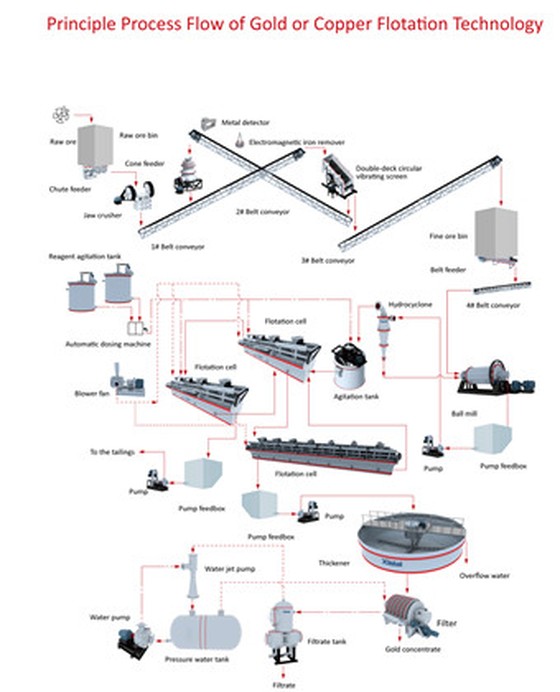
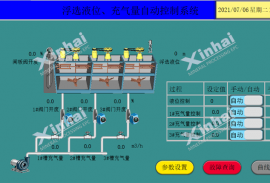
Generic principle flowsheet of gold–copper flotation. The diagram is illustrative and does not represent the Hope Brook flowsheet.
Flotation uses differences in mineral surface properties to separate selected minerals from the rest of the ore. Reagents and air bubbles help the target minerals report to a froth product, which is collected as concentrate.
In Hope Brook’s locked-cycle flotation tests, the concentrate graded approximately 24% copper, and reported copper recovery to concentrate was 90.3%. The concentrate also contained gold and silver.
A 24% copper grade means that copper accounted for about 24% of the concentrate by weight. It does not mean that 24% of the original ore became concentrate. The grade alone also does not establish whether the concentrate meets a particular buyer’s or smelter’s specifications.
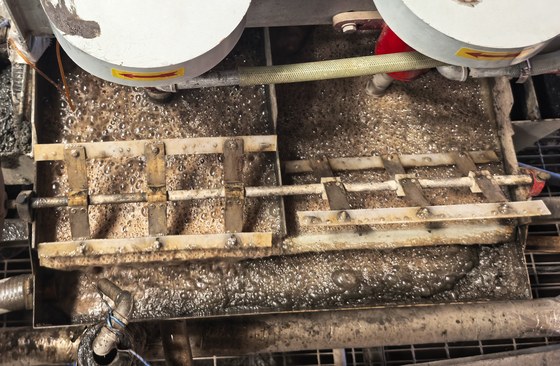
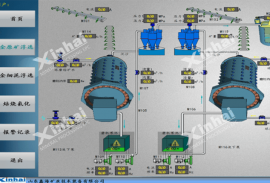
Mineralised froth being removed from flotation cells in a test circuit. Photo: Xinhai Mining; illustrative only and not related to the Hope Brook project.
Cleaner tailings are the material left after the concentrate-cleaning stage. Depending on the ore and test conditions, they may contain metals that were not recovered to the concentrate.
At Hope Brook, leaching the cleaner tailings contributed to the reported 88% overall gold recovery. The company said this figure includes gold recovered to the concentrate and gold recovered through cleaner-tail leaching.
It is a test result for the reported program. It should not be presented as a guaranteed recovery for a future operating plant.
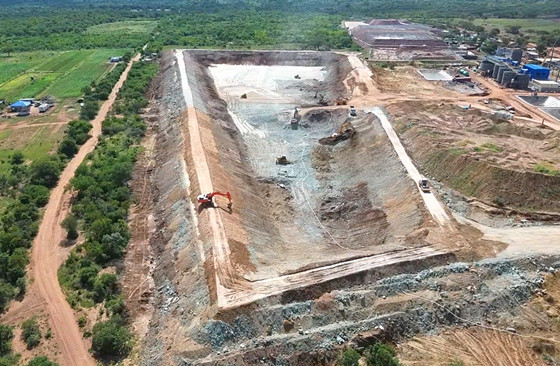
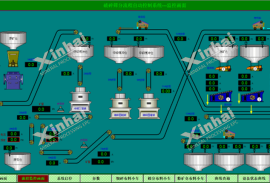
Photo: Xinhai Mining; illustrative only and not related to the Hope Brook project.
Gravity separation uses differences in density to separate heavier particles from lighter material. In some ores, it can recover gold particles that have been liberated from surrounding minerals.
At Hope Brook, laboratory testing recovered 53.7% of the gold into approximately 1.75% of the feed mass under the reported test conditions. Circuit modelling indicated potential plant gravity recoveries of approximately 27% to 40%, depending on circuit configuration.
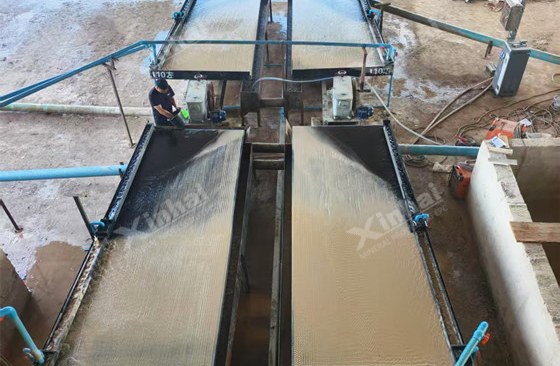
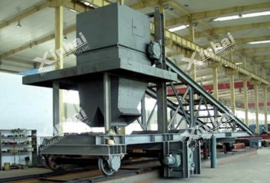
Shaking tables separating particles by density. Photo: Xinhai Mining; illustrative only and not related to the Hope Brook project.
The company also reported minimal differences in rougher flotation gold and copper recoveries between comparative tests conducted with and without gravity concentration. It identified gravity recovery as an option for further evaluation; the results do not establish that it will form part of the final process route.
Test result | What it describes | What it does not establish |
90.3% copper recovery to concentrate | Copper recovery in the reported locked-cycle flotation tests | Guaranteed recovery during plant operation |
Approximately 24% copper concentrate grade | Copper content by weight in the test concentrate | The proportion of ore converted to concentrate, or whether the product meets a particular buyer’s specifications |
Approximately 88% overall gold recovery | The reported overall result, including gold to concentrate and cleaner-tail leaching | Guaranteed plant recovery |
53.7% gravity-recoverable gold | Laboratory result: gold recovered into about 1.75% of the feed mass | Expected full-scale recovery |
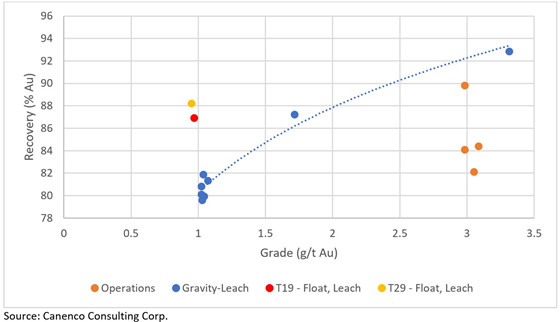
Gold recovery versus feed grade for the reported test programmes and historical operations. Source: Big Ridge Gold news release, 19 October 2026; chart prepared by Canenco Consulting Corp.
The announcement also reports higher recoveries from rougher flotation testing. Those figures relate to a different stage of testing and should not be combined with the locked-cycle results or the overall gold recovery figure.
Not without checking the test basis and material balance. Each figure may relate to a different sample or process stream, and the material changes as it moves through the test sequence. A stage result on its own does not describe the performance of a complete circuit.
For Hope Brook, further work is intended to test representative composites, integrate flotation with cleaner-tail leaching, assess grind sizes and examine variability across ore types. The company says these studies will support further process development and engineering work.
At Xinhai Mining, we provide mineral-processing test work, process design, equipment selection and supply, installation, and process commissioning.
One published example is our copper flotation project in Kazakhstan, for which we provided test work, process design, equipment supply and installation, and commissioning. The project is a separate case; its ore and operating conditions are not directly comparable with Hope Brook.
For each deposit, test results and site conditions inform the engineering work. Further testing and design review are needed to establish whether a proposed process route is suitable for that project.
Share your project details and our engineers will get back to you shortly.
 CHAT
 MESSAGE