
Pegmatite tailings are increasingly recognized as a valuable secondary resource for critical minerals such as lithium, cesium, and rubidium. In many historical pegmatite mining operations, processing systems were primarily designed to recover high-grade spodumene. As a result, significant quantities of valuable minerals remain locked in tailings deposits.
With the rapid growth of the battery industry and strategic metals market, reprocessing pegmatite tailings has become an attractive opportunity for mining companies. By applying advanced beneficiation technologies and systematic metallurgical testing, these previously discarded materials can be transformed into multiple high-value mineral products.
However, recovering minerals from pegmatite tailings is far from straightforward. Fine particle sizes, complex mineral intergrowth, and similar flotation characteristics between valuable minerals and gangue make separation technically challenging. Successful tailings reprocessing requires a carefully optimized process flowsheet based on rigorous mineralogical analysis and metallurgical testing.
A recent metallurgical testing program conducted by Xinhai Mining demonstrates how complex pegmatite tailings can be efficiently processed to recover lithium, rubidium, and cesium concentrates through a multi-stage flotation solution.
Pegmatite deposits are well known for hosting a wide range of rare and strategic minerals. During primary mining operations, the focus is often placed on recovering lithium from spodumene, while other valuable minerals receive less attention.
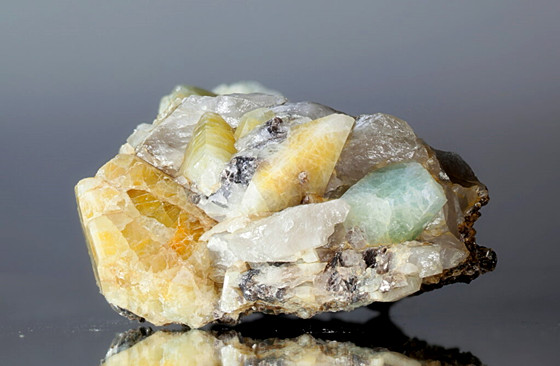
(Pegmatite deposits)
As a result, pegmatite tailings may still contain significant quantities of:
Spodumene – the primary lithium-bearing mineral
Pollucite – a major cesium mineral
Rubidium-bearing mica
Quartz and feldspar as industrial minerals
Many older processing plants were not designed to efficiently recover fine-grained lithium minerals or associated rare metals. Modern flotation technologies, improved grinding control, and optimized reagent systems now make it possible to economically recover these resources from tailings.
Although pegmatite tailings contain valuable minerals, their beneficiation presents several technical difficulties.
Valuable minerals are often finely interlocked with gangue minerals, requiring precise grinding and classification to achieve sufficient liberation.
Minerals such as spodumene, mica, and feldspar may exhibit similar surface chemistry during flotation, making selective separation difficult.
Pegmatite ores commonly contain multiple recoverable elements within the same ore matrix. An effective process must allow sequential recovery without compromising concentrate quality.
Because of these complexities, generic processing solutions rarely deliver satisfactory results. Tailings reprocessing projects usually require customized mineral processing solutions based on ore characteristics.
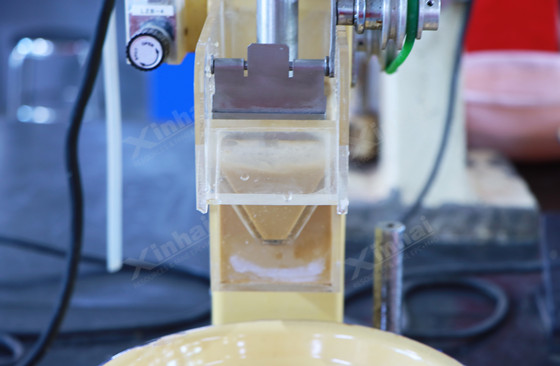
(Canadian tailings test for cesium, lithium, quartz, and feldspar recovery.)
The pegmatite tailings sample analyzed in this project contained encouraging grades of several critical minerals:
Li₂O: 1.63%
Cs₂O: 0.46%
Rb₂O: 0.50%
Mineralogical analysis confirmed that lithium was mainly hosted in spodumene and lithium mica, while cesium occurred primarily in pollucite. Quartz and feldspar were identified as the dominant gangue minerals.
Based on these characteristics, Xinhai’s laboratory team conducted extensive flotation tests, reagent selection experiments, and flowsheet optimization to determine the most effective beneficiation strategy.
To efficiently recover multiple valuable minerals, Xinhai developed a sequential multi-stage flotation process.
The overall beneficiation flowsheet can be summarized as:
Grinding → Lithium flotation → Desliming → Mica flotation → Feldspar flotation → Cesium flotation
This process enables step-by-step recovery of different minerals from the same tailings stream.
The process begins with controlled grinding and classification to liberate lithium minerals, followed by an optimized lithium ore processing flotation circuit.Grinding fineness:
−200 mesh accounting for 60%
A flotation circuit consisting of one rougher, two scavengers, and three cleaners produced a high-quality lithium concentrate:
Concentrate yield: 23.75%
Li₂O grade: 5.21%
Lithium recovery: 77.41%
This stage recovers the majority of lithium from the tailings and generates the primary revenue product.
After lithium flotation, the remaining material still contains valuable mica minerals enriched with rubidium. To improve selectivity, a desliming step is applied before flotation.
The mica flotation circuit includes:
one rougher
one scavenger
one cleaner
The resulting concentrate achieved:
Concentrate yield: 9.03%
Rb₂O grade: 2.03%
Rubidium recovery: 36.82%
This stage demonstrates that secondary rare metals can be effectively recovered when the process is properly optimize
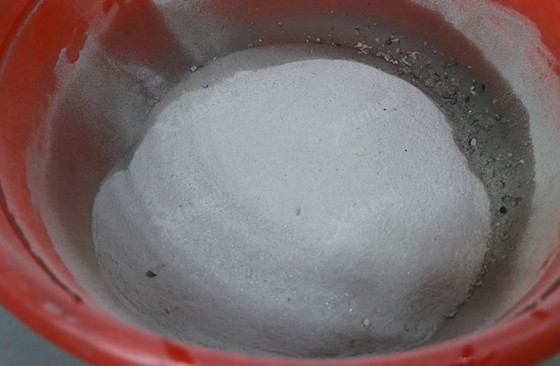
Following mica flotation, the remaining material still contains cesium-bearing minerals such as pollucite.
To ensure efficient separation, a three-stage feldspar flotation step is first applied to remove interfering gangue minerals. The material then enters the cesium flotation circuit.
The final cesium concentrate achieved:
Concentrate yield: 4.18%
Cs₂O grade: 4.30%
Cesium recovery: 39.12%
Through this final stage, the process successfully completes a comprehensive multi-mineral recovery solution.
The most significant advantage of this beneficiation solution is the ability to produce multiple saleable mineral products from a single tailings stream.
Instead of generating only a lithium concentrate, the process creates three valuable products:
Lithium concentrate
Rubidium-bearing mica concentrate
Cesium concentrate
This multi-product strategy significantly improves project economics by increasing resource utilization and generating diversified revenue streams.
For mining companies facing declining ore grades and increasing environmental pressure, advanced tailings reprocessing solutions are rapidly becoming both an economic opportunity and a sustainability strategy.
Processing complex mineral systems requires more than equipment. It demands deep expertise in mineralogy, beneficiation technology, and process engineering.
Extensive Metallurgical Testing Experience
Xinhai’s research institute has conducted metallurgical testing on more than 70 types of minerals, including lithium, rare metals, and polymetallic ores.
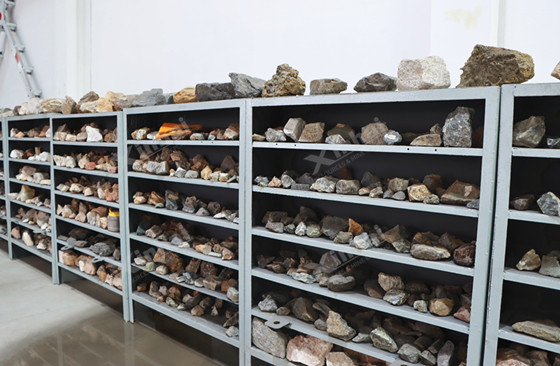
(Ore samples)
Advanced Process Development
Xinhai specializes in designing customized beneficiation flowsheets for complex ores and tailings, including multi-stage flotation systems and optimized reagent schemes.
Integrated EPC+M+O Services
Xinhai offers a complete EPC+M+O mineral processing service, covering testing, engineering design, equipment manufacturing, plant construction, and operation management:
mineral processing test research
mine design, equipment manufacturing and supply
mining, mineral processing and tailings storage facility (TSF) construction
equipment installation
mine construction management and production operation
This integrated approach ensures that laboratory results can be reliably translated into efficient industrial processing plants.
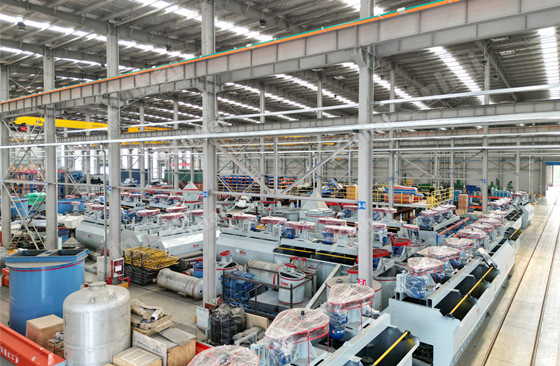
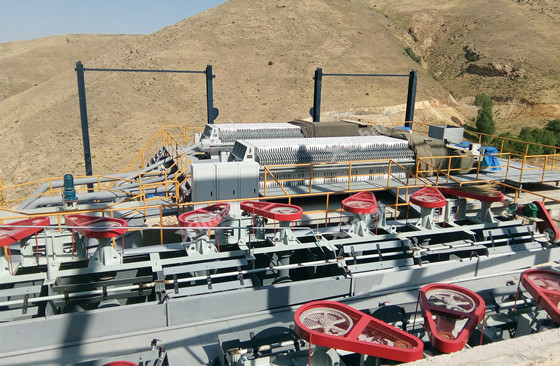
(New Plant Production Workshop - Flotation Machine)
The Future of Tailings Reprocessing
As high-grade mineral resources continue to decline, efficient utilization of existing resources is becoming increasingly important.
Tailings deposits are no longer considered waste. Instead, they represent a significant secondary source of critical minerals that can support the future supply of lithium and other strategic metals.
With advanced beneficiation technologies and systematic metallurgical testing, complex pegmatite tailings can be transformed into valuable mineral products while reducing environmental impact.
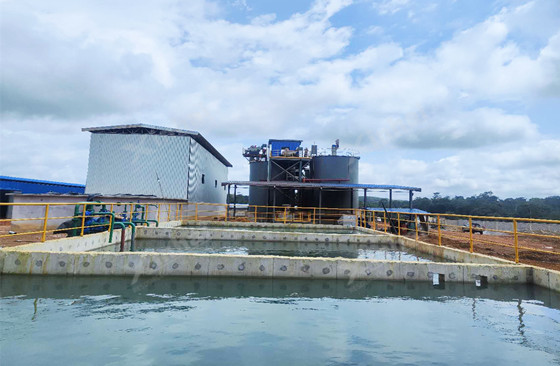
(Ghana 500t/d Gold Tailings CIL Plant Site)
1. Can lithium be economically recovered from pegmatite tailings?
Yes. Many historical tailings contain significant quantities of recoverable lithium because earlier processing technologies were unable to efficiently treat fine-grained lithium minerals.
2. What minerals are typically found in pegmatite tailings?
Pegmatite tailings may contain spodumene, pollucite, rubidium-bearing mica, quartz, and feldspar, many of which can be recovered through modern flotation processes.
3. Why is metallurgical testing essential for tailings reprocessing?
Every tailings deposit has unique mineralogical characteristics. Metallurgical testing determines the optimal grinding size, flotation reagents, and processing sequence required to achieve the highest recovery and economic return.
Unlock the Value of Your Tailings Resources
If you are evaluating the potential of pegmatite tailings or complex lithium resources, Xinhai’s metallurgical testing and EPC+M+O services can help you determine the most profitable recovery solution.
Contact Xinhai Mining today to turn your tailings into valuable mineral resources.
Share your project details and our engineers will get back to you shortly.
 CHAT
CHAT MESSAGE