
Although rarely in the public spotlight, tungsten is a cornerstone of heavy industry. It has the highest melting point of all metals at 3,422 °C and a density of 19.3 g/cm³, comparable to gold. Tungsten and its carbides are virtually irreplaceable in mechanical manufacturing, drilling equipment, and defense applications. In the military sector, it is the material of choice for armor-piercing ammunition, offering superior performance without the environmental and health risks of depleted uranium alternatives. From hypersonic vehicle components to semiconductor microcircuits, tungsten’s applications are everywhere.
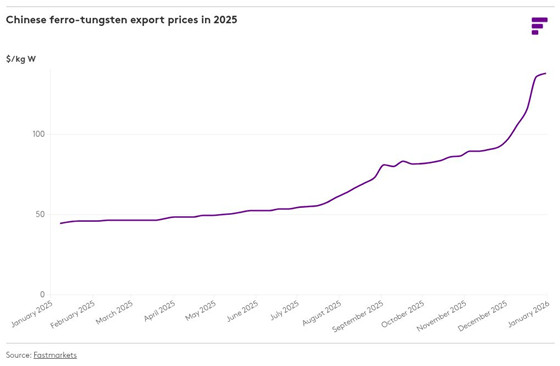
In recent years, global supply tightening, export policy adjustments, and growing demand from advanced manufacturing have pushed tungsten prices higher. Ammonium paratungstate (APT) prices are strengthening again, attracting investor attention to tungsten mining projects.
However, high prices alone do not guarantee profitability.
Today, the success of tungsten projects depends less on resource size and more on processing efficiency, recovery rates, and overall plant optimization. This marks a key shift from resource-driven value to technology-driven profitability. At XinHai, we see this not just as a market fluctuation but as a structural opportunity.
Known as the “industrial tooth” and a “strategic metal,” tungsten is an essential raw material for hard alloys, cutting tools, specialty steels, photovoltaics, new energy, and semiconductors. Recent price increases are mainly driven by three factors: tightening supply, rebounding demand, and a reassessment of its strategic value.
Supply Side: China continues to control total tungsten mining output, and quotas for 2026 remain tight. Strengthened environmental and safety regulations have reduced capacity at small and medium mines, limiting effective supply. Low mine operating rates around the Lunar New Year further reduced spot availability, reinforcing short-term supply pressure.
Meanwhile, declining ore grades, rising mining costs, and slow ramp-up of overseas capacity create a persistent supply-demand gap, supporting high tungsten prices.
Demand Side: High-end manufacturing, electric vehicles, and defense industries are steadily recovering. Hard alloy and cutting tool companies are increasing operations, while downstream stocking activity rises. Emerging sectors—photovoltaic tungsten wire, defense, and semiconductors—are seeing explosive growth, driving overall tungsten consumption.
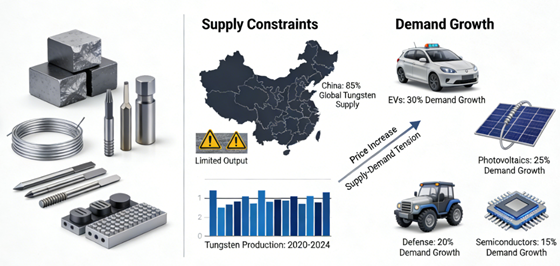
By 2026, the penetration of photovoltaic tungsten wire is expected to exceed 80%, with new demand from this sector alone accounting for over 5% of global tungsten demand. Advanced semiconductor nodes (3 nm and below) are also rapidly increasing demand for high-purity tungsten, intensifying supply-demand tensions.
Sustained price increases are accelerating upstream mining restructuring.
Higher prices improve the economics of low-grade deposits and tailings reprocessing. However, they also raise expectations: investors now demand higher recovery rates, tighter cost control, and more consistent concentrate quality.
In today’s market, merely owning tungsten resources is no longer enough. As price volatility persists, mining companies increasingly recognize that technological integration—not commodity cycles—determines long-term competitiveness. This is where systematic engineering capability becomes critical.
With nearly 30 years of experience in the mining sector, XinHai leverages its “full-chain mining service (EPC+M+O)” model to provide global tungsten clients with end-to-end solutions: from mineral processing test research, mine design, equipment manufacturing, tailings construction, equipment installation, and mine construction management, to production operation services.
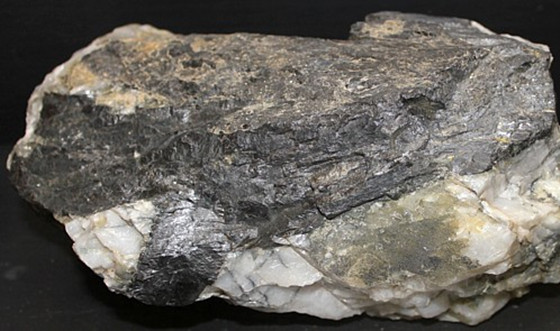
To address declining ore grades and the challenge of separating wolframite from scheelite, XinHai’s research system—comprising the Mining Research Institute, Mine Design Institute, and Mineral Processing Pilot Center—mobilizes over 700 technical experts to deliver customized processing solutions. Whether recovering fine-grained tungsten or separating complex polymetallic ores, innovative process design significantly improves concentrate grade and recovery.
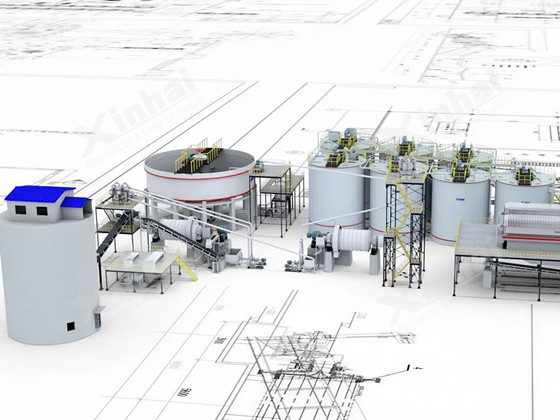
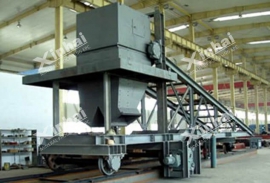
Time is money. XinHai operates three smart mining machinery manufacturing bases, producing over 1,000 main and auxiliary pieces of equipment across mining, beneficiation, and smelting. Using modular, prefabricated plant designs combined with top-tier EPC and blasting qualifications, XinHai can control the entire construction chain in-house, shortening project cycles and enabling clients to rapidly capitalize on high price periods.
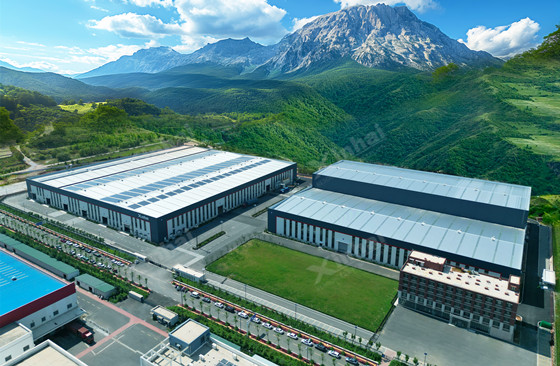
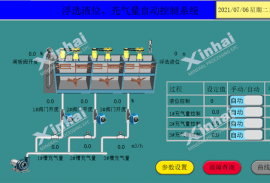
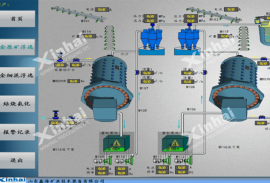
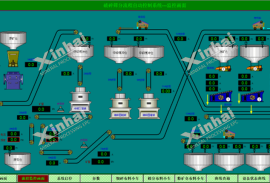
Building a mine is only the beginning; operating it efficiently is the long-term strategy. XinHai provides post-turnkey production management, forming high-efficiency operational teams, applying fine-tuned management and automation technologies, and continuously optimizing processing metrics. This reduces energy and reagent costs, ensuring high, green, and stable output over the mine’s full lifecycle.
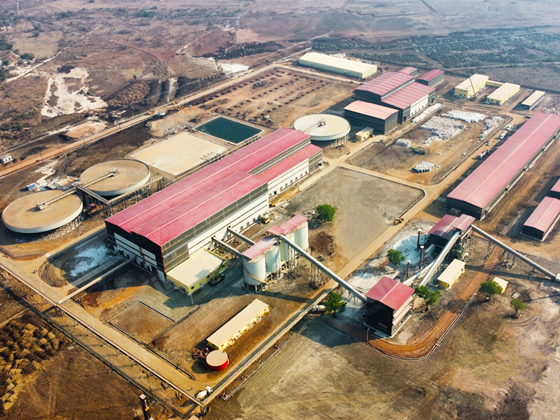
We believe no two tungsten deposits are identical. Standard templates cannot maximize recovery. We design systems based on detailed lab and pilot test data, integrating engineering and digital optimization to deliver higher tungsten recovery and improved long-term ROI.
Over the past decades, XinHai has successfully delivered numerous tungsten beneficiation and reprocessing projects across Asia, Africa, and other emerging mining regions. Projects include scheelite flotation systems, wolframite gravity plants, and tailings recovery facilities.
Complex Scheelite Separation: For scheelite associated with calcite or fluorite, XinHai applies “gravity pre-concentration + multi-stage flotation” workflows. Key technologies include precise particle size control and selective reagent schemes, achieving high grade, high recovery, stable processes, low reagent consumption, and flexible plant layouts.
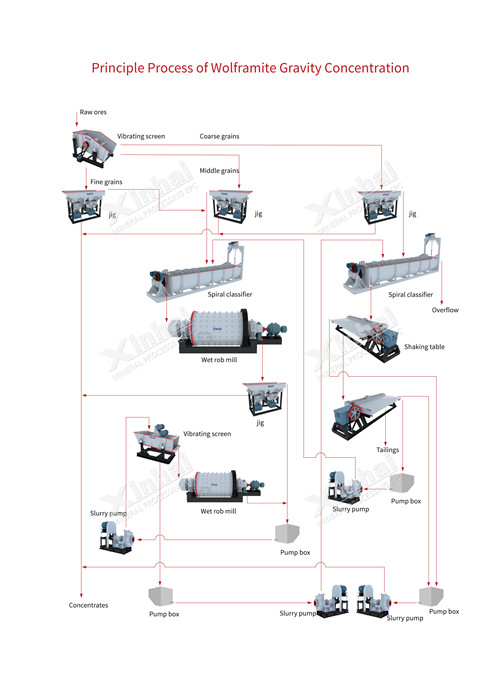
Wolframite Gravity-Magnetic Optimization: For high-density, paramagnetic wolframite, XinHai optimizes combined gravity-magnetic circuits. Through enhanced jigging, precise shaking table control, and high-intensity magnetic separation, efficiency and concentrate quality improve while reducing metal losses and gangue contamination. Integrated water recycling reduces consumption and environmental impact.
Tungsten Tailings Reprocessing: For residual fine tailings, XinHai employs a combination of classification, intensified centrifugal concentration, and efficient flotation sweeping to recover fine-grained tungsten, creating economic value while reducing environmental load through optimized tailings storage management and generating green value from waste.
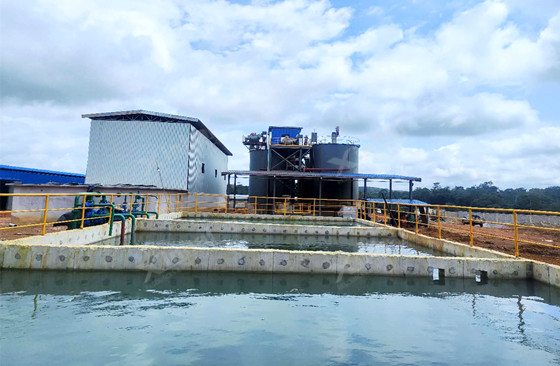
Our philosophy: success depends not only on resource endowment but on the ability to transform resources into stable profits through innovative process design and system optimization. XinHai’s technical expertise and project experience help global tungsten producers seize structural opportunities and convert resources into value.
In a world of geopolitical uncertainty, the technological value of mineral resources is certain. Tungsten’s strategic status and strong pricing create unprecedented opportunities. Shandong Xinhai Mining Group Co., Ltd., with nearly 30 years of professional experience and full-chain service capabilities, partners with global investors to maximize resource value through technological innovation, ushering in a golden era for the tungsten industry.
Talk to Our Tungsten Experts Today.
Share your project details and our engineers will get back to you shortly.
 CHAT
CHAT MESSAGE