
Through April and May at a gold project site in Guinea, temperatures held above 45°C day after day, and crews working steel and concrete were repeatedly affected by the heat. On a schedule with no slack in it, one question followed the site from morning to morning: could a 1,000 t/d gold processing plant still be delivered on time?
It was. Installation began on site in early April 2026 and was complete by the end of July. What follows is what stood behind that commitment — and why an owner can hand an entire gold plant to Xinhai.
The heat during Guinea’s hot season presents a serious challenge to construction schedules, not just working comfort. Welding, mill assembly and tank fabrication all require careful planning when temperatures remain extreme for extended periods.
The team adjusted working hours to manage the heat without changing the project schedule. Work began at 6:30 a.m., paused during the hottest hours and resumed at 3 p.m. Shift rotation, cooling breaks and close monitoring of workers helped protect the crew while keeping critical installation activities on track.
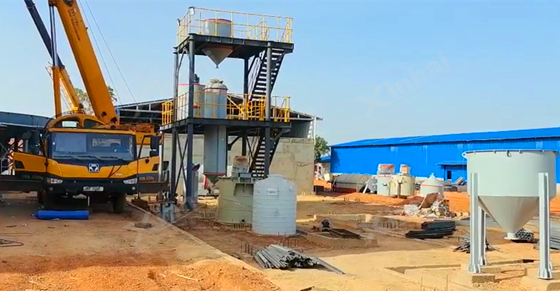
The project milestones tell the story:
Early April 2026 — Site installation began.
5 May — Ball mill assembly was completed.
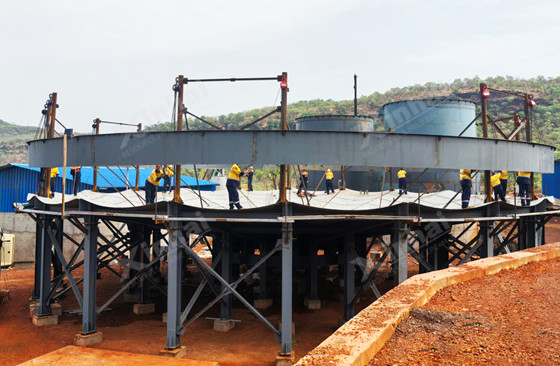
16 May — The shell of the 24 m thickener tank was completed.
End of July — All equipment installation work was completed.
The schedule remained unchanged despite the weather. On a project exposed to extreme heat, maintaining progress depends on adapting site operations to the conditions rather than compromising safety or extending the deadline.
The equipment was also supplied and integrated within a coordinated project scope, reducing the need to manage multiple equipment interfaces independently.
Gold processing projects often involve several separate contracts, with equipment supply, steel structures, electrical and instrumentation work, and commissioning handled by different parties. When interfaces are not clearly coordinated, the owner may face additional work resolving technical issues and determining responsibility.
For this project, Xinhai’s scope covered mineral processing design, equipment supply, and on-site installation and commissioning services, providing a coordinated approach from flowsheet development through plant installation.
The flowsheet covers the main stages of gold recovery: primary grinding and classification, gravity recovery using a jig, shaking table and centrifugal concentrator, followed by cyanide leaching, desorption and electrowinning, and gold smelting. Tailings are pumped to the tailings storage facility.
Key equipment designed and manufactured by Xinhai includes the MQGg2745 wet energy-saving grid ball mill, the NZY24 thickener, seven SJ7.5 × 8.0 dual-impeller leach tanks, and a 1,000 kg/batch desorption and electrowinning system.
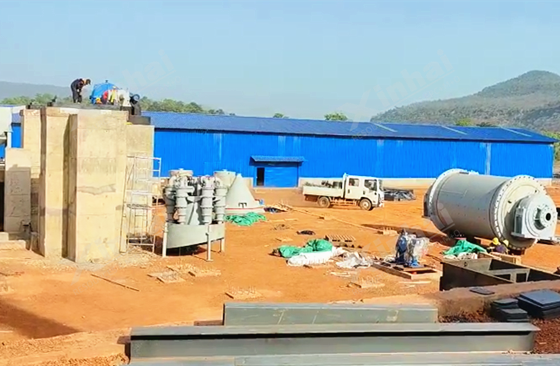
With process design and major equipment coordinated by the same company, the plant could be developed as an integrated system rather than assembled from independently supplied components with separate technical interfaces.
This integrated approach helps simplify coordination across equipment supply and installation, particularly on overseas projects where site conditions and logistics can complicate execution.
Transporting a gold processing plant to West Africa requires careful planning. Large equipment and heavy components may need to be dismantled into transportable units, while long sea transit, port limitations and restricted heavy-lifting capacity at the project site add further complexity.
Before shipment, Xinhai prepared a containerization plan for the plant, specifying the dimensions and weights of major components. The equipment was shipped in 20 × 40 ft high-cube containers, 12 × 40 ft open-top containers and two 40 ft flat-rack containers.
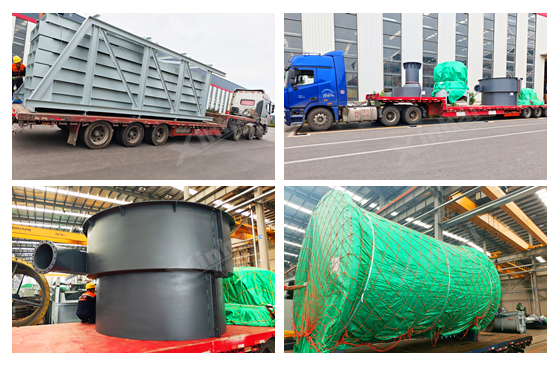
Oversized and overweight components were separated for transport. These included the ball mill motor assembly (8,140 kg), reducer assembly (4,600 kg) and oil-mist lubrication unit (500 kg), each shipped as a separate unit.
Careful planning linked factory dismantling and packing with transportation and subsequent reassembly on site, helping coordinate the equipment throughout the logistics process.
The project still faced delays involving owner-supplied materials, steel platforms and the arrival of a 130 t crane.
Rather than allowing these issues to halt progress, the team coordinated directly with the relevant parties and adjusted the installation sequence. Preparatory assembly of the ball mill and other heavy equipment was completed before the crane arrived, allowing lifting operations to begin once the crane was in place.
This approach helped maintain progress despite disruptions to material supply and equipment availability.
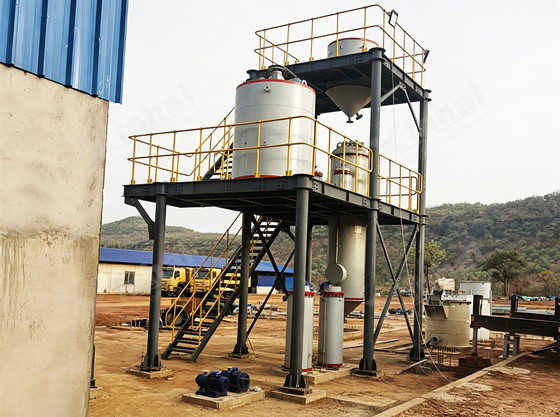
Throughout installation, quality requirements remained unchanged despite the difficult working conditions.
Large non-standard tanks, particularly the leach tanks, required careful welding to achieve a flat, uniform and consistent finish. Maintaining welding quality in extreme heat and with limited on-site facilities demanded close attention to workmanship and construction procedures.
These details matter beyond the construction phase. Consistent fabrication and installation quality provide an important foundation for reliable plant operation in demanding tropical conditions.
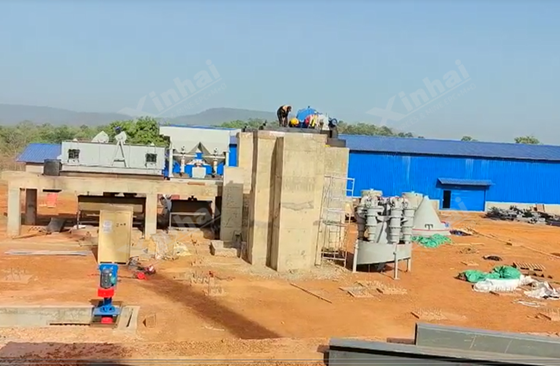
The project tested the team's ability to manage three major challenges: extreme heat, a complex international logistics chain and delays at the construction site. Through adjusted working hours, coordinated equipment transport and changes to the installation sequence, Xinhai completed all equipment installation work by the end of July, as scheduled.
All equipment installation is now complete. Commissioning is awaiting the availability of the mine site's water and power supplies.
For gold projects in West Africa and across Africa, successful delivery depends on more than equipment performance alone. Process design, equipment integration, logistics and site execution all need to work together.
Xinhai works with project owners to develop mineral processing solutions around ore characteristics and site conditions. Share your project requirements with our engineers to discuss a suitable process design and equipment delivery plan.
Site installation ran from early April to the end of July 2026 — roughly four months — starting once civil works were complete.
Mineral processing design, equipment supply, and on-site installation and commissioning services. Civil works, metallurgical testing and the automation system were outside Xinhai's scope.
All equipment installation is complete. The plant is waiting for mains water and power at the mine site before commissioning can begin.
Share your project details and our engineers will get back to you shortly.
 CHAT
CHAT MESSAGE