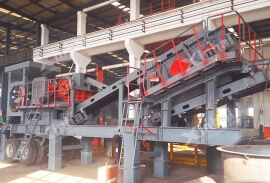


In recent years, mobile crushers have been increasingly used in crushing operations across a variety of industries. By integrating feeding, crushing, screening, and other processing functions into a single unit, a mobile crushing plant simplifies the production process and helps avoid some of the challenges associated with fixed crushing sites, complex infrastructure, and material transportation.
Compared with fixed crushing and screening equipment, a mobile crusher can be viewed as a movable crushing and screening plant. This flexibility has contributed to its growing acceptance in many industries. Much of that popularity comes from the advantages offered by the mobile crusher itself.
One of the commonly discussed advantages of mobile crushers is their potential to reduce overall investment requirements.
At first glance, this may seem surprising, since the purchase price of a mobile crusher is often higher than that of fixed crushing and screening equipment. However, equipment cost is only one part of the investment. Fixed crushing and screening systems generally involve additional installation work, infrastructure construction, and labor input. Mobile crushers reduce some of these requirements, while also lowering the need for certain material inputs during installation and operation.
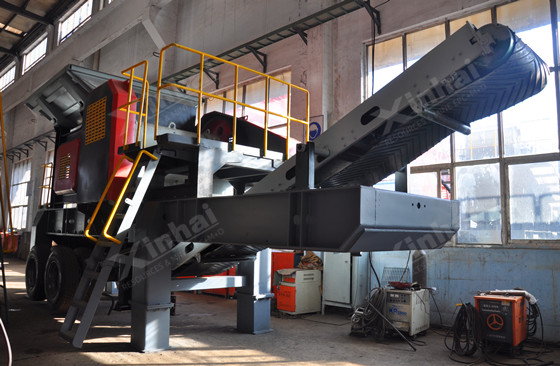
Mobility is perhaps the most distinctive feature of a mobile crusher and the characteristic that sets it apart from fixed crushing and screening equipment.
A mobile crusher can be moved directly to the work site and put into operation after a relatively short adjustment period. It can also be used at different locations according to production requirements and site conditions. In addition, mobile crushers eliminate much of the steel framework and foundation construction typically associated with fixed crushing and screening equipment, helping save installation time.
Mobile crushers can be used either as integrated units or as independent operating systems, depending on production needs.
They also offer flexibility in equipment and process configuration. Common arrangements include “crushing followed by screening,” “screening followed by crushing,” two-stage crushing and screening processes, and three-stage crushing and screening processes. This flexibility allows different production requirements to be accommodated through a range of configuration options.
Another advantage of mobile crushers is their ability to process materials directly at the work site. This reduces the need to transport materials to a separate processing location and can help lower material transportation requirements.
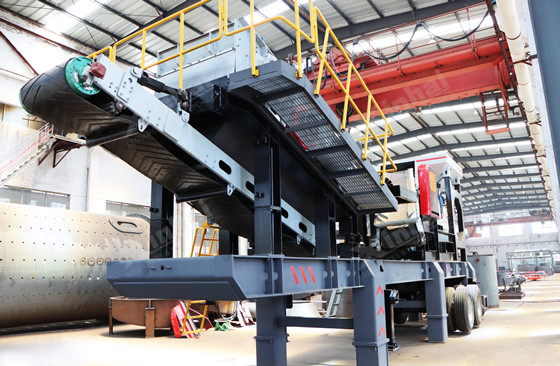
Based on their travel mechanism, mobile crushers can generally be divided into two categories: tire-type mobile crushers and crawler-type mobile crushers.
So, what are the differences between these two types, and how can users choose between them? The answer largely depends on their respective characteristics and the requirements of the project.
1. Mobility
The tire-type mobile crusher is not completely self-propelled and typically requires a semi-trailer tractor for relocation between sites.
The crawler-type mobile crusher generally adopts a self-driving design, giving it greater mobility when moving around a work site. In this respect, crawler-type models offer an advantage over tire-type units.
2. Application Scope
The tire-type mobile crusher relies on vehicle traction and is generally better suited to areas with convenient road access and relatively accessible working conditions. As a result, it is widely used in applications such as construction waste treatment, infrastructure projects, and construction-related industries.
The crawler-type mobile crusher features a modular structure and a high-strength chassis, allowing it to adapt to more demanding operating environments, including mountainous and wet areas. It can also travel on more challenging terrain, giving it a broader range of applications. For this reason, crawler-type mobile crushers are often used in mine crushing and screening operations.
3. Productivity
The hydraulic support legs installed beneath the frame of a tire-type mobile crusher help improve overall equipment stability during operation. This stability allows the equipment to be configured with larger crushing and screening units and enables the handling of larger materials.
The crawler-type mobile crusher has a different structural arrangement at the front end, resulting in different operating characteristics compared with tire-type models.
Conclusion
Both tire-type and crawler-type mobile crushers have their own features and application characteristics. Equipment selection should be based on a combination of factors, including production requirements, investment considerations, material characteristics, and operating conditions.
As industries continue to pursue greater efficiency and convenience, mobile crushers are being adopted in an increasing number of applications. Understanding the characteristics of both tire-type and crawler-type mobile crushers can provide a useful reference for current and future equipment selection.
Share your project details and our engineers will get back to you shortly.
 CHAT
CHAT MESSAGE