
Crushing and grinding form the foundation of any mineral processing plant. Their main purpose is to reduce raw ore to a suitable particle size. This allows valuable minerals to be fully liberated for subsequent separation processes. If crushing and grinding efficiency drops, downstream operations like flotation, magnetic separation, or gravity separation cannot achieve the desired results. In this sense, crushing and grinding are more than just preparation steps. They set the upper limit for metallurgical recovery.
Improving crushing and grinding efficiency is not a single-point fix. It is a systematic effort. You must optimize across seven key areas: process flow, equipment condition, operational control, and maintenance management. Based on over twenty years of field experience and real cases from multiple global concentrators, this article outlines seven proven, practical strategies. These focus on stabilizing circuit performance, enhancing mineral liberation, and systematically boosting overall process results to improve crushing and grinding efficiency.
The core goal of crushing is to minimize the feed size to the mill as much as possible. This reduces the mill load from the source and cuts unnecessary energy use in grinding. This is the key prerequisite for better overall efficiency.
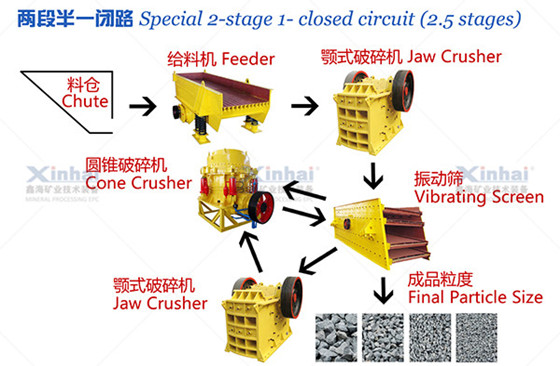
Set up a reasonable crushing circuit and strengthen closed-circuit screening. Use a three-stage or four-stage crushing process (coarse, intermediate, fine, and sometimes extra-fine). Pair it with efficient vibrating screens for closed-circuit operation. This ensures the final crushed product has uniform and qualified particle size.Strictly control wear parts on crushers to maintain stable discharge size. Regularly inspect liners, jaw plates, blow bars, and impact plates for wear. Prevent coarsening of particle size due to wear, which increases circulating load.
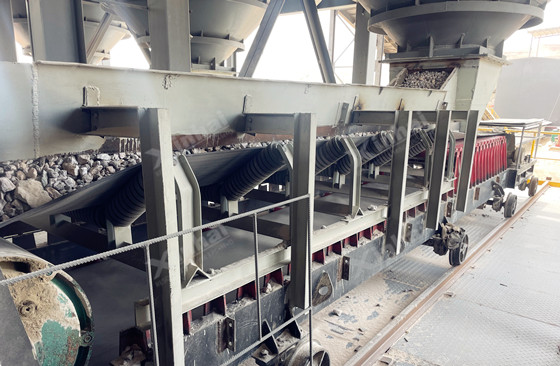
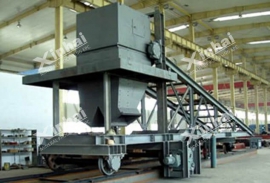
Maintain stable feeding to avoid no-load running or overload. Use variable-frequency feeders and anti-blocking devices in bins. This keeps crushers running at full load, uniformly, and continuously. It prevents idling, segregation, blockages, and tramp iron.
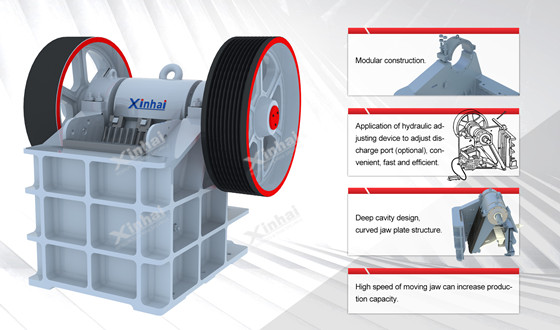
Upgrade to efficient crushing equipment and chamber designs. Replace outdated crushers with energy-efficient models (such as jaw crushers and cone crusher for hard rock). Optimize crushing chamber shapes to enhance breakage efficiency and reduce specific energy consumption per ton of ore.
Upgrading to a high-efficiency jaw crusher can significantly improve crushing circuit optimization and reduce energy per ton.
Mill efficiency depends heavily on stability. Any variation in parameters (feed rate, pulp density, circulating load, water addition) directly lowers efficiency, raises energy use, and even harms mineral liberation.
Keep the four core parameters stable. Strictly control feed rate, grinding density, circulating load (return sand), and water addition. Avoid large swings or inconsistent conditions.Replace rule-of-thumb operations with data-driven control. Stop adjusting mill speed or water based on experience alone. Use online data like power draw, current, oil pressure, density, and pressure to guide precise adjustments.
Control grind size to prevent under-grinding and over-grinding. Under-grinding leads to insufficient mineral liberation and lower downstream recovery. Over-grinding causes slime formation, increases energy use, and worsens separation conditions.
Optimize grinding media management. Use proper ball/rod size ratios and filling rates. Add media regularly and perform periodic mill cleanouts and reloads to maintain optimal grinding performance.
Classification is the "throat" of the grinding circuit. Low classification efficiency means qualified fines cannot discharge quickly. Coarse particles recirculate repeatedly. This wastes energy and reduces grinding efficiency. Focus on optimization here.
Stabilize operating parameters of classification equipment. Keep pressure, flow, and density steady in hydrocyclones, vibrating screens, and other classifiers. Prevent roping, short-circuiting, or fine material in underflow.
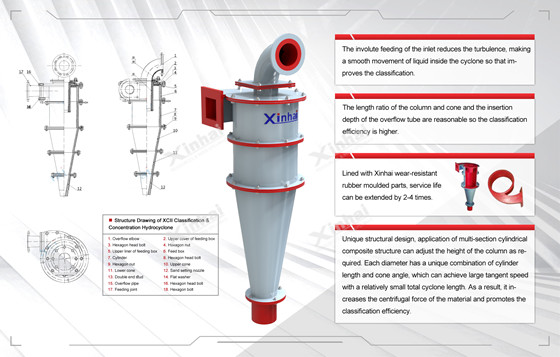
Replace worn classification parts promptly. Check and change cyclone apex nozzles, liners, overflow pipes, and screen meshes regularly. Wear changes cut size and drops classification efficiency.
Improve classification efficiency to cut ineffective recirculation. Optimize classifier parameters and upgrade classification processes. This allows qualified particles to discharge quickly and reduces coarse particle recirculation in the circuit.
Poor equipment condition is the most common yet often overlooked killer of efficiency on site. Worn liners, poor lubrication, and bearing issues lower performance and increase downtime. Use scientific management to reduce these hidden losses.
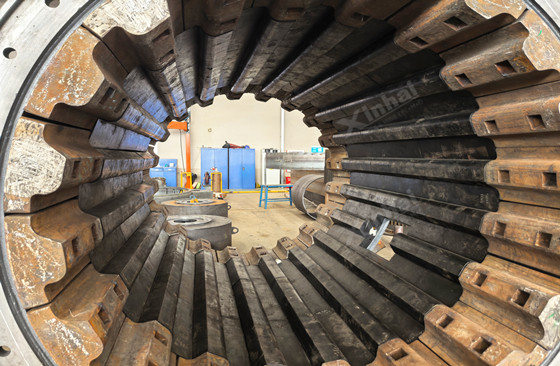
Enhance maintenance of mill wear parts. Regularly inspect mill liners and lifter bars. Replace them when wear is severe to avoid reduced lifting capacity and poorer grinding results.
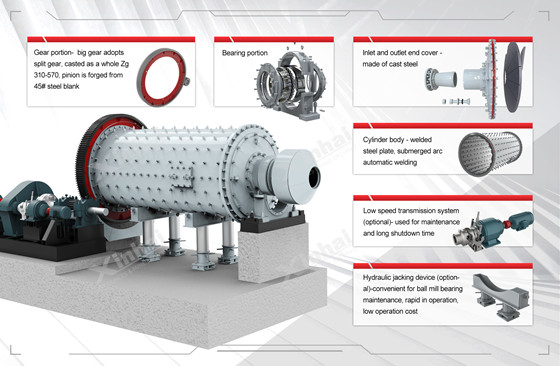
Improve lubrication and monitoring. Strengthen bearing lubrication for mills and crushers. Check oil quality and levels regularly. Install bearing temperature monitors and motor current monitoring systems. Detect issues early to cut unplanned downtime and inefficient running.
Implement preventive maintenance instead of reactive repairs. Build equipment maintenance logs. Perform regular full inspections and upkeep on crushing and grinding equipment. Identify potential failures early and avoid running equipment in poor condition.
Tramp metal, debris, high moisture, or excessive clay in mill feed disrupts grinding conditions, damages equipment, and lowers efficiency. Control these strictly.
Install strong iron removal to protect equipment and conditions. Place electromagnetic or permanent magnetic separators in the crushing circuit. This stops drill steel, iron plates, rock bolts, and other metals from entering crushers or mills. It prevents damage and process upsets.
Manage feed moisture and clay content. High moisture or clay causes sticking, blockages, and coating. This harms crushing and grinding efficiency. Pre-treat ore as needed.
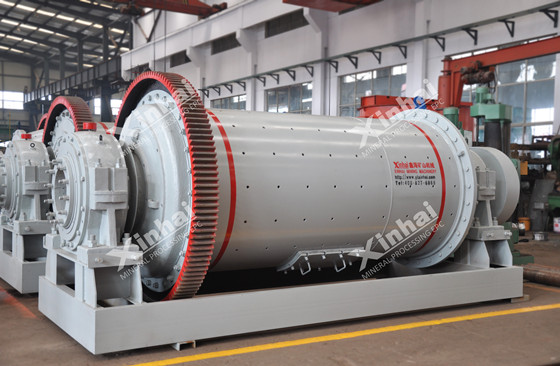
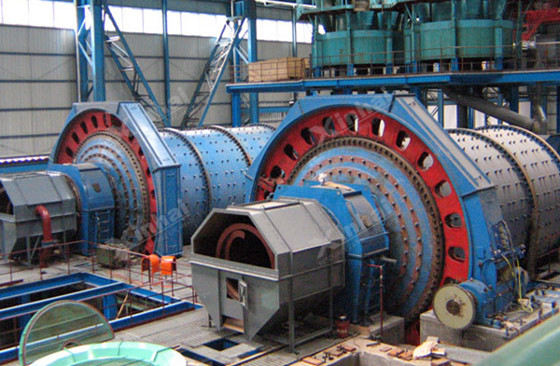
Optimizing ball mill performance through stable feed control and proper media loading is essential for maintaining consistent grinding mill efficiency.
Manual operations bring subjectivity and fluctuations. These limit stable efficiency gains in crushing and grinding. Automation and intelligent upgrades enable data-driven, automatic optimization. This is key to high-efficiency running.
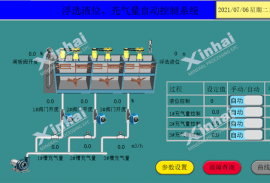
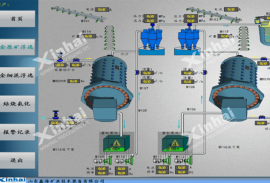
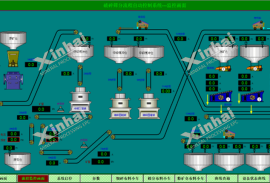
Introduce online monitoring and automatic control systems. Install online particle size analyzers, grinding expert systems, and variable-frequency controls. These auto-adjust feed, water, pressure, and flow to reduce human intervention.
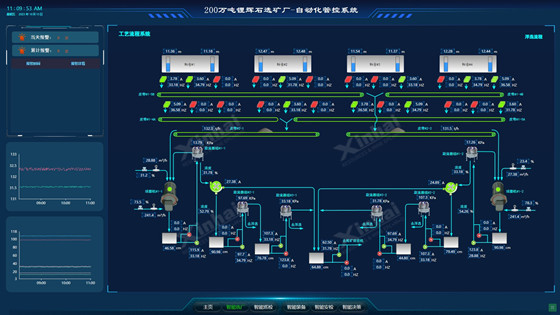
Build a KPI dashboard for key indicators. Track throughput, specific power consumption, grind size, circulating load, classification efficiency, and equipment availability. Analyze and optimize regularly for closed-loop management.
Upgrade from manual operation to intelligent optimization. Use big data and AI to build grinding efficiency prediction models. Anticipate condition changes and enable proactive adjustments.
In hard rock operations, selecting the right cone crusher for secondary and tertiary crushing plays a critical role in improving crushing and grinding efficiency across the entire circuit.
Improving crushing and grinding efficiency is not about optimizing one step. It requires synergy across the entire process and system. This delivers three core benefits and creates greater value for the concentrator.
Increase throughput and boost overall plant capacity. Optimized crushing and grinding flows plus stable conditions reduce downtime. Plant throughput can rise 10%-20%, significantly expanding capacity.
Lower specific power consumption and cut production costs. Crushing and grinding account for 50%-65% of total plant energy use. Efficiency gains can drop specific energy consumption by 5-10 kWh/t. For large plants, this saves millions in annual energy costs.
Improve mineral liberation and upgrade separation performance. Stable grind size and sufficient liberation create ideal conditions for flotation, magnetic separation, and gravity separation. This can raise recovery by 1%-3 percentage points and concentrate grade by 0.5%-2 percentage points. It significantly boosts economic returns.
In summary, improving crushing and grinding efficiency must match the plant's scale, ore properties, and equipment status. Apply the methods above selectively. Learn from similar plants' real cases. Adding new equipment blindly is less effective than tuning existing system parameters first. In many projects I have worked on, simply optimizing operating parameters and stabilizing grinding density increased mill hourly output by 8%-12% without any new equipment.
Xinhai Mining has specialized in crushing and grinding systems for many years. We offer full-chain support from process validation and equipment selection to EPC+M+O contracting. Welcome to discuss your specific issues in depth.
Share your project details and our engineers will get back to you shortly.
 CHAT
CHAT MESSAGE