
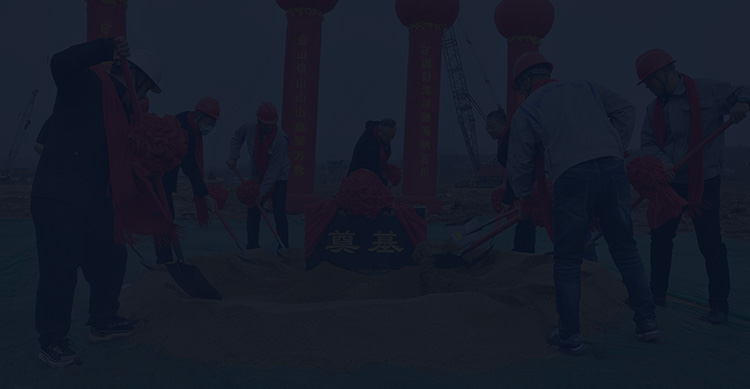
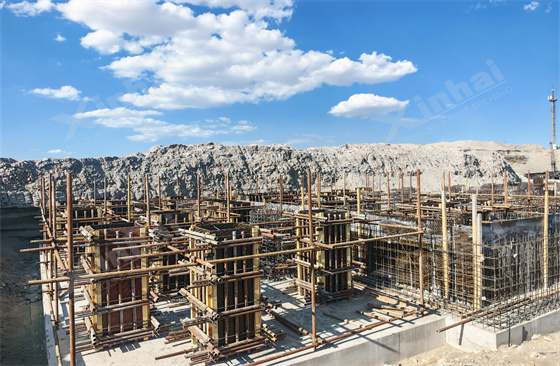
Civil construction at Xinhai Mining’s 1 million t/a tungsten tailings reprocessing project in Uzbekistan entered its final stage in August 2026. The project covers approximately 8 million tonnes of existing tailings and aims to recover the tungsten resources they still contain.
Under the EPC+M+O contract, Xinhai provides services covering mineral processing testwork, engineering design, equipment supply, civil construction, equipment installation, commissioning, and automation systems. The processing flowsheet combines gravity separation with flotation to recover tungsten from the tailings.
For the site team, the main challenge has been working around steep terrain, summer temperatures above 40°C, and frequent dust storms.
The project has reached several key milestones in 2026:
March: Particle size analysis testwork was completed, and equipment design and manufacturing began.
April: Civil construction started.
May: The complete equipment package was delivered to the port for shipment.
July 28: The project held a ceremony marking the start of installation works, officially moving into the equipment installation stage.
August: Civil construction entered its final stage, with the site being prepared for equipment delivery and structural steel installation.
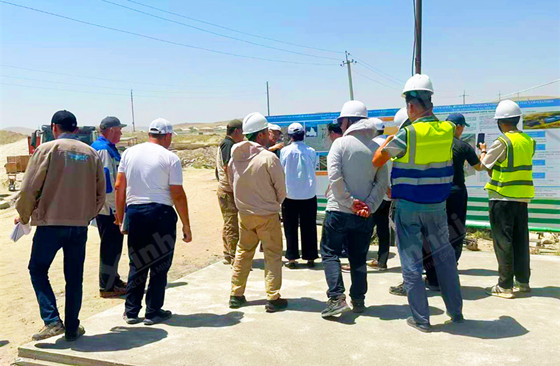
Uzbekistan’s mining authorities also visited the site and recognized the construction progress and the team’s professional services.
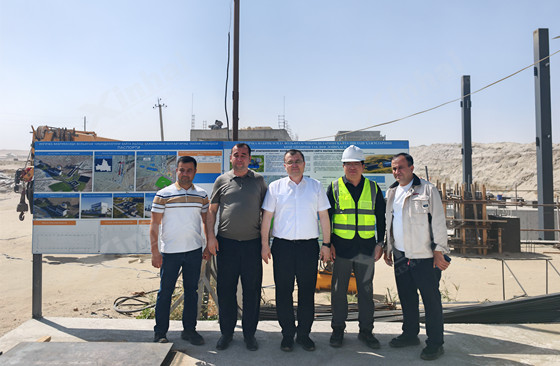
(Uzbekistan’s Minister of Mining Visits the Xinhai Tungsten Tailings Project Site)
1. Steep Slopes and Limited Working Space
The site’s steep terrain leaves little room for construction activities. Moving personnel, machinery, and building materials between work areas requires careful planning. When several operations run at the same time, poorly coordinated movements can disrupt work sequences and delay progress.
The Xinhai team has planned access routes and designated work areas according to the terrain. It has also made use of available open space and staggered the movement of personnel and machinery. These arrangements help reduce congestion and allow different construction activities to proceed with less interference.
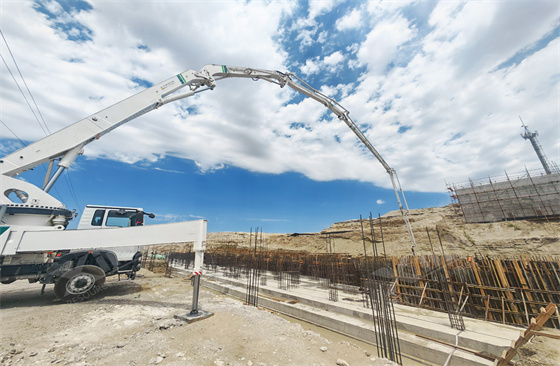
2. Summer Heat and Concrete Curing
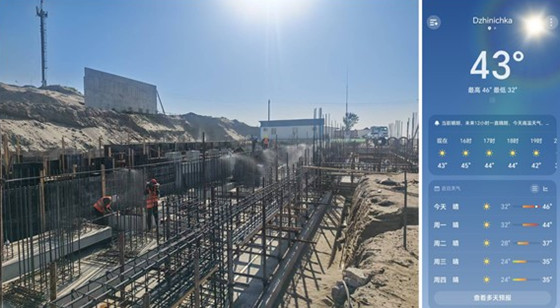
Daytime air temperatures can exceed 40°C, while ground surface temperatures can reach 50°C. Such conditions make outdoor work more demanding and increase the risk of premature moisture loss and cracking in concrete.
The team has shifted more outdoor work to the cooler hours of early morning and late afternoon or evening. A mist-spray system also helps maintain moisture on concrete surfaces during curing. Evaporative cooling lowers the ambient temperature in the working area by more than 10°C, according to the project information.
3. Dust Storms and Construction Continuity
Dust storms can arise suddenly, interrupt work, create safety concerns, and expose building materials and temporary facilities to damage.
The team monitors weather conditions and prepares protective measures before dust storms arrive. Equipment and building materials are covered or secured as needed, while restart procedures are prepared in advance. This allows work to resume promptly when conditions permit.
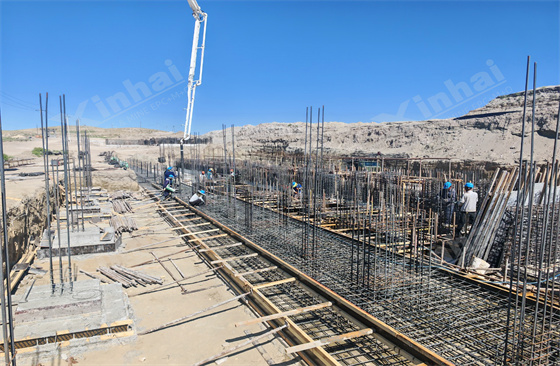
With limited space and changing weather conditions, the site team must coordinate work areas, construction sequences, and available resources closely.
The team plans construction routes around the terrain, adjusts working hours to suit temperatures, and reschedules activities when weather conditions change. It also prepares protective measures in advance rather than waiting for adverse conditions to disrupt the site.
These arrangements help the team manage overlapping operations while keeping civil works aligned with the requirements of equipment installation.
Civil construction must provide a suitable foundation for equipment installation and structural steel erection. Work quality, access, and construction schedules all affect how smoothly the next stage can proceed.
The July 28 installation ceremony marked the project’s transition into equipment installation. As civil works approach completion, site preparation continues to support the delivery and installation of the processing equipment.
For Xinhai, the project involves more than recovering tungsten from existing tailings. It also requires the coordinated delivery of mineral processing testwork, engineering design, equipment supply, and on-site construction under demanding conditions.
Xinhai Mining provides EPC+M+O services for mineral processing projects, integrating process engineering and project execution from testwork through construction and commissioning. For mining operators considering tungsten tailings reprocessing, the appropriate flowsheet and project scope depend on the characteristics of the tailings and the requirements of the operation.
Contact Xinhai to discuss a tailings reprocessing project or an EPC solution for recovering valuable minerals from existing tailings.
Share your project details and our engineers will get back to you shortly.
 CHAT
CHAT MESSAGE