cases




This production line processes electrolytic aluminum waste residue. Xinhai tailored to the client’s needs, encompassing process design, key equipment manufacturing, commissioning support, and guidance for the installation phase. Although the initial design capacity was 3 t/h, the plant achieved an actual output of 150 t/d, enabling efficient and sustainable recycling of industrial solid waste.
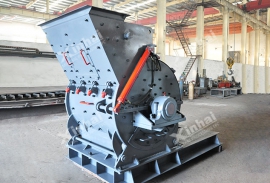
Crushing System Design: An open-circuit, single-stage crushing process was adopted, utilizing a hammer crusher and a trough feeder, suitable for the large lump size and high impurity content of the waste. Crushed material is conveyed to the fine ore bin via a bucket elevator, effectively overcoming the height difference between the two plant buildings.
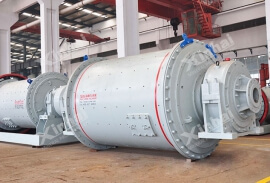
Grinding & Classification System Optimization: The grinding circuit employs an overflow ball mill in a closed-circuit, single-stage grinding and classification process. The classification equipment is a hydrocyclone. The cyclone underflow returns to the ball mill, forming a closed circuit to ensure stable particle size and create optimal conditions for subsequent flotation.
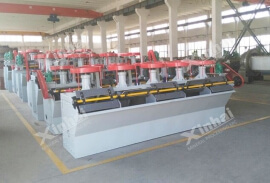
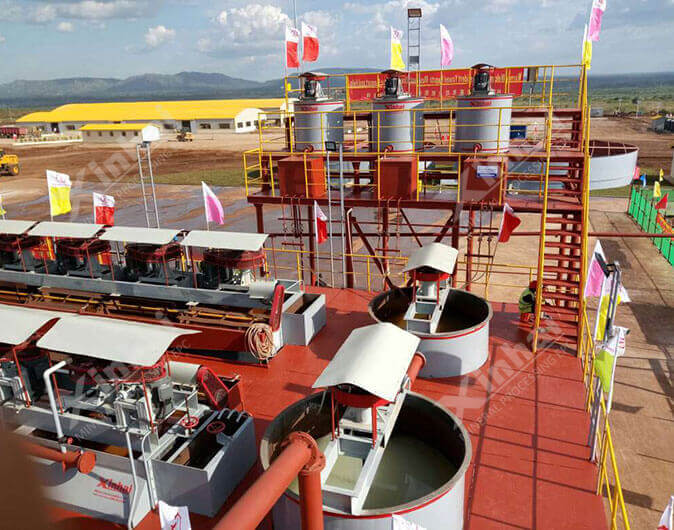
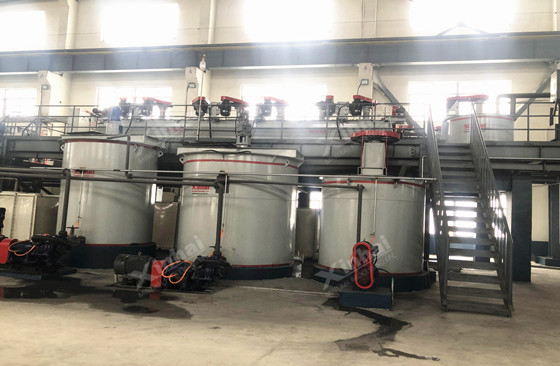
High-Efficiency Flotation Circuit: Based on the characteristics of carbon residue, the flowsheet includes one-stage rougher flotation and three-stage scavenger flotation (reverse flotation). BF-1.2 flotation cells were selected to enhance separation efficiency. Conditioned slurry enters the flotation system after reagent mixing in the agitation tank.
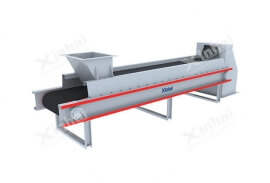
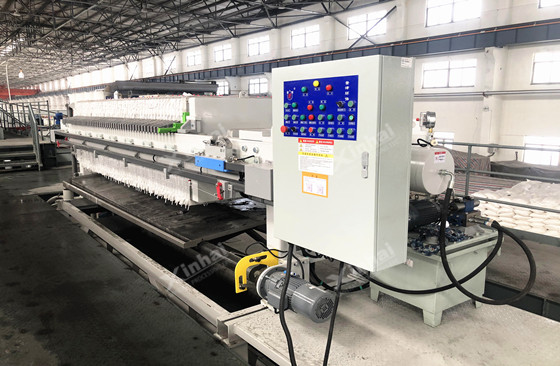
Carbon Powder Detoxification & Dewatering: Flotation froth enters a conditioning tank for neutralization before being pumped to a membrane filter press. The resulting carbon powder is conveyed to a storage yard via a belt conveyor, ensuring safe and environmentally friendly handling.
Cryolite Dewatering System: Cryolite concentrate is pumped to a membrane filter press for dewatering, achieving a final moisture content below 12%. The filtrate is clarified and recycled to reduce water consumption.
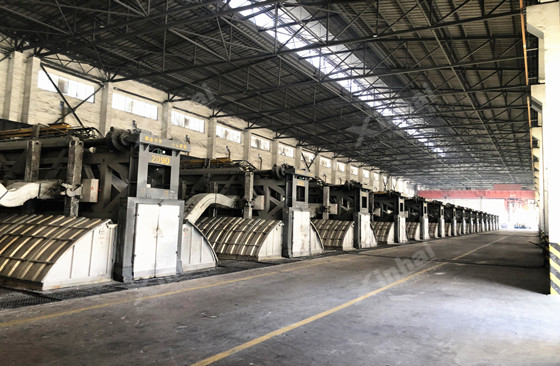
Steel-Structure Foundations & Automation Layout: All equipment foundations and operation platforms were constructed using steel structures inside the existing plant, minimizing civil construction work and shortening the project schedule. Space and interfaces were reserved for potential automation and drying system upgrades.
The plant achieved a stable output of 150 t/d, far exceeding the designed 3 t/h capacity, and efficiently recovered both cryolite and additional aluminum products, delivering higher economic returns. Built entirely within the existing facility using a compact steel-structure layout, the project minimized civil costs and accelerated construction. The flowsheet runs reliably with low energy use and simplified operation, demonstrating Xinhai’s capability to deliver fast, efficient, and cost-effective solid-waste recycling solutions.
Share your project details and our engineers will get back to you shortly.
 CHAT
CHAT MESSAGE