
Since October 2026, antimony prices have retreated from their highs, falling by more than 10% in a month. Downstream sectors such as flame retardants and photovoltaic glass have become more cautious. During periods of price volatility, a processing plant's profitability often depends less on how much it can sell its product for and more on how well it can control costs.
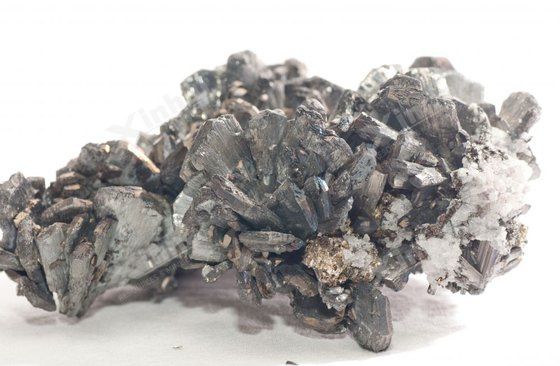
Antimony is an important strategic metal used in flame retardants, alloys, semiconductors and other applications.
Antimony ores vary widely in mineral composition, oxidation level and grain size. This article reviews four approaches to antimony ore processing—pre-concentration, gravity separation, flotation and combined flowsheets—and outlines ways to control costs and improve recovery.
Pre-concentration removes waste rock after crushing and before grinding. This follows the principle of rejecting waste as early as possible and minimizing unnecessary grinding. It can reduce the tonnage sent to grinding and flotation while increasing the feed grade. For low-grade ores, XRT sensor-based sorting or dense-medium cyclones can typically reject 30%–50% of the waste rock.
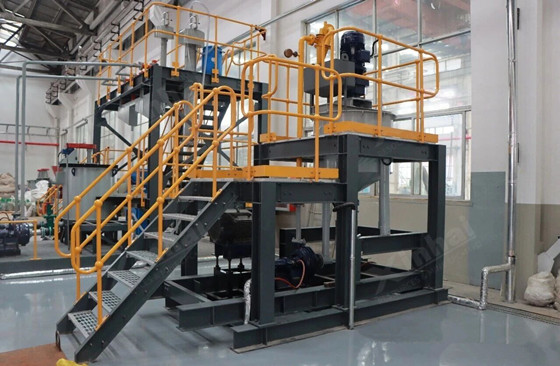
Hand sorting: Hand sorting suits high-grade, lump stibnite and can produce lump concentrate. Wash the ore first if it contains a high level of slimes. Because hand sorting is labour-intensive and costly, sensor-based sorting is increasingly replacing it.
Sensor-based sorting: XRT transmission sorting, XRF sorting and image-based colour sorting suit coarse, low-slime ores.
Dense-medium cyclones: Dense-medium cyclones suit ores with coarse mineralization that can be readily liberated after crushing.
Gravity separation uses the density difference between antimony minerals—stibnite has a density of 4.5–4.6 g/cm³—and gangue, which typically has a density of 2.5–3.0 g/cm³. It suits coarsely disseminated, single-sulfide antimony ores and antimony oxide ores, but is less effective for fine particles.
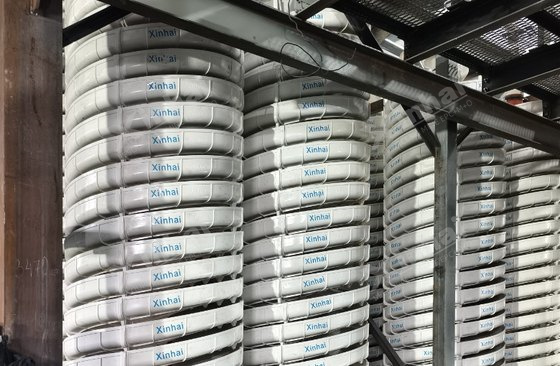
(Spiral chutes separating antimony ore at a plant)
A typical flowsheet uses jaw crushers for primary and secondary crushing to 20–50 mm, followed by ball milling to 0.074–0.15 mm to liberate the antimony minerals. Jigs provide rough concentration, and shaking tables upgrade the concentrate. Spiral chutes pre-concentrate fine particles, while centrifugal concentrators recover additional ultrafine particles. The concentrate is then thickened and filtered.
Gravity separation uses relatively simple equipment, requires no flotation reagents and has low energy consumption. Typical recovery rates range from 60% to 75%.
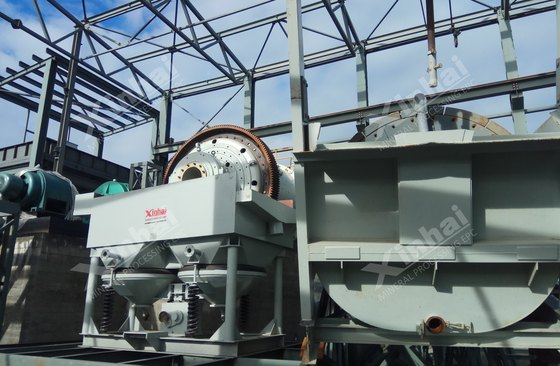
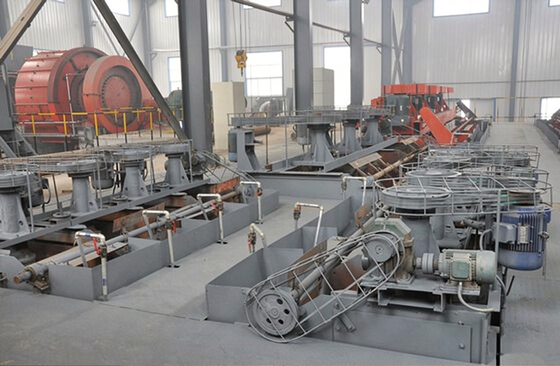
Flotation uses the natural hydrophobicity of antimony sulfide minerals. Reagents help the minerals attach to air bubbles and separate from the gangue. Flotation is widely used and can achieve recovery rates of 85%–95%. It suits fine-grained antimony sulfide ores and complex polymetallic antimony ores.
A suitable grind is typically 60%–75% passing 200 mesh. Coarse grinding can leave minerals insufficiently liberated, while overgrinding can create slimes and reduce flotation performance.
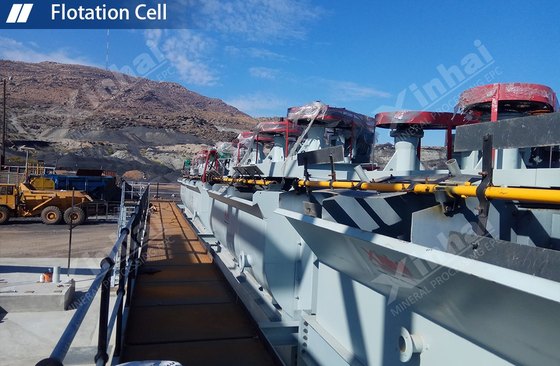
The reagent scheme is critical. Use sodium carbonate or lime to adjust the pH to 6–8, lead nitrate as an activator, butyl xanthate or sodium diethyldithiocarbamate as a collector, and pine oil as a frother. Lime and sodium sulfite can depress pyrite and arsenopyrite.
A typical flowsheet uses one rougher, two cleaner and two scavenger stages. Roughing recovers antimony, cleaning upgrades concentrate grade, and scavenging recovers antimony from the flotation tailings.
Antimony oxide ores have poor floatability. They may require sulfidization with sodium sulfide before flotation, or the use of oleic-acid-based collectors with sodium silicate to depress the gangue.
A single process may not achieve both the required concentrate grade and recovery when the ore has variable grain sizes, contains both sulfide and oxide minerals, or contains low-grade associated antimony. In these cases, a combined flowsheet may be more suitable.
Gravity separation followed by flotation: Jigs and shaking tables pre-concentrate the coarse fraction. The gravity tailings are reground and floated to recover fine antimony minerals. The concentrates are then combined. This approach treats coarse and fine particles while reducing reagent and energy consumption.
Flotation followed by hydrometallurgical or pyrometallurgical treatment: Refractory oxide ores may be treated by sulfidization and flotation to produce a rougher concentrate, followed by alkaline leaching or reduction smelting to recover metallic antimony.
Bulk flotation followed by differential flotation: Complex polymetallic antimony ores may first produce a lead-antimony bulk concentrate. The process then depresses lead minerals and floats antimony minerals to separate them.
When antimony prices are falling, process adjustments need to be made methodically.
A suggested sequence is to set the grind size first—typically 60%–75% passing 200 mesh—then adjust the collector dosage, commonly 50–150 g/t of butyl xanthate or sodium diethyldithiocarbamate, and finally adjust the frother dosage, commonly 20–60 g/t of No. 2 pine oil. Change one variable at a time, keep each adjustment within 10%–15%, and observe the results over one or two shifts before making the next adjustment.
Step | Adjustment | Typical range |
1 | Set the grind size | 60%–75% passing 200 mesh |
2 | Adjust the collector dosage | 50–150 g/t butyl xanthate or sodium diethyldithiocarbamate |
3 | Adjust the frother dosage | 20–60 g/t No. 2 pine oil |
When recovery falls, first check the grind size and the proportion of oxidized antimony in the feed rather than immediately increasing the collector dosage. Oxidized antimony may require activation with sodium sulfide or recovery by gravity separation.
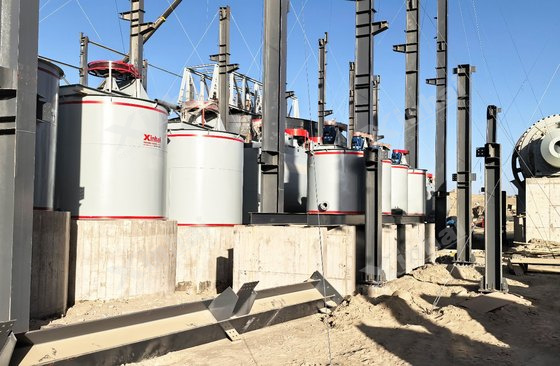
Tailings grade is a useful indicator of flotation performance. For single-sulfide antimony ores, the antimony grade in the tailings is typically 0.3%–0.6%. If it exceeds 1.0%, check the grind size, reagent effectiveness, pH—which is typically maintained at 6.5–8.5—and aeration rate.
However, lower tailings grade is not always better. For many processing plants, the economic range is 0.4%–0.8%. When antimony prices are low, controlling costs may be more practical than pursuing the highest possible recovery.
Crushing and grinding account for approximately 50%–70% of a processing plant's total energy consumption, making them a major opportunity for cost reduction. Gravity pre-concentration can reject waste rock before grinding. Preventive equipment maintenance and accurate records of reagent and grinding-media consumption can also help. Processing teams can track energy use, reagent consumption and recovery as part of shift performance.
Pre-concentration, gravity separation, flotation and combined flowsheets each suit different conditions. Matching and combining them to the ore can help processing plants protect margins during periods of antimony price volatility.
Ore properties vary from deposit to deposit, including antimony mineral type, oxidation level and grain size. Before selecting a processing method, conduct metallurgical testwork to assess ore amenability and determine a suitable flowsheet and operating parameters. The results provide a basis for plant design and can help improve both technical performance and project economics.
Share your project details and our engineers will get back to you shortly.
 CHAT
 MESSAGE