cases
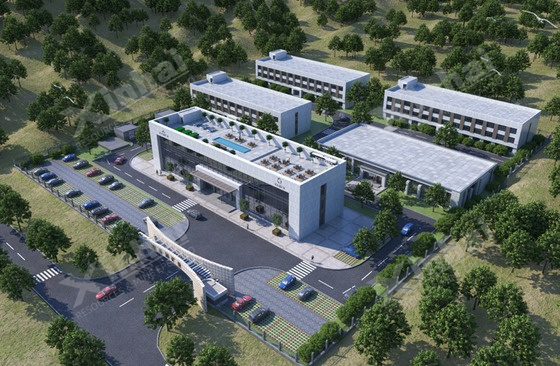



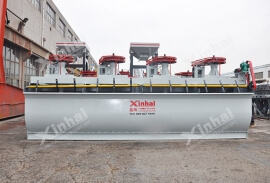
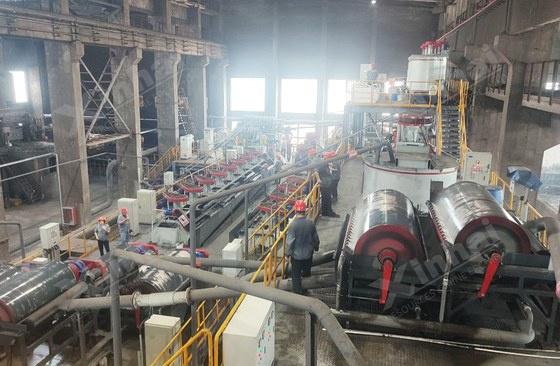
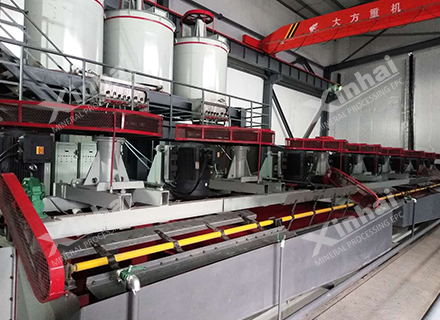
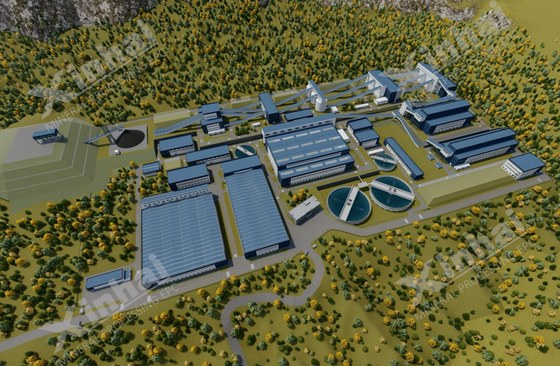
Located in Xinjiang, this project applies a testwork-backed flowsheet to a 50,000 t/d low-grade ilmenite operation, covering engineering design and supply of the flotation equipment. Xinhai completed the testwork and process design, while the client procured the vertical mills and magnetic separators and handled installation.
Crushing and high-pressure grinding: designed a crushing–HPGR–ball milling circuit that reduces the ore to 1–0 mm, shifting part of the comminution work from milling to coarse crushing to lower power consumption per tonne.
Dry separation of fine ore: applied dry separation to the minus 1 mm fraction to discard around 50% of the feed as tailings before grinding, reducing both mill load and the volume reporting to the tailings storage facility.
High-intensity magnetic separation: introduced a magnetic stage ahead of flotation to upgrade the low-grade ilmenite to a level at which flotation can work effectively.
Ultra-high-density titanium flotation: specified flotation at 50–60% pulp density, above the 30–40% of conventional circuits, to improve titanium selection from the magnetically enriched feed.
Rougher concentrate regrinding: selected a vertical mill for regrinding the titanium rougher concentrate, limiting overgrinding while reducing floor space and noise.
Phosphorus separation: incorporated a phosphorus removal stage requested by the client in the revised flowsheet issued in 2025, keeping the design aligned with the final testwork results.
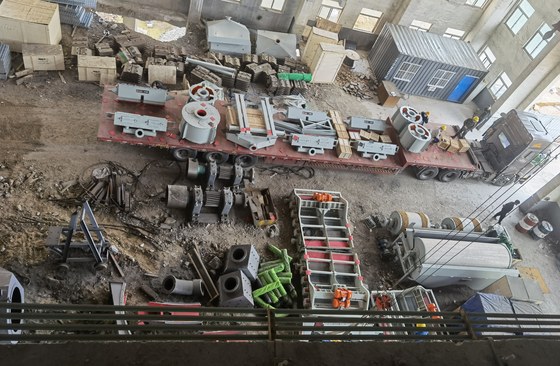
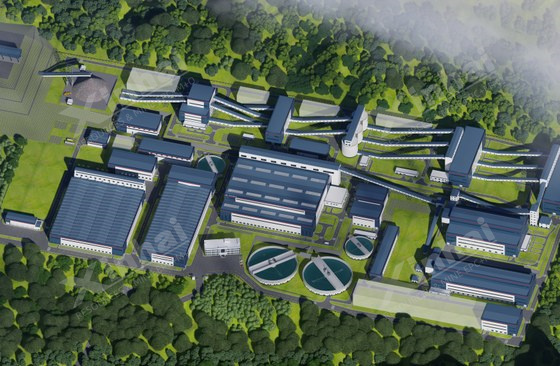
Testwork and staged engineering have carried the project through to detailed design. By October 2025, the main plant building design was nearing completion, with the dewatering, drying and ore storage buildings in progress and civil works advancing in parallel. The client issued the revised flowsheet incorporating phosphorus recovery in 2025, and the team adopted it for the ongoing design, establishing the process basis for a 50,000 t/d ilmenite operation.
Share your project details and our engineers will get back to you shortly.
 CHAT
 MESSAGE