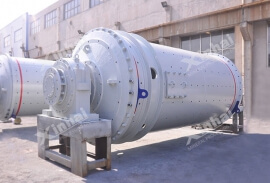

(Raymond Mill 3D Demonstration)
This Xinhai 3D demonstration video shows how large bulk materials are fed into the storage hopper and then enter the grinding chamber for grinding. It illustrates the Raymond Mill’s working principle from feeding through grinding.
Xinhai Raymond Mill is a type of mineral processing equipment designed for powder processing. It offers strong performance and operates as a complete, independent production system.
Before discussing how to improve the performance of a Raymond Mill used in mineral processing, it is helpful to understand how the machine works. First, a jaw crusher reduces large bulk materials to the required size. A mine hoist then transfers the crushed materials to a storage hopper. From there, an electromagnetic vibrating feeder delivers them uniformly, quantitatively and continuously into the main engine’s grinding chamber.
After grinding, a blower carries the material to a separator for classification. The separator’s impellers return material that does not meet the required fineness to the grinding chamber for further grinding. Material that meets the fineness requirement travels with the airflow through pipelines to a cyclone powder collector, where it is separated and collected. The powder discharged from the discharge device is the finished product. The separated airflow returns to the blower through a return duct at the top of the cyclone powder collector.
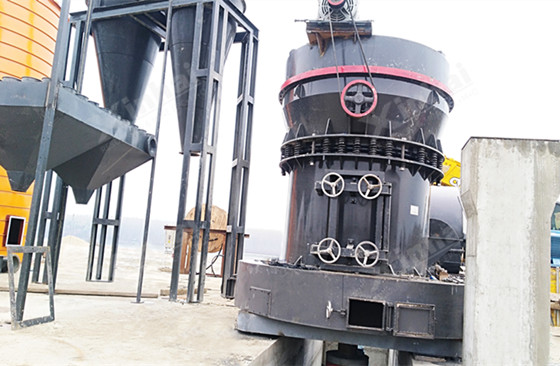
(Xinhai Raymond Mill operating at a project site in Serbia.)
How Xinhai Improves Raymond Mill Performance
Xinhai Raymond Mill uses high-quality steel and wear-resistant materials to support wear resistance and reliable operation. Its capacity is up to 22 t/h.
Its advantages include:
Protection from impact and reduced vibration: The force generated by the milling rollers, which are connected by pull rods and high-pressure springs, helps prevent damage to the equipment from bulk materials. A resilient coupling between the main engine and separator helps reduce vibration and noise and extend equipment service life.
Compact system layout: Crushing, drying, grinding, classification and transmission are integrated into one system. Its simple, compact layout occupies about 50% of the area required by a ball mill system. It can also be arranged outdoors, helping reduce investment costs.
Effective sealing: The milling roller devices use a superimposed, multistage sealing structure for effective sealing.
Dust control: A unique air circulation system and advanced dust collector support the equipment’s environmental protection features.
Improved product yield and adjustment: High-density, high-precision impeller devices increase finished-product yield by more than 50% under the same power. Efficient, energy-saving centrifugal induced-draft fans improve fan efficiency, while convenient impeller adjustment helps improve finished-product fineness precision.
Share your project details and our engineers will get back to you shortly.
 CHAT
 MESSAGE