

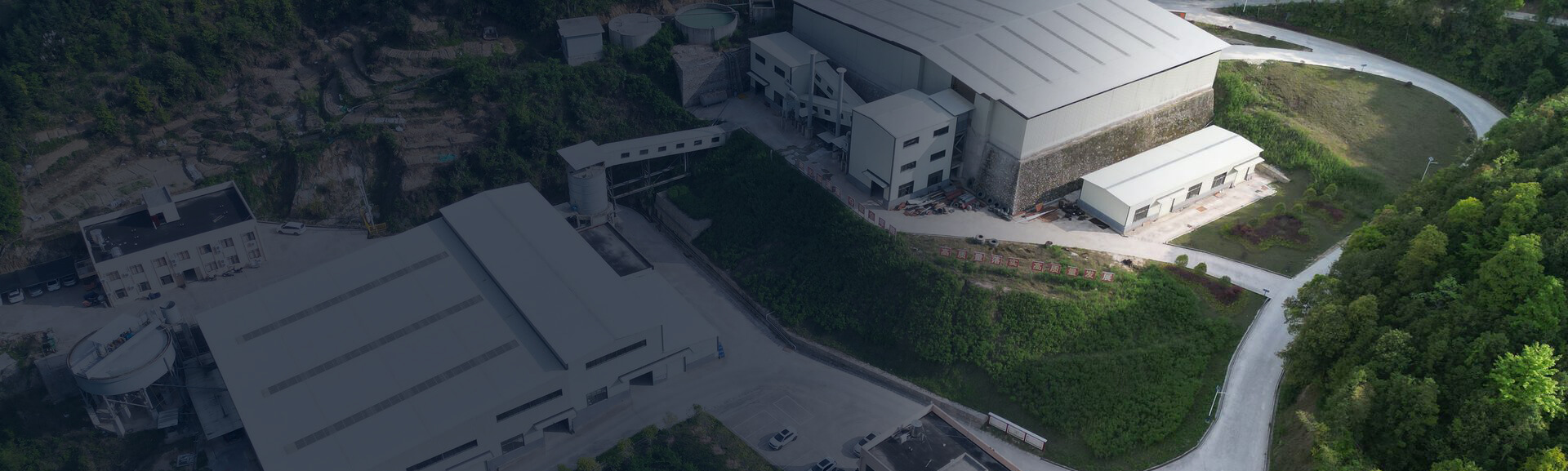
Explore processing routes for fluorite, quartz sand, and barite, and learn how Xinhai supports projects from metallurgical testing and design to equipment, construction, and operation.
Achieving consistent product specifications from non-metallic ores requires a process route tailored to the ore's mineralogy and target market. This article examines the beneficiation considerations for fluorite, quartz sand, and barite, and outlines how Xinhai supports projects through metallurgical testing, process design, equipment supply, construction, and operation.
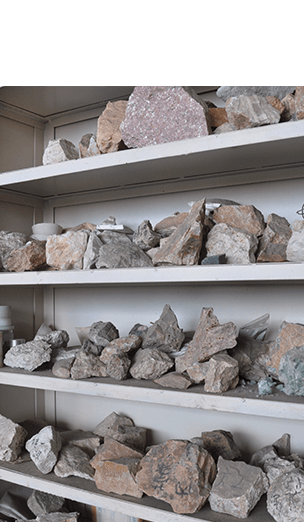
Non-metallic minerals are increasingly shaped by processing technology as downstream industries raise their purity requirements:
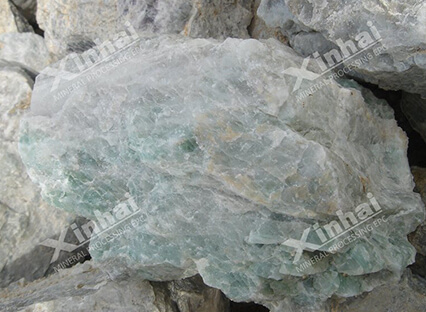
Run-of-mine fluorite ore from a site survey in Vietnam.
Key feedstock for hydrofluoric acid and the fluorochemical chain — refrigerants, fluoropolymers, and electronic-grade HF. Only acid-grade concentrate (CaF2 ≥ 97%) enters this chain; metallurgical-grade product (65–90%) serves steelmaking, and the two tiers differ sharply in price and process investment.
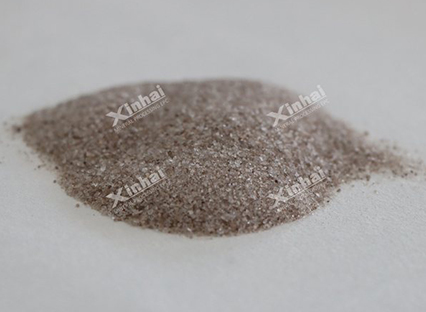
Washed silica sand sample ready for grade testing.
Value rises with purity: ordinary industrial sand (≥98.5%), glass sand (≥99.3%), solar-grade sand (≥99.9%), and electronic-grade high-purity quartz (≥99.99%). Higher-purity grades can command higher prices, depending on market conditions and specifications.
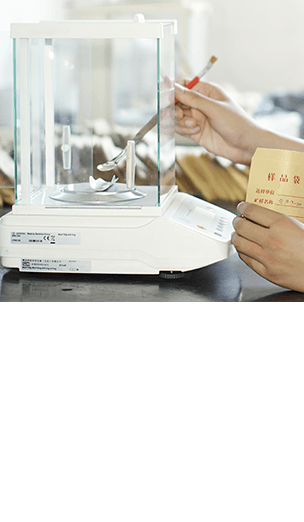
In short, run-of-mine ore does not become an on-spec product on its own. The gap is closed by metallurgical test work, process design, and engineering execution — areas on which Xinhai has focused for nearly three decades.
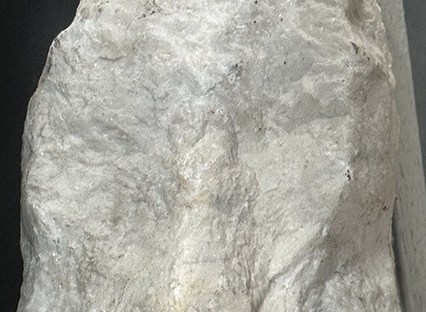
Lump barite ore with a specific gravity of about 4.5.
Specific gravity about 4.5 — a key weighting agent in oil and gas drilling mud that helps control formation pressure and prevent blowouts. Grade, density, and fineness all have quantified thresholds; chemical processing converts barite into barium carbonate, chloride, and a full family of barium salts.
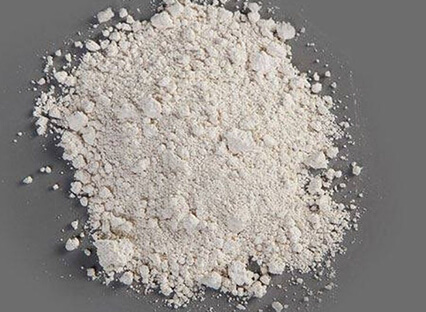
Kaolin powder sample — whiteness, fineness and surface coating
Ground calcium carbonate and kaolin compete on whiteness, particle-size distribution, and surface treatment — properties that directly shape cost and quality for plastics, rubber, and coatings producers.
Gangue type is the first key variable in fluorite beneficiation. Siliceous ores typically follow a sequence of coarse grinding and roughing, regrinding, and multiple cleaning stages with acidified water glass; carbonate (calcite) ores must first address the challenge of selective suppression. Current industry development is focused on fluorine-free, acid-free, non-toxic reagent systems and low-temperature, high-efficiency collectors that can address both cost and environmental compliance.
Test work determines the grind size, reagent regime, and number of cleaning stages; flowsheets are developed around the ore rather than applied as a standard template. For multi-ore-body supplies, sampling starts with representativeness: a primary sample drives the test program while secondary samples verify it before the recommended flowsheet is fixed.
Jiangxi 300 t/d fluorite flotation EPC project (China)
Mongolia 800 t/d fluorite flotation project
Italy 1,200 t/d galena–fluorite complex-ore EPC project
Inner Mongolia 100,000 t/a fluorite mining turnkey and operation project
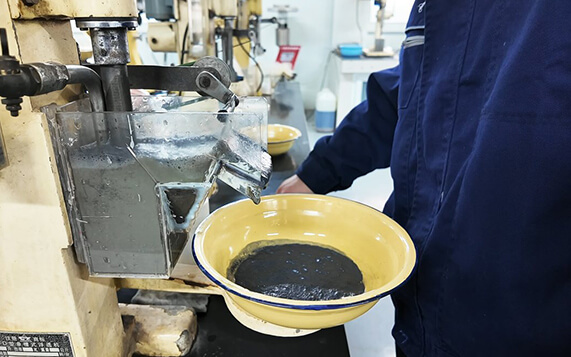
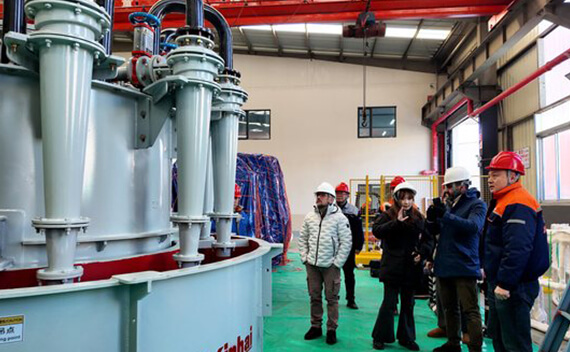
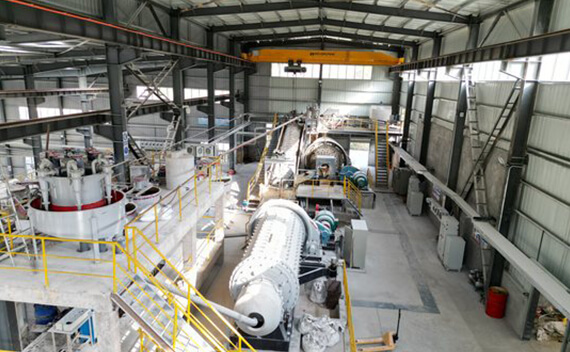
What you get — A flotation route tailored to your acid-grade or metallurgical-grade specifications, supported by plant construction and operating services.
The required purification depth depends on the product market: ordinary industrial sand at SiO2≥ 98.5%, glass sand ≥ 99.3%, solar grade ≥ 99.9%, and electronic grade ≥ 99.99%, with iron limits tightening step by step (Fe2O3 from percentage to ppm level). The standard purification chain runs from scrubbing and desliming to classification → magnetic separation (high-gradient at ~1.2 T for industrial iron removal; 4–5 T for high-purity duty) → flotation to remove feldspar and mica → acid leaching; lattice-bound impurities require deeper processing routes such as chlorination roasting. Specific targets should be confirmed through test work on the ore.
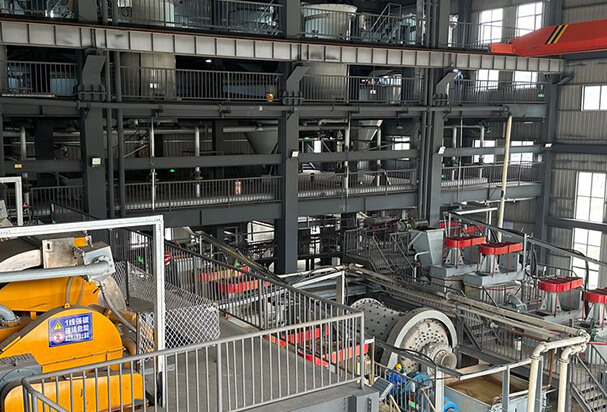
Processing line at the Hubei 900,000 t/a quartz sand project, China.
Xinhai maintains a dedicated quartz-mineral processing capability portfolio; the flotation stage offers both fluorinated and fluorine-free routes, the latter exploiting differences in zeta potential between quartz and feldspar for greener separation.
On two domestic silica-sand lines in Anhui and Fujian, Xinhai hydrocyclones and high-frequency dewatering screens have reduced product moisture to roughly 10%, with stable operation and low failure rates.
What you get — Iron removal, desliming, classification, and dewatering circuits designed around your target grade — from construction sand to glass or solar-grade sand.
Barite beneficiation takes advantage of its large specific-gravity contrast with quartz, calcite, or clay: barite has a specific gravity of about 4.5, so gravity separation is often the most cost-effective route for coarse ores. Liberation size and head grade help determine the path: coarse-grained (+0.5 mm) ore with BaSO4 ≥ 30% is typically treated by jigging; fine-grained (-0.074 mm) or low-grade (BaSO4 8–20%) ore may require flotation (the classic "one roughing, three cleaning, two scavenging" configuration) to reach high purity. Iron can reduce product whiteness, so pharmaceutical- and coating-grade products usually need wet high-gradient magnetic separation (1.0–1.5 T) plus acid leaching where required. As a drilling-mud weighting agent, typical requirements are a specified fineness of -0.056 mm, density > 4.2 g/cm³, and grade > 95%.
Barite sits within Xinhai's 70+ serviced minerals and pilot-circuit list: crushing and screening, gravity separation (jigging/table), magnetic separation, flotation, and combined routes ("gravity + flotation", "magnetic + flotation") can all be validated at semi-continuous industrial scale in the pilot center.
In-house manufacturing covers comminution, separation, dewatering, and packaging equipment, supporting complete-equipment delivery.
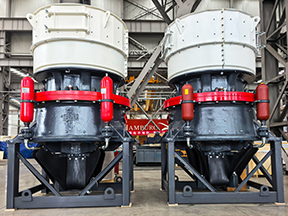
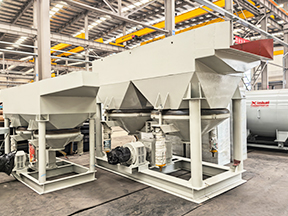
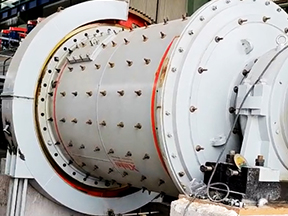
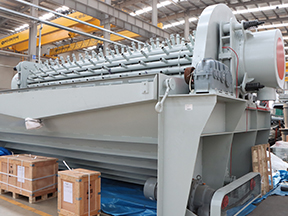
What you get — Advice on selecting a combined route — from gravity and magnetic separation to flotation — with delivery as complete equipment sets or EPC packages tailored to drilling-agent, chemical, or filler-grade specifications.
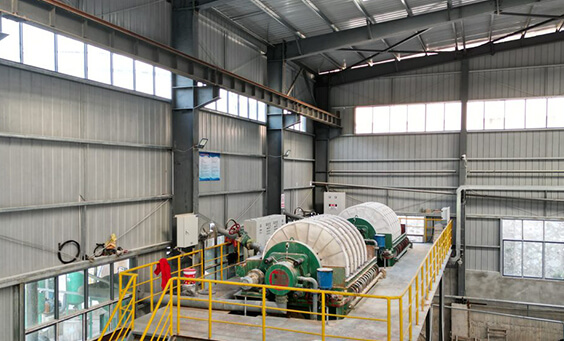
Fluorite and barite are both naturally floatable and have similar floatability, making their separation when they occur together a recognized challenge in salt-type mineral processing. Two basic routes exist — priority flotation versus bulk-flotation-then-differential-separation — and the crux lies in highly selective depressant combinations (aluminum sulfate, acidified water glass, lignosulfonate systems). The barium-to-fluorite ratio and liberation characteristics determine which route is most suitable.
Xinhai addresses this challenge through laboratory and pilot testing rather than relying on a standard formula. The pilot center is fully equipped for flotation, magnetic, and gravity test circuits, and progressive validation from bench tests to semi-continuous industrial trials helps identify a separation scheme for the specific ore before engineering implementation.
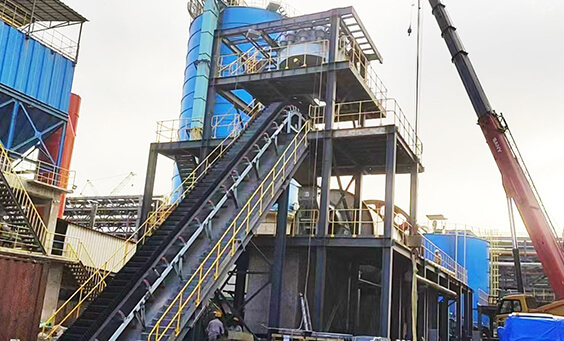
In non-metallic minerals, a significant increase in product value can come from ultrafine grinding, precision classification, and surface modification. Metrics such as SPAN value, whiteness, and coating rate help determine whether a powder can enter polymer matrices in plastics, rubber, and coatings. Xinhai extends along the beneficiation–grinding–classification–dewatering spine: full-cycle mine design covers grinding/classification and automation systems, and in-house rod mills, ball mills, classifiers, and dewatering equipment form the engineering base for the front end of powder processing; deep-processing configurations are developed through testing and pilot calibration, with each project tailored to its requirements.
CNAS-accredited laboratory plus a ~3,000 m² pilot-test center (Yantai key laboratory; provincial-level mineral utilization pilot demonstration base); ~200 test programs annually across gravity, magnetic, flotation, chemical, and combined circuits.
Nearly 20 disciplines — geology, mining, mineral processing, civil, electrical, automation; conventional, mobile, 3D, and modular steel-structure design options; ability to work to Chinese, Australian, Finnish, and Canadian standards; 2,500+ mines designed.
Three equipment bases producing crushing, grinding, classifying, flotation, magnetic, thickening, filtering, and drying lines; wear-resistant rubber lining prevents iron contamination — aligned with non-metallic purity requirements.
Grade-One general contracting qualification for mine engineering; mining, processing, and tailings dam construction with installation and commissioning.
A talent pool of 700+ technicians; production-operation track record across multiple mines worldwide; flexible, negotiable cooperation models.
| Project | Mineral | Scope |
|---|---|---|
| Jiangxi 300 t/d fluorite flotation plant, China | Fluorite | EPC turnkey |
| Mongolia 800 t/d fluorite flotation project | Fluorite | Processing engineering |
| Italy 1,200 t/d galena–fluorite complex-ore EPC project | Fluorite / Lead | EPC turnkey |
| Inner Mongolia 100,000 t/a fluorite mining turnkey & operation, | Fluorite | Mining EPC + O&M |
| Hubei 900,000 t/a quartz sand processing project, China | Quartz sand | Processing EPC |
| Hunan 600,000 t/a quartz sand production line, China | Quartz sand | Processing engineering |
| West Asia 400 t/d barite complete-equipment project | Barite | Complete equipment |
| Tanzania 3,000 t/d graphite plant + tailings dam | Graphite | Design + engineering |
| Jiangxi 500,000 t/a wollastonite mining EPC project, China | Wollastonite | Mining EPC |
| Shandong 1,000,000 t/a zirconium–titanium processing project, C | Zr–Ti sands | Processing EPC |
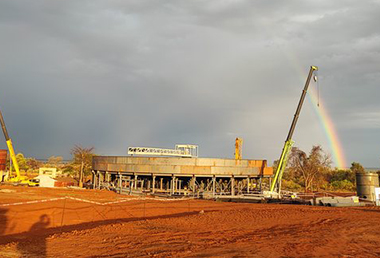
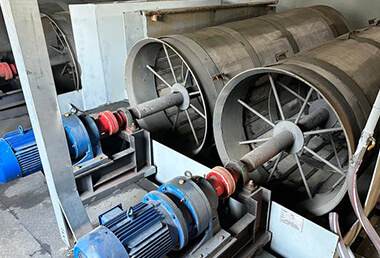
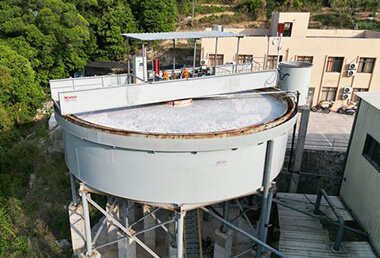
One of the biggest uncertainties in a non-metallic mineral investment is whether the ore can consistently produce the target grade. A test report can help answer that question before a quotation is prepared.
Send a sample, run the test. Xinhai's CNAS-accredited laboratory will deliver mineral analysis, beneficiation condition tests, and a formal Metallurgical Test Report — defining concentrate grade, recovery, and process parameters as the scientific basis for your design, investment, and construction decisions.
That depends on the gangue type and liberation characteristics; there is no answer that applies to every ore. Siliceous ores usually have room for upgrading through repeated cleaning, while calcareous ores are more challenging because their similar calcium chemistry makes selective suppression difficult. Metallurgical testing is the most reliable way to assess the ore.
Upgrading to solar grade typically requires more than adjusting a single stage. It may require additional high-gradient magnetic separation, stronger scrubbing and desliming, and recalibrated flotation and acid-leaching conditions. Test work should define the controls for each stage based on the target grade and ore characteristics.
The choice depends mainly on liberation size and head grade. Jigging is often cost-effective for coarse, relatively high-grade ore. Fine, slimy, or low-grade ore may require flotation, while intermediate ores may benefit from a combined route. Test work should determine the final flowsheet.
Their similar floatability makes separation challenging. The main options are priority flotation or bulk flotation followed by differential separation. The barium-to-fluorite ratio and liberation characteristics help determine which route is suitable; bench and pilot testing can validate the approach for a specific ore.
Share your project details and our engineers will get back to you shortly.